Ukda Tandul
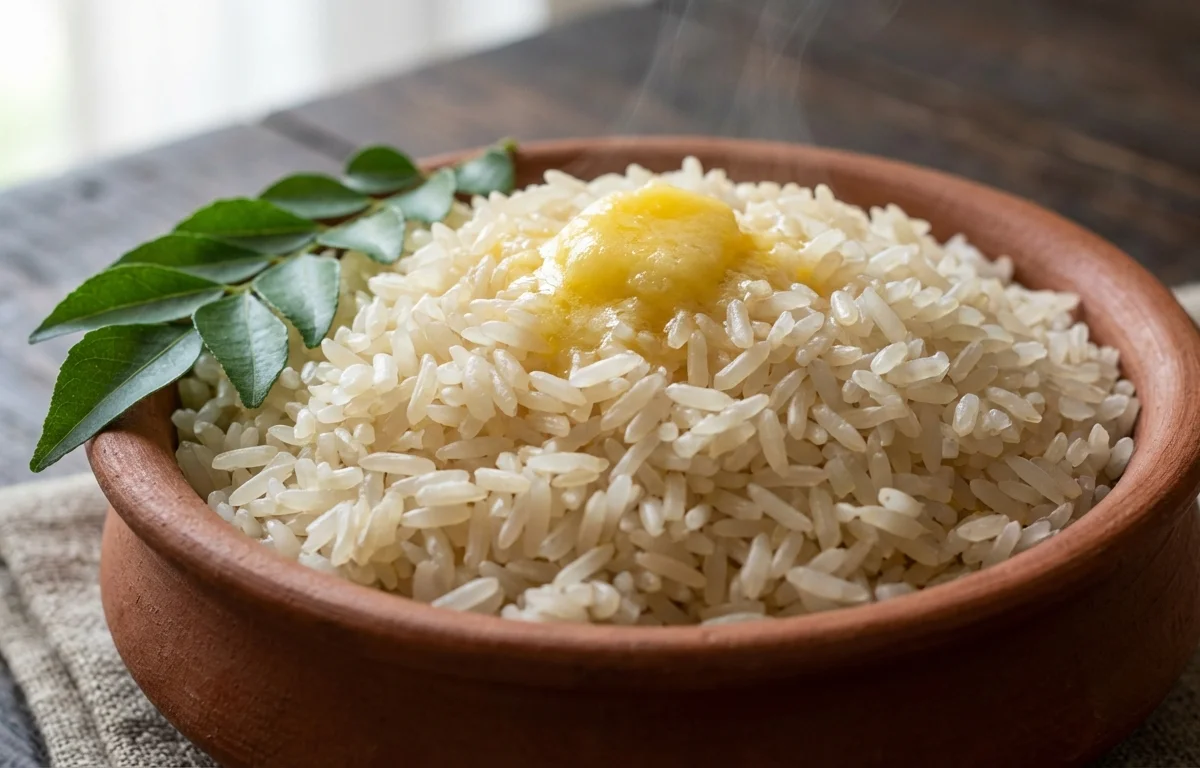
A simple Maharashtrian-style boiled rice preparation made with parboiled rice and water. The grains cook up soft yet separate, making it an easy everyday rice to serve with curries, amti, or simple vegetable dishes.
For 4 servings
- prep
Rinse and soak the rice.
Wash the ukda rice in 2 to 3 changes of water until the water looks clearer. Soak it in fresh water for 20 minutes, then drain well.
- boil · ~5 min
Boil the water.
Bring 4 cups water to a rolling boil in a pot. Add the salt if using.
- boil · ~18 min
Cook the rice until tender.
1.Add the drained rice to the boiling water.2.Cook uncovered over medium heat until the grains are soft but still separate, about 15 to 18 minutes.3.Stir once or twice gently so the rice does not settle at the bottom.TIPDo not stir often or the grains can break and turn sticky. - other
Drain the extra water.
Once the rice is cooked, drain off any remaining water immediately using a strainer.
- rest · ~5 min
Cover and rest the rice.
Return the drained rice to the warm pot, cover, and let it rest for 5 minutes so the steam finishes the cooking.
- serve
Fluff and serve hot.
Gently fluff the rice with a fork or spoon and serve hot with curry, amti, or a simple vegetable side.
What to keep in mind.
7 tips from the recipe — small details that make a real difference to the final dish.
- 1Soaking the ukda rice for the full 20 minutes helps the grains cook evenly without a hard center.
- 2Add the rice only after the water reaches a rolling boil, so the grains stay more separate.
- 3Keep the pot uncovered while boiling; this prevents the rice from turning overly soft and waterlogged.
- 4Check doneness by pressing a grain between your fingers; it should be soft through but not mashed.
- 5Drain the rice as soon as it is cooked, because leftover hot water will keep softening the grains.
- 6After draining, let the rice rest covered in the warm pot so steam finishes the center gently.
- 7For next-day use, cool the rice quickly and refrigerate; it reheats well for varan-bhat or simple rice plates.
Adapt it for your goals.
Low-sodium
Skip the optional salt in the boiling water if you are pairing the rice with a salty amti, usal, or curry.
ghee finishedGhee-finished
Toss the hot drained rice with a little ghee after resting for a richer aroma and a more festive everyday meal.
pressure cookedPressure-cooked
Use a pressure cooker if you want a more hands-off method, though the open-boil-and-drain style often gives looser, more separate grains.
Why this is on our healthy list.
Gentle Everyday Staple
Plain boiled ukda rice is simple and easy to pair with dals, curries, and lightly spiced vegetable dishes.
Parboiled Rice Advantage
Because it is parboiled, ukda rice holds its shape well after cooking and is less likely to turn mushy than many regular white rice varieties.
Frequently asked questions
It usually happens if the rice was stirred too much, overcooked, or not drained quickly enough after boiling.



.webp)