
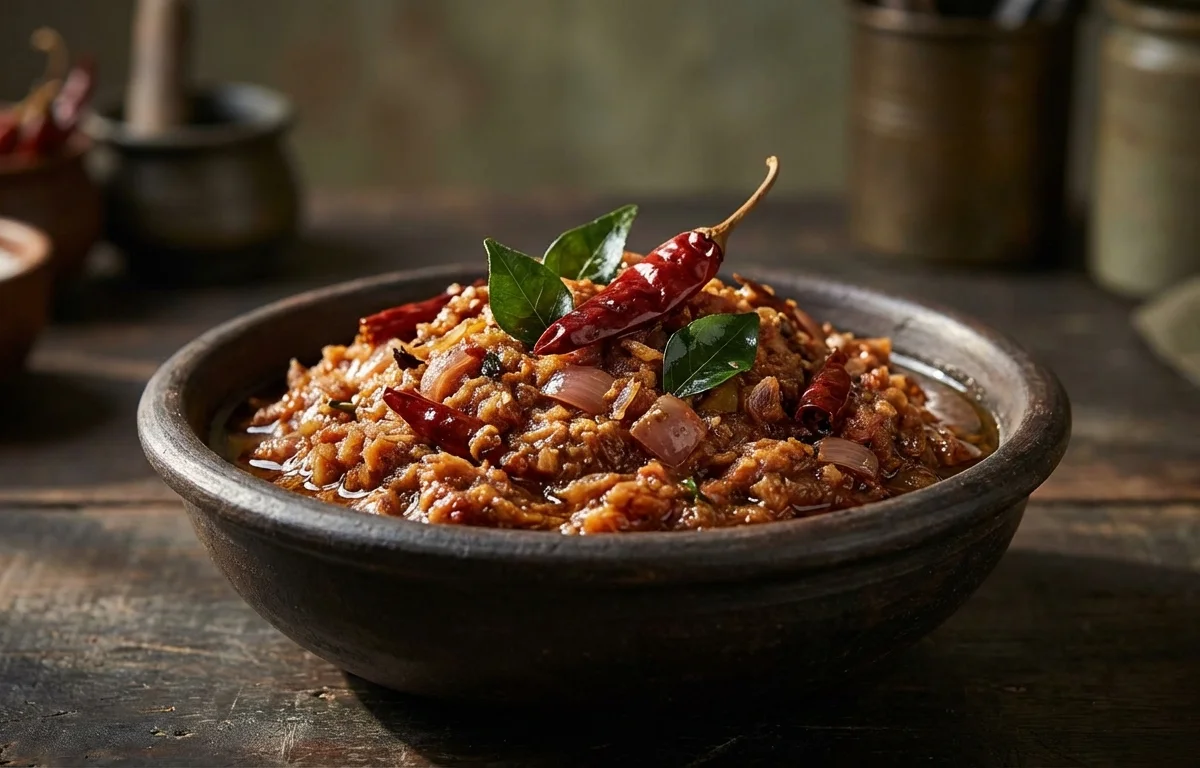
Ulli Chammandi
A fiery, tangy Kerala-style onion chutney that comes together in minutes. Shallots are ground with whole spices and tamarind into a coarse, rustic paste, then finished with a crackling coconut oil tempering of mustard seeds and curry leaves. Perfect alongside steamed rice or kanji.
For 8 servings
- prep · ~5 min
Peel the shallots and get the ingredients ready.
Peel the shallots and keep them whole. Soak the tamarind in a tablespoon of warm water for 5 minutes to soften it.
- mix · ~5 min
Coarsely grind the chutney.
In a mortar and pestle, first crush the dried red chilies and salt to a coarse powder. Add the shallots and softened tamarind. Pound everything into a coarse, chunky paste – do not make it smooth. The texture should be rustic with bits of shallot still visible.
TIPPound in batches if your mortar is small. The coarse texture is what makes this chammandi authentic – avoid using water unless the mixture is too dry to come together, and even then, add just a few drops. - temper · ~2 min
Make the tempering.
1.Heat coconut oil in a small pan over medium heat.2.Add mustard seeds and let them splutter for 30 seconds.3.Add urad dal and fry until golden brown, about 30 seconds.4.Drop in the curry leaves and a pinch of asafoetida, then immediately switch off the heat. - mix · ~1 min
Combine the tempering with the ground chutney.
Pour the hot tempering, including all the oil and fried lentils, over the ground chammandi. Mix well to combine.
- serve · ~2 min
Rest briefly and serve.
Let the chammandi sit for a couple of minutes so the flavours meld. Serve at room temperature with steamed rice, kanji, or dosa.
What to keep in mind.
7 tips from the recipe — small details that make a real difference to the final dish.
- 1Use small Kerala shallots (chuvanna ulli) for the authentic sweet-sharp flavor — regular onion will be too harsh.
- 2Don't skip soaking the tamarind; even 5 minutes in warm water makes it easier to pound into a smooth paste.
- 3Pound the dried red chilies first with salt — this grinds them evenly and prevents the shallots from turning mushy.
- 4Aim for a coarse, chunky texture with visible bits of shallot; a smooth paste changes the rustic character of this chammandi.
- 5Let the chammandi rest for 2–3 minutes after mixing in the tempering so the coconut oil and spices infuse fully.
- 6Store leftover chammandi in a clean glass jar in the fridge for up to a week — bring to room temperature before serving.
- 7If using a blender instead of mortar and pestle, pulse in short bursts to avoid over-grinding into a purée.
Adapt it for your goals.
Milder version
Reduce dried red chilies to 2–3 and add 1 teaspoon of grated coconut while grinding — the coconut softens the heat and adds a subtle sweetness.
Garlic forwardGarlic-forward
Add 2–3 peeled garlic cloves along with the shallots during pounding — garlic adds a pungent, savoury depth that pairs well with idli and dosa.
Tomato twistTomato twist
Replace tamarind with half a small, ripe tomato (roughly chopped) — the tomato gives a milder tang and a slightly sweeter, juicier chutney.
Vegan / no oil temperingVegan / no-oil tempering
Skip the tempering and simply stir in a pinch of roasted cumin powder and a squeeze of lemon juice — the chutney stays fresh, raw, and low-fat.
Why this is on our healthy list.
Low-Calorie Flavour Bomb
Ulli Chammandi packs intense taste with very few calories, making it a guilt-free accompaniment that adds zest without excess fat or sugar.
Rich in Antioxidants
Dried red chilies, curry leaves, and asafoetida are all sources of antioxidant compounds that help combat oxidative stress in the body.
Digestive Aid
Asafoetida and mustard seeds in the tempering are traditionally used to support digestion, while tamarind acts as a mild laxative.
Shallot Goodness
Shallots contain quercetin and organosulfur compounds that may support immune health and heart function.
Frequently asked questions
You can, but the flavor will be sharper and less sweet. Use about 2 small red onions as a substitute and pound them with the same spices.



.webp)


.webp)