If you’ve ever seen a sidewalk stained deep purple in early summer, you’ve probably met a mulberry tree. These delicate, fleeting berries are wildly underrated. They look a bit like a lanky blackberry, taste like a sweet-tart grape, and are often ignored in favor of their supermarket cousins. That's a shame. Because fresh, raw mulberries aren't just delicious — they're incredibly low in calories and pack a surprising vitamin C punch. The trick is knowing what to do with them in their very short season.
↑ Fresh mulberries are delicate and best eaten right after picking.
The underrated summer berry
Mulberries are the fruit of the Morus tree, and they come in white, red, and the most common deep-purple-black varieties. Unlike a blackberry, a mulberry doesn't have a solid core; it's more fragile, with a tiny, edible green stem that often comes along for the ride. You won't find them in plastic clamshells at the grocery store. They're too delicate to ship. This is a local, seasonal, 'eat them right off the tree' kind of fruit, which is part of its charm.
IN ONE LINE
A 100g serving of mulberries has just 43 calories but delivers around 40% of your daily vitamin C. They're a low-sugar, nutrient-dense choice.
Mulberry nutrition facts
Here’s the nutritional breakdown for a 100-gram serving of raw mulberries, which is a generous handful or about two-thirds of a cup.
The standout number here is the vitamin C. Getting 40% of your daily value from such a small, low-calorie portion is fantastic. The fiber isn't super high, but at 1.7 grams, it's still a helpful contribution that works with the low sugar content to keep you full and your blood sugar stable.
Mulberry's glycemic index
We don't have an official, lab-tested Glycemic Index (GI) number for mulberries. They're just not a fruit that's been studied in the same way as apples or bananas. But we can make a very educated guess.
Based on their low sugar content, decent fiber, and similarity to other berries like raspberries and cherries (which are very low-GI), it's safe to treat mulberries as a low-glycemic food. They're not going to cause the kind of blood sugar spike you'd get from, say, a slice of white bread or even a pineapple.
GLYCEMIC INDEX · MULBERRY vs COMMON FOODS
Mulberries are likely a low-GI fruit
Cherries
whole fruit
LOW
Mulberry (est.)
whole fruit
LOW
Apple
whole fruit
LOW
Pineapple
whole fruit
MEDIUM
White bread
refined
HIGH
SCALE 0–90
04590
How to eat them
First, a warning: they stain. Don't wear a white shirt while picking or eating them. Beyond that, it's simple.
01
Eat them fresh and raw.
This is the best way. Just rinse and eat. The little green stem is edible and you'll barely notice it.
02
Stick to a reasonable portion.
A cup (about 140g) is a great serving size. Because they're so easy to eat, it's possible to overdo it, which can sometimes lead to an upset stomach.
03
Forage safely.
If you're picking them yourself, choose a tree away from a busy, polluted road. Give them a good rinse before eating.
04
Freeze the excess.
Their season is short. If you have a bounty, lay them on a baking sheet to freeze individually, then transfer to a bag. They're perfect for smoothies later.
05
Skip the dried version (mostly).
Dried mulberries are a different beast. They're much higher in concentrated sugar and calories. Treat them like candy, not fruit.
What mulberries are good for
01
A major vitamin C boost
With about 40% of your daily vitamin C in a 100g serving, mulberries are fantastic for immune support and skin health.
40%
vit C DV
02
Low-calorie volume
At just 43 calories per 100g, you can eat a satisfying amount without a big caloric hit, making them ideal for weight management.
43
cals / 100g
03
Rich in antioxidants
Beyond vitamin C, their deep purple color signals the presence of anthocyanins, powerful antioxidants that help protect your cells from damage.
Deep
purple
04
Gentle on blood sugar
Thanks to their low sugar and carb content, plus a bit of fiber, mulberries provide a sweet taste without a major blood sugar spike.
Low
GI (est.)
What to pair mulberries with
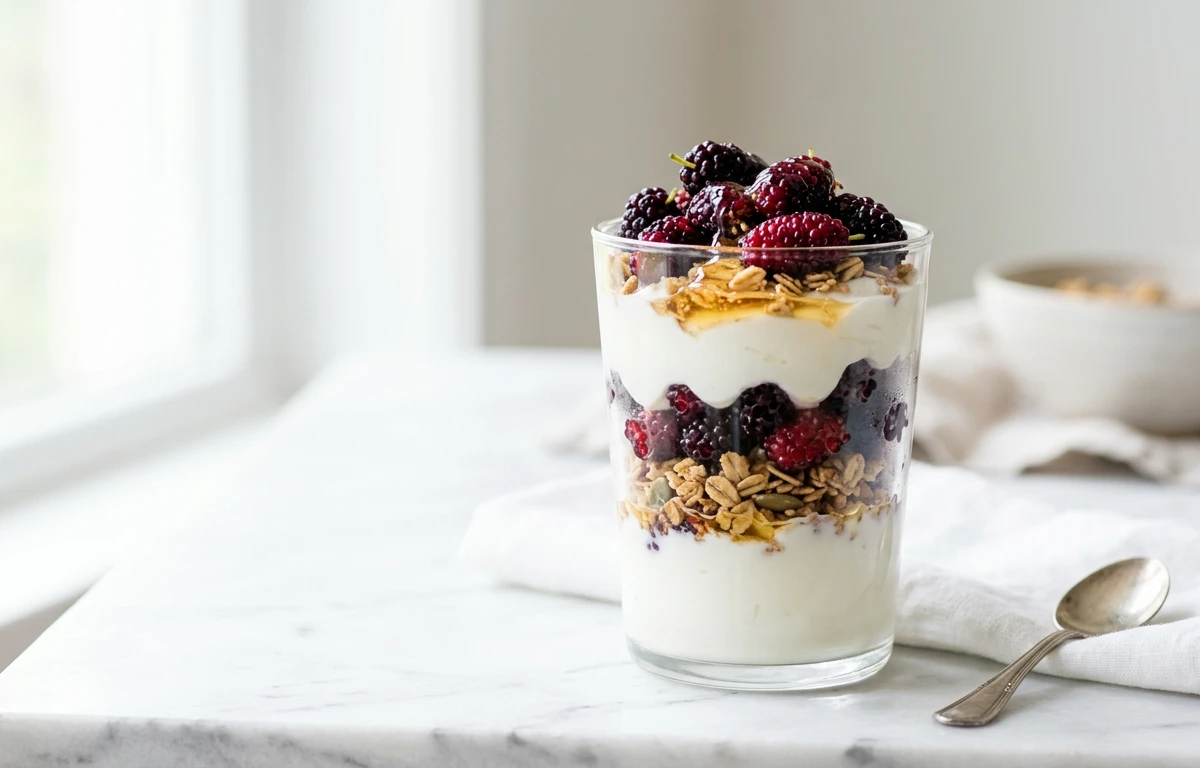
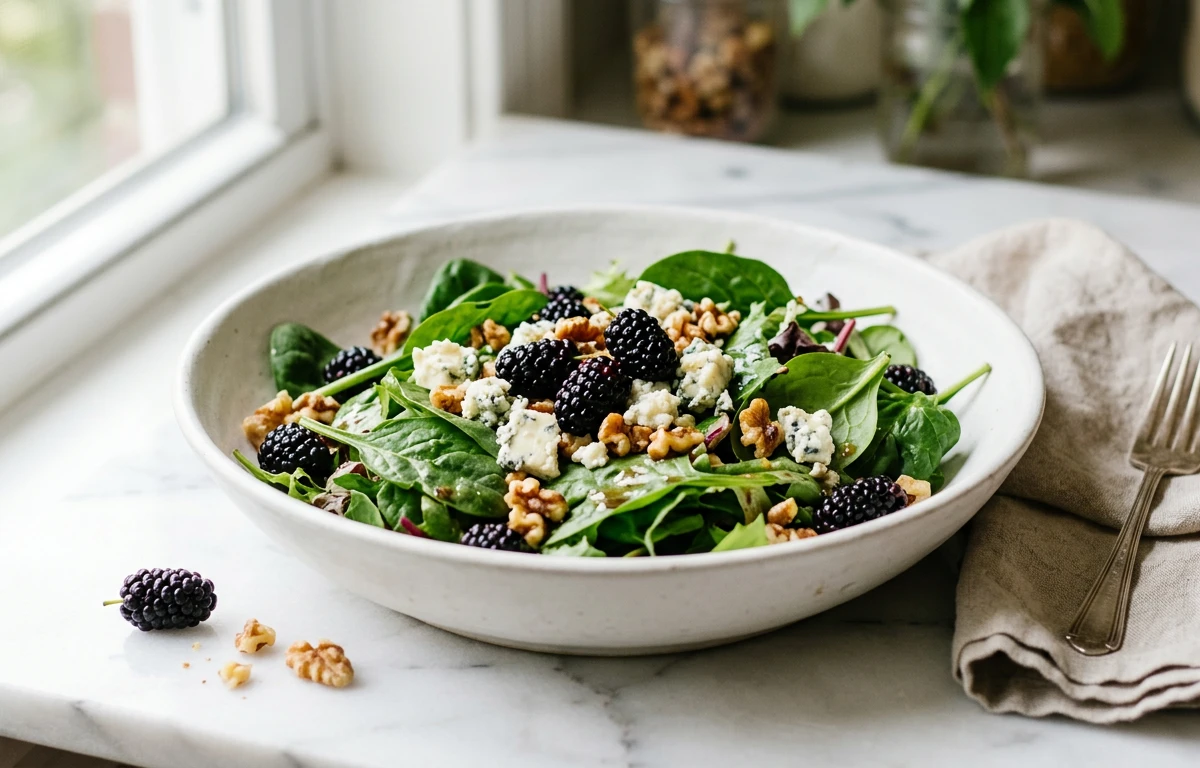
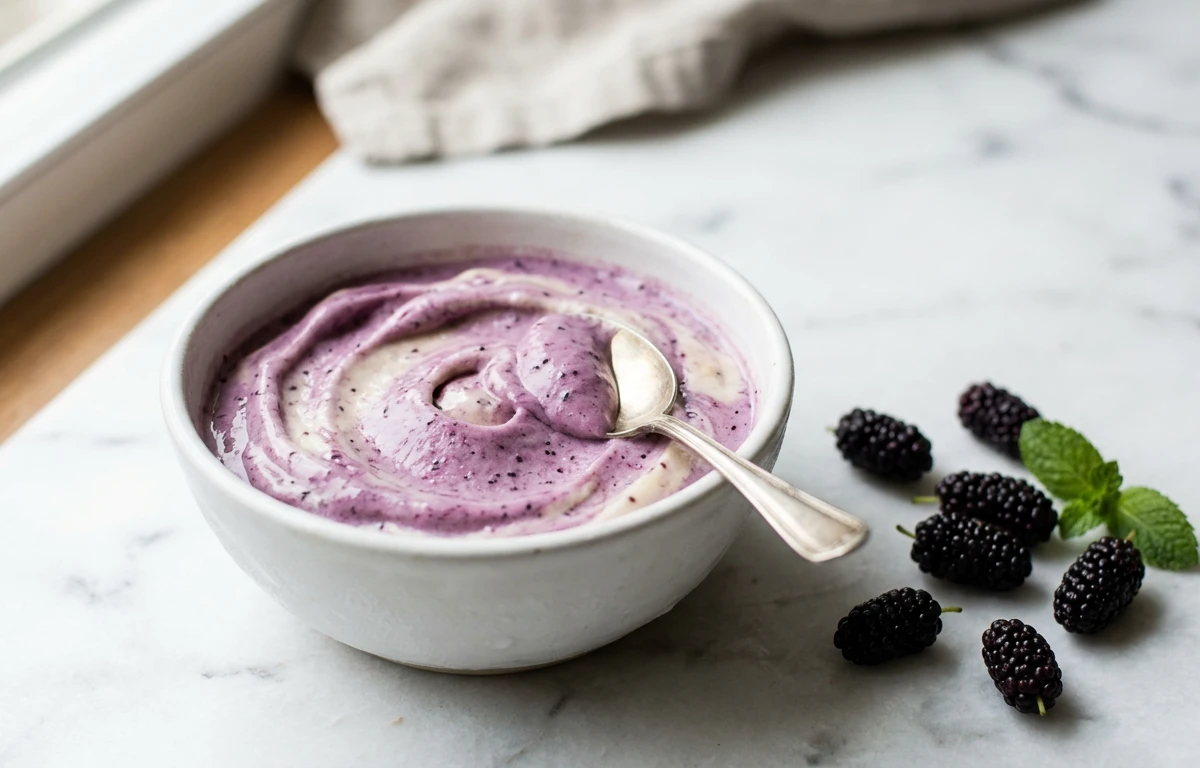
Their sweet-tart flavor works well in both sweet and savory dishes. Pairing them with protein or fat makes for a more balanced and filling snack.
Are mulberries for you?
Three ways to use them
Because they're so delicate, the best recipes are simple ones that let the fresh berries shine.
Love finding hidden gems like the mulberry?
Our meal planner helps you discover and incorporate seasonal, nutrient-dense foods into your week, with balanced recipes and a smart grocery list to make healthy eating feel like an adventure.
Build my weekly plan →SOURCES & REFERENCES · 3
One more thing
Eating well is rarely about willpower. It’s about having a short list of dinners you actually want to eat. Pick two from this list. Make them next week. The rest will follow.
If you want these on autopilot, our weekly meal planner can drop the picks above into your calendar with one click and build a single grocery list from the merged ingredients.
FREQUENTLY ASKED QUESTIONS
Frequently asked questions
Can you eat mulberries raw?
Yes, absolutely! That's the best way to enjoy them. Just give them a gentle rinse. The small green stem is edible and you won't even notice it.
Are mulberries good for people with diabetes?
Yes, in moderation. They are a low-sugar, low-carb, high-fiber fruit with a low estimated glycemic index, making them a good choice. As always, monitor your own blood sugar and stick to a standard portion size like a cup.
What do mulberries taste like?
A ripe black mulberry is sweet with a mild tartness, often described as a cross between a grape and a blackberry. They are less tart than blackberries and have a softer texture.
Why can't I find mulberries in the grocery store?
Mulberries are extremely delicate and have a very short shelf life, making them nearly impossible to transport and sell commercially. Your best bet is a local farmers' market or a friendly neighbor with a tree.
METHODOLOGY
How this article was created
Built using verified nutrition databases, culinary research, and traditional cooking knowledge — every claim is cross-referenced against the sources listed in the article.
· USDA data· Culinary research· Quality reviewed
Read our methodology →TRANSPARENCY
About this content
Articles are curated using trusted food databases (USDA FoodData Central, IFCT), culinary literature, and dietary guidelines, then structured by our editorial team for clarity, accuracy, and usefulness.
· Verified data sources· Culinary research· Quality reviewed
Read our editorial policy →RELATED RECIPES
Cook from this article
EXPLORE OUR MEALS
Meals that fit this article

AMERICAN · 1677 CAL
Almonds with Sliced Apple + supplement + iron

MEDITERRANEAN · 809 CAL
Greek Yogurt with Berries Almonds and Granola + supplement + iron

GENERAL_HEALTHY · 705 CAL
Banana with Peanut Butter Pregnancy + supplement + iron

MODERN · 982 CAL
Hummus with Crudits and Pita with Fresh Orange Snack + supplement + iron
TAGGED
KEEP READING