Raw Purple Passion Fruit: Fiber, Vitamin C, Glycemic Index & More: verified nutrition facts, glycemic context, serving guidance, and practical cooking ideas.
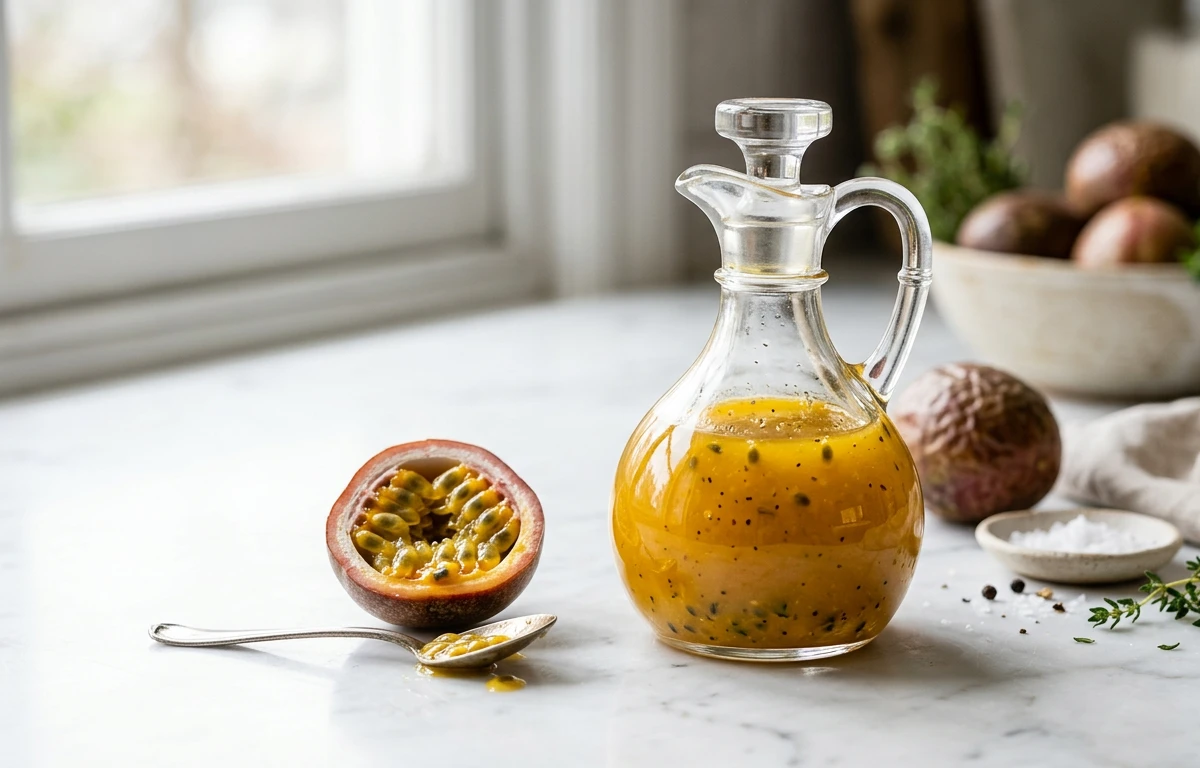
↑ The magic is inside: a tangy, seed-filled pulp packed with fiber.
The fiber superstar in a wrinkly disguise
Let's be honest, passion fruit looks a little strange. But don't let the wrinkly purple skin fool you. What's inside is special. That bright, tangy, seed-filled pulp is a nutritional heavyweight, and its secret weapon is fiber. A staggering 10.4 grams of it in a 100-gram serving.
To put that in perspective, that's more fiber than a cup of oatmeal or a whole avocado. This fact alone makes passion fruit one of the most interesting fruits you can put on your plate. It means the fruit's natural sugars are absorbed incredibly slowly, and it's fantastic for gut health and keeping you full.
IN ONE LINE
With more fiber than almost any other fruit, passion fruit is a gut-health and blood-sugar superstar disguised as a tropical treat. And yes, you're supposed to eat the seeds.
Passion fruit nutrition facts
Here's the nutritional breakdown for 100 grams of raw, purple passion fruit pulp and seeds. That's about what you'd get from three or four medium-sized fruits.
The standout number here is the fiber, providing over a third of your daily needs in a small serving. This is incredibly high for a fruit. The vitamin C content is also significant, delivering about a third of your daily value. The rest is a nice mix of essential minerals like potassium and iron.
But what about the sugar?
Seeing 23 grams of carbohydrate might give you pause, but you have to look closer. Nearly half of that is fiber (10.4 grams), which doesn't get digested as sugar. The 'net' or 'impact' carbs are closer to 13 grams. Because that sugar is packaged with so much fiber, water, and texture from the seeds, it enters your bloodstream at a crawl, not a rush. It's the perfect example of why whole foods are so different from processed ones.
Don't just drink the juice. Most commercial passion fruit juice is loaded with added sugar and has all the amazing fiber stripped out. It's not the same food at all.
Passion fruit's glycemic index
While purple passion fruit doesn't have an official, universally agreed-upon glycemic index (GI) score, its nutritional profile—very high fiber, moderate net carbs—screams 'low GI'. Foods this rich in soluble fiber inherently slow down digestion and sugar absorption. For anyone managing blood sugar, it's one of the safest and smartest fruit choices available, behaving much more like a low-GI berry than a high-GI tropical fruit like pineapple or watermelon.
GLYCEMIC INDEX · PASSION FRUIT vs COMMON FOODS
Passion fruit sits in the low-GI band
Cherries
whole fruit
LOW
Passion Fruit
estimated low
LOW
Apple
whole fruit
LOW
Pineapple
whole fruit
MEDIUM
White Bread
refined
HIGH
SCALE 0–90
04590
How to eat it right
It's simple to get the best from a passion fruit. The key is to embrace the whole pulp, seeds and all.
01
Eat the seeds.
This is non-negotiable. The crunchy black seeds contain much of the insoluble fiber. They're perfectly edible and add a great texture.
02
Scoop and go.
The easiest way is the best: slice it in half and scoop the pulp out with a spoon. It's a self-contained, portion-controlled snack.
03
Use it as a topping.
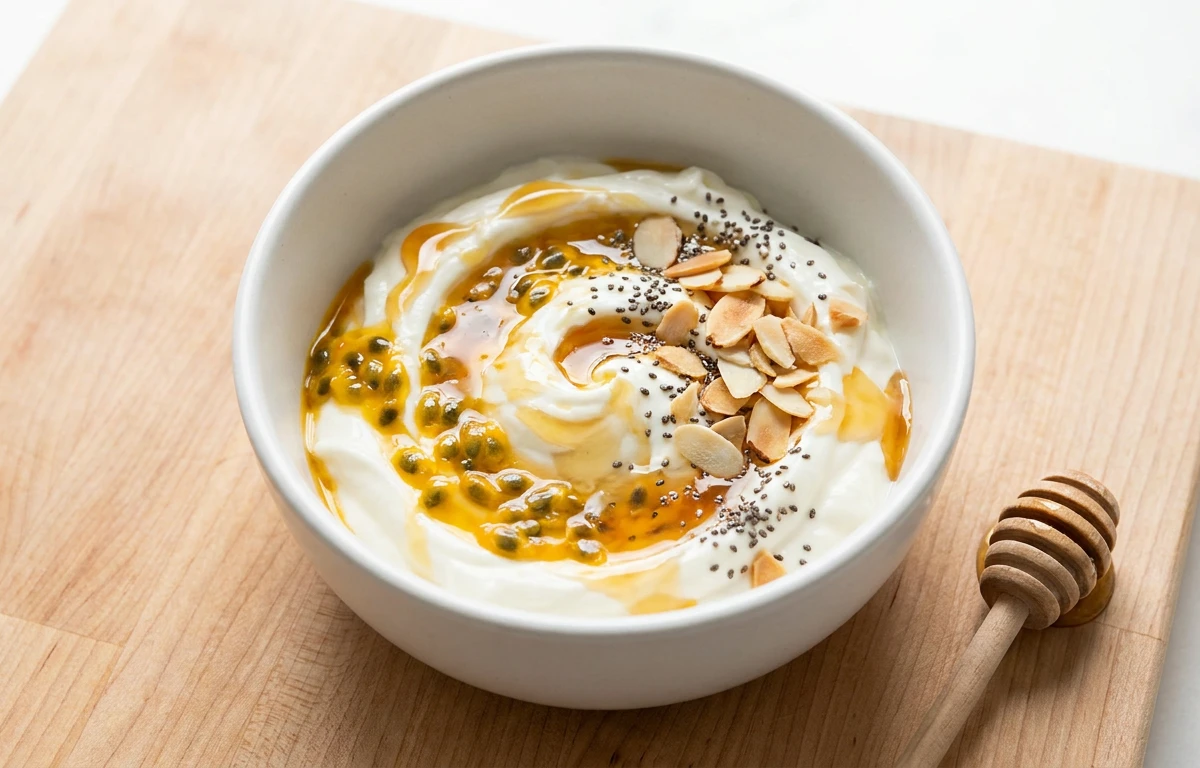
Its intense tartness is perfect for cutting through richer foods. Swirl it through Greek yogurt, spoon it over oatmeal, or top a chia pudding.
04
Stick to 2-4 fruits.
A serving is around 100g, which is typically 3-4 small purple passion fruits. This gives you all the benefits without overdoing the carbs.
What passion fruit is good for
01
Exceptional for Gut Health
With a massive 10.4g of fiber, passion fruit is brilliant for promoting regularity and feeding beneficial gut bacteria.
10.4g
fiber
02
Excellent for Blood Sugar Control
The high fiber content dramatically slows sugar absorption, making it one of the best fruits for preventing blood sugar spikes.
Low
GI
03
Supports a Healthy Immune System
A 100g serving provides a third of your daily vitamin C, a key antioxidant for immune function and skin health.
33%
vit C DV
04
Promotes Fullness and Weight Management
Fiber-rich foods like passion fruit are very satiating, helping you feel full and satisfied on fewer calories.
97
calories
What to pair passion fruit with
Passion fruit's tartness is its superpower. Pair it with creamy, rich, or plain foods to let its flavor shine and create a balanced snack.
Who should eat it?
Three simple ideas
Passion fruit shines brightest in simple preparations that let its unique flavor come through.

Want smart fruit choices worked into a balanced week?
Our meal planner pairs high-fiber fruits like passion fruit with protein and healthy fats for steady energy. We handle the portions, macros, and grocery lists so you don't have to.
Build my weekly plan →SOURCES & REFERENCES · 3
One more thing
Eating well is rarely about willpower. It’s about having a short list of dinners you actually want to eat. Pick two from this list. Make them next week. The rest will follow.
If you want these on autopilot, our weekly meal planner can drop the picks above into your calendar with one click and build a single grocery list from the merged ingredients.
FREQUENTLY ASKED QUESTIONS
Frequently asked questions
Is passion fruit good for people with diabetes?
Yes, it's an excellent choice. Its extremely high fiber content and low glycemic index mean it has a very gentle effect on blood sugar levels.
Do you eat the black seeds in passion fruit?
Absolutely! The crunchy seeds are where much of the dietary fiber is. They are meant to be eaten with the pulp.
Is passion fruit keto-friendly?
In moderation. A 100g serving has about 13 grams of net carbs, which can fit into some low-carb diets but might be too high for strict keto. A single fruit (about 4g net carbs) is more manageable.
How do you know when a passion fruit is ripe?
Look for a dark purple, slightly wrinkly skin. A smooth-skinned passion fruit is not yet ripe. The wrinkles indicate the fruit is mature and the pulp inside is sweet and aromatic.
METHODOLOGY
How this article was created
Built using verified nutrition databases, culinary research, and traditional cooking knowledge — every claim is cross-referenced against the sources listed in the article.
· USDA data· Culinary research· Quality reviewed
Read our methodology →TRANSPARENCY
About this content
Articles are curated using trusted food databases (USDA FoodData Central, IFCT), culinary literature, and dietary guidelines, then structured by our editorial team for clarity, accuracy, and usefulness.
· Verified data sources· Culinary research· Quality reviewed
Read our editorial policy →RELATED RECIPES
Cook from this article
EXPLORE OUR MEALS
Meals that fit this article

AMERICAN · 1677 CAL
Almonds with Sliced Apple + supplement + iron

MEDITERRANEAN · 809 CAL
Greek Yogurt with Berries Almonds and Granola + supplement + iron

GENERAL_HEALTHY · 705 CAL
Banana with Peanut Butter Pregnancy + supplement + iron

MODERN · 982 CAL
Hummus with Crudits and Pita with Fresh Orange Snack + supplement + iron
TAGGED
KEEP READING