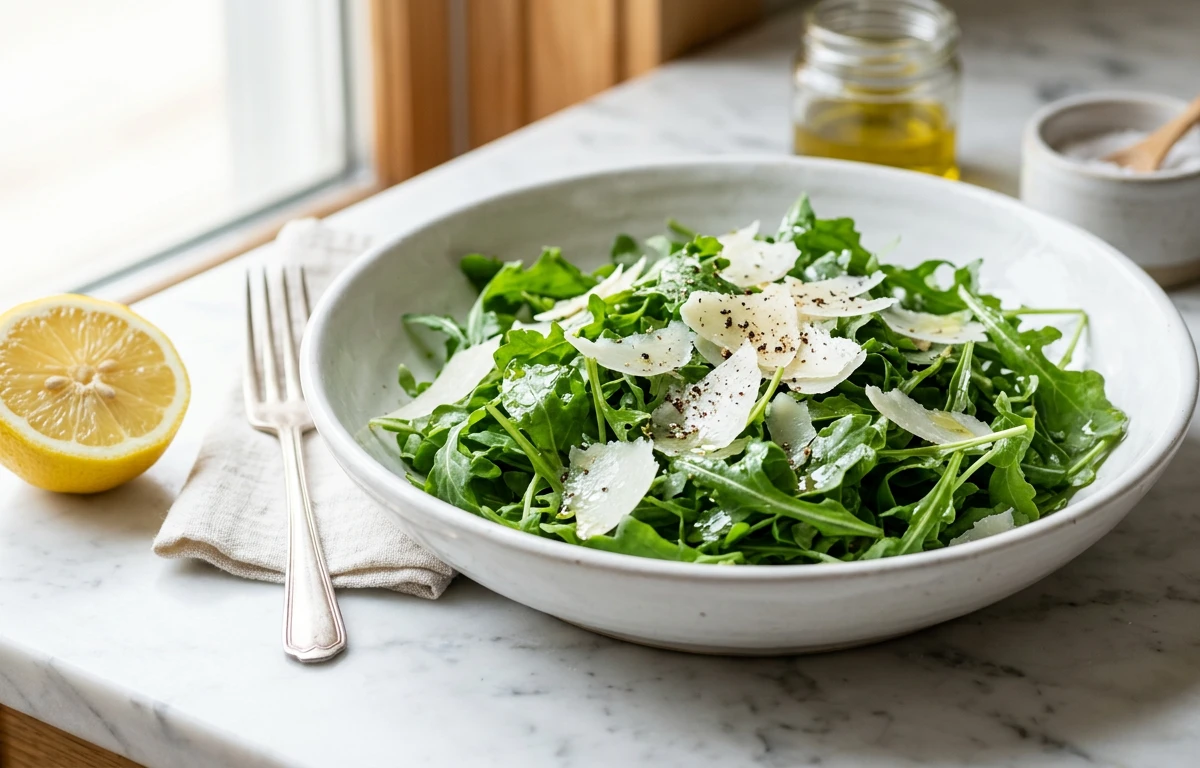
That peppery, slightly bitter bite you get from a handful of arugula? That’s not just flavor. It’s a sign that this isn't your average, watery lettuce. Arugula—or rocket, if you're in the UK—is a cruciferous vegetable, in the same family as broccoli and kale. It's surprisingly nutrient-dense for something so delicate, with a glycemic index so low it's barely worth measuring. It's time we stopped thinking of it as just a fancy garnish.
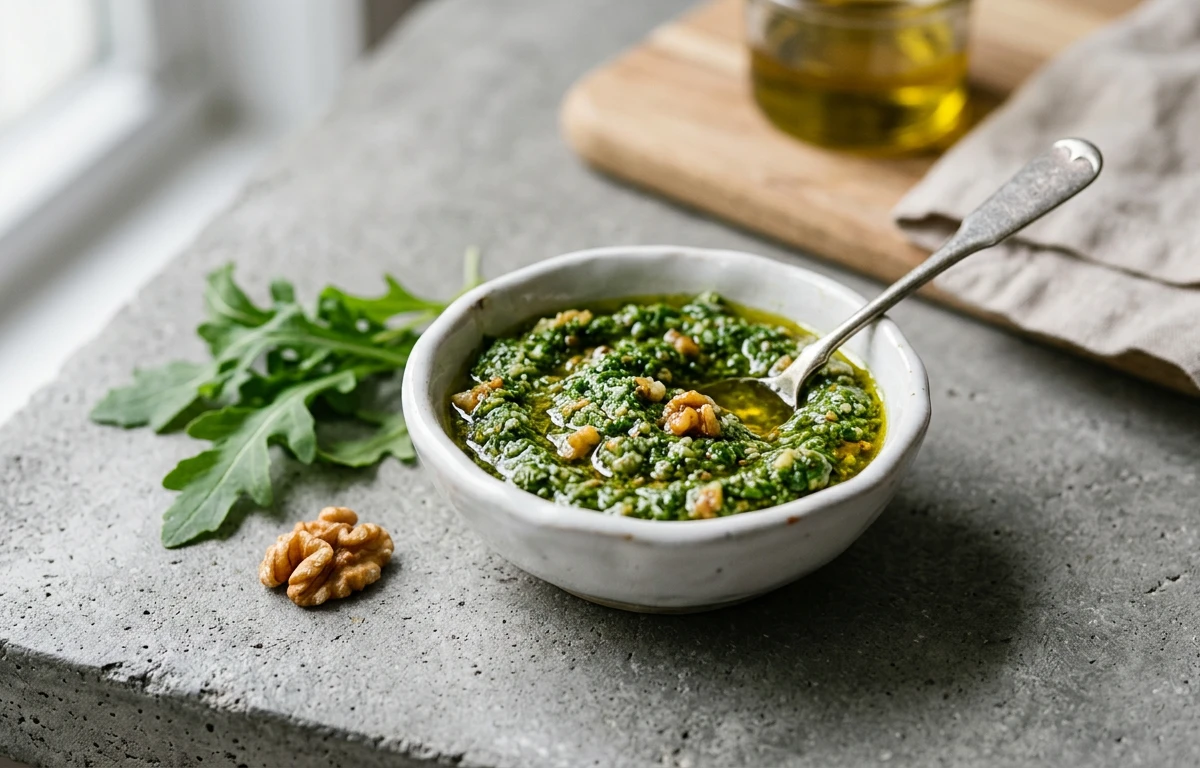
↑ Arugula's peppery flavor is a sign of its nutrient density.
The peppery, powerful green
Arugula is one of those greens people either love or haven't tried yet. Its defining feature is that spicy, peppery flavor that cuts through rich foods and wakes up a boring salad. That flavor comes from compounds called glucosinolates — the same family of compounds that give horseradish its kick and broccoli its characteristic smell.
But it's more than just a flavor agent. For a leaf that's mostly water, it packs a surprising amount of nutrition. It's low in everything you want to limit (calories, carbs, sugar) and a good source of things you need more of, like vitamins and minerals. And unlike iceberg lettuce, it actually tastes like something.
IN ONE LINE
Arugula is a low-calorie, nutrient-dense leafy green with a negligible glycemic index, making it a smart addition to almost any diet.
Arugula nutrition facts
Here's what a substantial 100-gram serving of arugula — about four or five packed cups — provides. It's a lot of volume for very few calories.
The numbers are almost comically low. For 25 calories, you get a huge, flavorful pile of greens that contributes a bit of protein, some fiber, and a decent shot of Vitamin C. What the label doesn't show is that it's also one of the best dietary sources of nitrates and Vitamin K, both crucial for health.
Arugula's glycemic index is practically zero
Glycemic index (GI) measures how quickly a food raises blood sugar. You won't find a reliable GI value for arugula, and there's a simple reason: it has so little digestible carbohydrate that it's almost impossible to test. To get the 50 grams of carbs needed for a GI test, you'd have to eat about 1.4 kilograms (over 3 pounds) of arugula in one sitting.
For all practical purposes, arugula has a glycemic index and glycemic load of zero. It will not raise your blood sugar. In fact, adding it to a meal can help blunt the overall blood sugar response by adding fiber and bulk.
GLYCEMIC INDEX · ARUGULA vs COMMON FOODS
Arugula barely registers on the GI scale
Arugula
leafy green
LOW
Apple
whole fruit
LOW
Pineapple
whole fruit
MEDIUM
White bread
refined
HIGH
Cornflakes
refined
HIGH
SCALE 0–90
04590
What arugula is good for
01
Big flavor, few calories
Arugula's peppery taste can make a simple meal feel more satisfying, helping you cut back on rich sauces or extra cheese without feeling deprived.
25
cals/100g
02
Supporting heart health
Arugula is packed with dietary nitrates, which your body converts to nitric oxide. This molecule helps relax blood vessels, improving blood flow and helping to manage blood pressure.
Nitrate
rich
03
Excellent for bone health
Like other dark leafy greens, arugula is a fantastic source of Vitamin K, a nutrient that's essential for helping your body use calcium to build and maintain strong bones.
High in
Vit K
04
Blood sugar friendly
With virtually no impact on blood sugar, arugula is an ideal food for managing diabetes or for anyone looking to avoid energy spikes and crashes.
GI ≈ 0
negligible
What to pair arugula with
Arugula's bold flavor means it pairs beautifully with sweet, salty, and fatty foods. The key is to balance its peppery bite.
Eat freely — or be mindful?
Three ways to use it
Beyond a simple salad, arugula is incredibly versatile. Add it at the last minute to pastas, soups, or pizzas for a fresh, peppery finish.

Want more healthy greens in your week — without the planning?
Our meal planner incorporates flavorful greens like arugula into balanced meals, with portions and macros already calculated and a single grocery list at the end.
Build my weekly plan →SOURCES & REFERENCES · 3
One more thing
Eating well is rarely about willpower. It’s about having a short list of dinners you actually want to eat. Pick two from this list. Make them next week. The rest will follow.
If you want these on autopilot, our weekly meal planner can drop the picks above into your calendar with one click and build a single grocery list from the merged ingredients.
FREQUENTLY ASKED QUESTIONS
Frequently asked questions
Why is arugula (or rocket) so peppery?
That peppery, spicy kick comes from glucosinolates, natural compounds found in cruciferous vegetables like arugula, mustard greens, and horseradish. They are part of the plant's defense mechanism and are also responsible for many of its health benefits.
Is it okay to eat arugula every day?
For most people, yes. It's a healthy, low-calorie green. The only major exception is for individuals taking blood-thinning medication like Warfarin. Arugula is very high in Vitamin K, so a sudden large increase in intake can interfere with the medication. If this is you, speak with your doctor.
How do I make arugula less bitter?
First, try 'baby arugula,' which is harvested earlier and is much milder. Second, balance the flavor. Pair it with sweet elements (like pear, balsamic glaze), fatty elements (like cheese, olive oil, nuts), and acidic elements (like lemon juice). The bitterness gets lost in a well-constructed dish.
Is arugula healthier than spinach?
They're both incredibly healthy, just in different ways. Spinach is higher in iron, vitamin A, and folate. Arugula is significantly higher in Vitamin K and those peppery glucosinolate compounds. The best approach is to eat a variety of different leafy greens, including both.
METHODOLOGY
How this article was created
Built using verified nutrition databases, culinary research, and traditional cooking knowledge — every claim is cross-referenced against the sources listed in the article.
· USDA data· Culinary research· Quality reviewed
Read our methodology →TRANSPARENCY
About this content
Articles are curated using trusted food databases (USDA FoodData Central, IFCT), culinary literature, and dietary guidelines, then structured by our editorial team for clarity, accuracy, and usefulness.
· Verified data sources· Culinary research· Quality reviewed
Read our editorial policy →RELATED RECIPES
Cook from this article
EXPLORE OUR MEALS
Meals that fit this article

AMERICAN · 1677 CAL
Almonds with Sliced Apple + supplement + iron

MEDITERRANEAN · 809 CAL
Greek Yogurt with Berries Almonds and Granola + supplement + iron

GENERAL_HEALTHY · 705 CAL
Banana with Peanut Butter Pregnancy + supplement + iron

MODERN · 982 CAL
Hummus with Crudits and Pita with Fresh Orange Snack + supplement + iron
TAGGED
KEEP READING