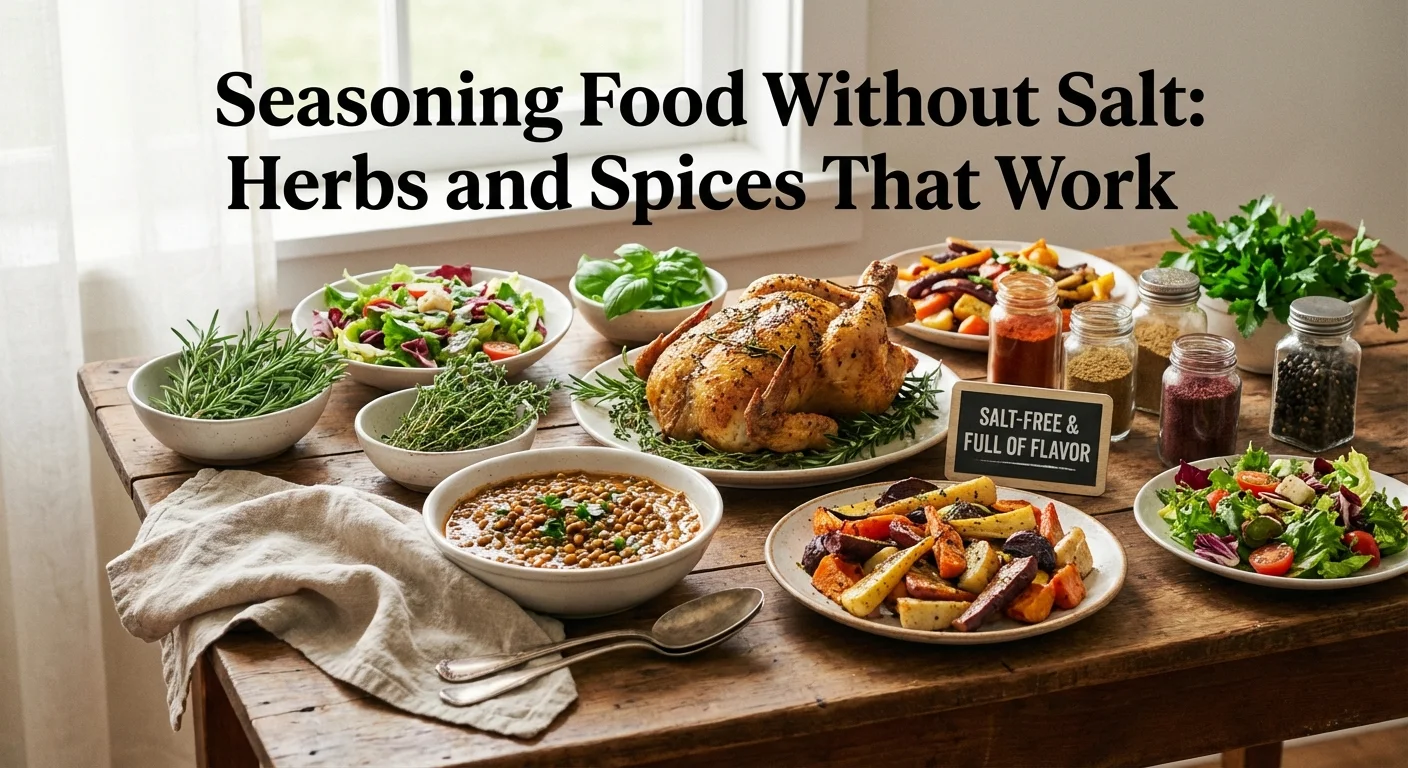
Seasoning Food Without Salt: Herbs and Spices That Work
Learn how to use herbs and spices to build deep flavor without salt. Discover the best seasoning combinations, timing techniques, and common mistakes to avoid.
Loading...
Learn how to use herbs and spices to build deep flavor without salt. Discover the best seasoning combinations, timing techniques, and common mistakes to avoid.
This article is for home cooks who want food that tastes seasoned and complete—without relying on salt. One of the biggest challenges people face when cooking low-sodium is knowing what to use instead. Many people try removing salt, sprinkle in a few random spices, and end up with meals that taste flat, confusing, or unbalanced. When that happens, salt feels unavoidable.
Seasoning without salt isn’t about finding a single replacement—it’s about understanding how herbs and spices actually work. Used with intention, they add aroma, warmth, freshness, and depth that make meals feel satisfying and familiar. This guide focuses on herbs and spices that genuinely improve flavor, not just add noise. You’ll learn which ones work best, when to use them, and how to avoid common mistakes that lead to bland food.
Salt often gets credit for flavor when it’s really covering up what’s missing. When dishes lack browning, aromatics, acidity, or contrast, salt becomes the default fix. Many packaged seasoning blends depend heavily on salt to deliver impact. While convenient, they limit flexibility and make it harder to adjust flavor naturally. When salt is removed from the equation, those blends often fall flat.
Seasoning works best when it’s layered. Some herbs and spices build a base early in cooking, while others shine at the end. Understanding this timing gives you control. Instead of reacting at the last minute, you can build flavor intentionally from the start—and meals begin to taste finished, not 'missing something.'

Add fresh herbs just before serving to keep their flavors vibrant and aromatic.

Dried herbs need heat and moisture to wake up. Crushing them helps release their essential oils.
Start with onions, garlic, and whole seeds (like cumin or mustard). Bloom them in oil until fragrant.
Add your dried herbs and ground spices once the liquids are added to allow them to infuse the entire dish.
Just before serving, stir in fresh herbs, citrus zest, or a crack of black pepper to brighten the flavor profile.
When moving away from salt, watch out for these common pitfalls that can ruin a dish's potential:
Seasoning without salt works best when flavors are layered intentionally. By using dried herbs for structure, warm spices for depth, and fresh herbs for brightness, you create a profile that feels complete rather than restricted. The goal is practical seasoning you can repeat confidently, moving away from salt as a crutch and toward a more vibrant, aromatic kitchen.
Built using verified nutrition databases, culinary research, and traditional cooking knowledge — every claim is cross-referenced against the sources listed in the article. Last reviewed May 2026.
Articles are curated using trusted food databases (USDA FoodData Central, IFCT), culinary literature, and dietary guidelines, then structured by our editorial team for clarity, accuracy, and usefulness.