Swiss chard is the vegetable drawer's quiet achiever. People either walk right past it or mistake it for a strange kind of spinach. But those vibrant stems and deep green leaves are one of the most nutrient-dense things you can put on a plate. It's incredibly low in calories and carbs, but loaded with vitamins. Forget seeing it as a boring side dish; it's a genuine workhorse.
↑ Rainbow chard has the same nutritional profile as its white-stemmed cousin.
The quiet green
Let's be honest, chard doesn't have the celebrity status of kale or the everyday ease of spinach. It's that slightly mysterious green with the colorful, celery-like stalks. But treating it as an afterthought is a mistake. It has a lovely, mild, earthy flavor — less bitter than kale, more substantial than spinach — and those stems add a fantastic crunch. A single 100-gram serving, which is only 19 calories, delivers a serious dose of real nutrition.
At just 19 calories, with almost no carbs and a third of your daily vitamin C, Swiss chard is one of the most nutrient-dense foods you can find.
Swiss chard nutrition facts
Here's the nutritional breakdown for a 100-gram serving of raw swiss chard, which is about one very large leaf with its stem, or a few smaller ones.
The numbers that jump out are the vitamins. While the 33% of daily vitamin C is great, chard is an absolute powerhouse of Vitamin K, essential for blood clotting and bone health. It's also packed with Vitamin A. All this for just 19 calories is what we mean by 'nutrient-dense'.
Swiss chard's glycemic index
The glycemic index (GI) of Swiss chard is so low that it's not officially measured or listed in most databases. Why? Because it barely contains any digestible carbohydrate to raise blood sugar in the first place. Non-starchy, leafy green vegetables like chard, spinach, and lettuce have a negligible effect on blood glucose, making them ideal foods for blood sugar management.
GLYCEMIC INDEX · SWISS CHARD vs COMMON FOODS
Chard sits at the very bottom of the GI scale
Swiss Chard
non-starchy veg
LOW
Cherries
whole fruit
LOW
Apple
whole fruit
LOW
Pineapple
whole fruit
MEDIUM
White bread
refined
HIGH
SCALE 0–90
04590
How to eat it (all of it)
The biggest mistake people make with chard is either overcooking the leaves or throwing away the stems. Here's how to get it right.
01
Eat the stems.
Seriously. Separate them from the leaves, chop them like celery, and sauté them for a few minutes before you add the leaves. They have a great, crunchy texture.
02
Go raw in salads.
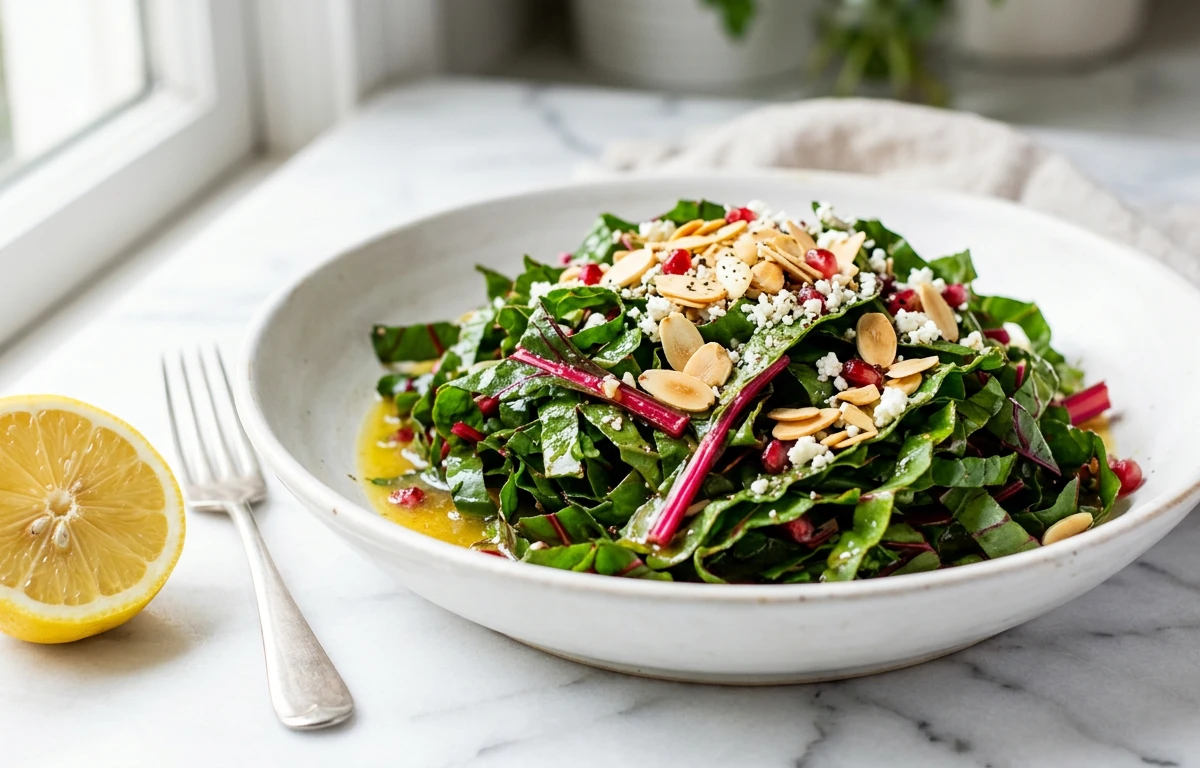
For raw salads, slice the leaves into very thin ribbons (a 'chiffonade'). This tames their texture. Massage with a dressing containing oil and acid to soften them further.
03
Just wilt it.
When cooking, the leaves only need a minute or two in a hot pan with a little olive oil or water. They shrink dramatically. Cook until just wilted to preserve nutrients and texture.
04
Balance its flavor.
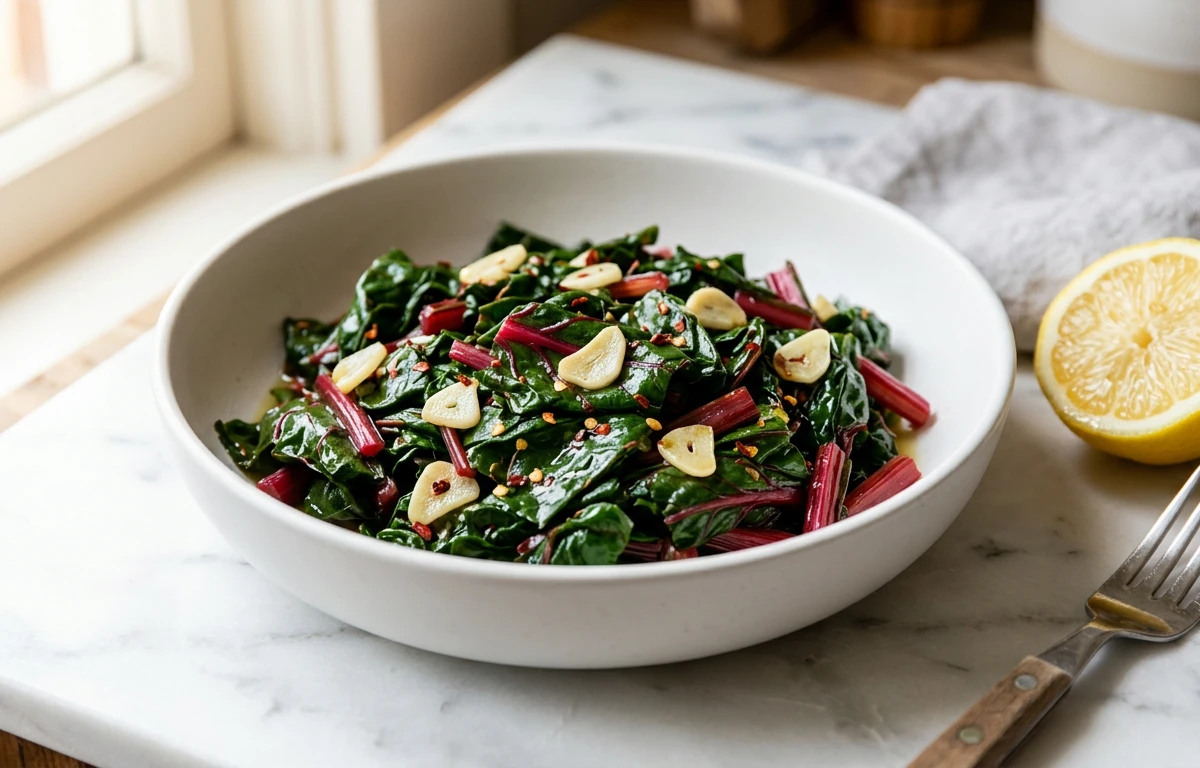
Chard has a slightly earthy, salty flavor. It loves acid (a squeeze of lemon juice), fat (olive oil, butter), and pungent partners (garlic, chili flakes).
What swiss chard is good for
01
Exceptional for bone health
One serving contains nearly 700% of your daily Vitamin K, which is vital for directing calcium to your bones and keeping them strong.
692%
vit K DV
02
Supports stable blood sugar
With almost no digestible carbs and a good dose of fiber, chard has a negligible effect on blood sugar, making it a first-class food for diabetics.
GI
very low
03
Weight management
It's hard to beat chard for volume and nutrients per calorie. It helps fill you up without adding significant energy, perfect for a calorie-controlled diet.
19
cals/100g
04
A solid vitamin C source
A 100g serving provides a third of your daily vitamin C, which is crucial for your immune system and skin health.
33%
vit C DV
What to pair chard with
Chard's earthy flavor gets along with many others. The key is often to balance it with fat, acid, or salt.
Eat freely — or be mindful?
Three ways to eat it
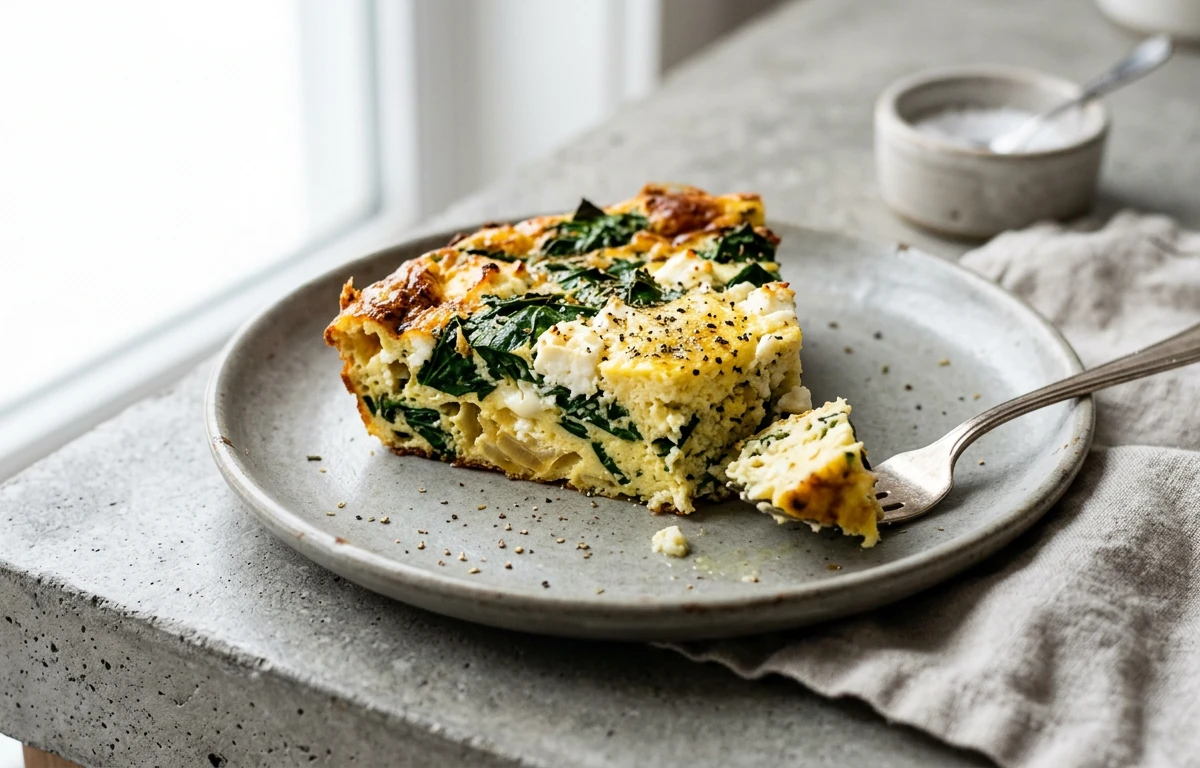
Beyond a simple sauté, chard is incredibly versatile. Here are three easy ideas to get you started.
Want more nutrient-dense foods in your week, without the guesswork?
Our meal planner can build you a balanced week of eating, incorporating greens like Swiss chard alongside the right proteins and fats for steady energy. All with calculated macros and a single grocery list.
Build my weekly plan →SOURCES & REFERENCES · 3
One more thing
Eating well is rarely about willpower. It’s about having a short list of dinners you actually want to eat. Pick two from this list. Make them next week. The rest will follow.
If you want these on autopilot, our weekly meal planner can drop the picks above into your calendar with one click and build a single grocery list from the merged ingredients.
FREQUENTLY ASKED QUESTIONS
Frequently asked questions
Is Swiss chard good for people with diabetes?
Yes, it's an excellent choice. It is extremely low in carbohydrates and calories, and high in fiber, so it has a minimal effect on blood sugar levels.
Can you eat the stems of Swiss chard?
Absolutely! The stems are edible and delicious. They have a crunchy texture similar to celery. It's best to chop them and cook them for a few minutes before adding the leaves, as they take longer to soften.
What's the difference between Swiss chard and spinach?
They can be used similarly, but chard has a more robust, earthier flavor and a sturdier texture. Its stems are also thicker and meant to be eaten. Spinach is more delicate and has a milder flavor.
Why do I need to be careful with Swiss chard if I'm on blood thinners?
Swiss chard is exceptionally high in Vitamin K, a nutrient that plays a key role in blood clotting. Medications like Warfarin work by affecting Vitamin K's action. A sudden large intake of chard could interfere with the medication's effectiveness. If you're on these medications, it's crucial to maintain a consistent intake of Vitamin K and discuss any major dietary changes with your doctor.
METHODOLOGY
How this article was created
Built using verified nutrition databases, culinary research, and traditional cooking knowledge — every claim is cross-referenced against the sources listed in the article.
· USDA data· Culinary research· Quality reviewed
Read our methodology →TRANSPARENCY
About this content
Articles are curated using trusted food databases (USDA FoodData Central, IFCT), culinary literature, and dietary guidelines, then structured by our editorial team for clarity, accuracy, and usefulness.
· Verified data sources· Culinary research· Quality reviewed
Read our editorial policy →RELATED RECIPES
Cook from this article
EXPLORE OUR MEALS
Meals that fit this article

AMERICAN · 1677 CAL
Almonds with Sliced Apple + supplement + iron

MEDITERRANEAN · 809 CAL
Greek Yogurt with Berries Almonds and Granola + supplement + iron

GENERAL_HEALTHY · 705 CAL
Banana with Peanut Butter Pregnancy + supplement + iron

MODERN · 982 CAL
Hummus with Crudits and Pita with Fresh Orange Snack + supplement + iron
TAGGED
KEEP READING