Nothing says summer like a cold, crisp wedge of watermelon. It feels like the most innocent treat imaginable—it's mostly water, after all. And while it is incredibly hydrating and refreshingly low in calories, there's a catch people don't expect: a surprisingly high glycemic index. This isn't a reason to skip it. But it does mean that how you eat it, and how much, really matters.
↑ Watermelon feels like pure hydration, but its sugar profile has a twist.
The high-GI hydrator
Watermelon is about 92% water, which is why it's so incredibly refreshing. The rest is mostly carbohydrate, with a little fiber and a surprising amount of nutrients like vitamin C and the antioxidant lycopene. The most important thing to understand about watermelon, though, is the difference between its glycemic index (GI) and its glycemic load (GL).
The GI is high, meaning its sugars enter the bloodstream quickly. But because watermelon is mostly water, the amount of sugar in a normal serving is low. That's the glycemic load, and it's what really matters for most people. The trick is keeping the serving normal.
IN ONE LINE
Watermelon is a low-calorie, hydrating fruit with a high GI but a low glycemic load, making portion size the most important factor for blood sugar management.
Watermelon nutrition facts
Here's the nutritional breakdown for a standard 100-gram serving of raw watermelon—that's about two-thirds of a cup of diced fruit.
The numbers are tiny, which is the whole point. It's a very low-energy-density food. You get a lot of volume and hydration for very few calories. The fiber is quite low, but it does provide a useful top-up of Vitamin C and, unlisted on most labels, the powerful antioxidant lycopene (responsible for its red color) and the amino acid citrulline.
Watermelon's surprising glycemic index
Glycemic index (GI) tells you how fast a food's carbs raise your blood sugar. Anything over 70 is considered high. Watermelon clocks in around 72, which puts it in the same league as some breakfast cereals and white bread. This sounds alarming, but it's only half the story. Because watermelon has so few carbs per serving, the overall impact on blood sugar—its glycemic load (GL)—is very low, around 4 for a 100g serving. As the chart shows, its GI is high, but its real-world effect is small if you stick to a reasonable portion.
GLYCEMIC INDEX · WATERMELON vs COMMON FOODS
Watermelon is a high-GI fruit
Cherries
whole fruit
LOW
Apple
whole fruit
LOW
Pineapple
whole fruit
MEDIUM
Watermelon
whole fruit
HIGH
Cornflakes
refined
HIGH
SCALE 0–90
04590
The smart way to eat it
To get all the hydrating joy of watermelon without the blood sugar drama, a few simple rules make all the difference.
01
Stick to a single serving.
A one-cup portion (about 150g) is the sweet spot. It keeps the glycemic load low and the calories minimal.
02
Pair it with protein or fat.
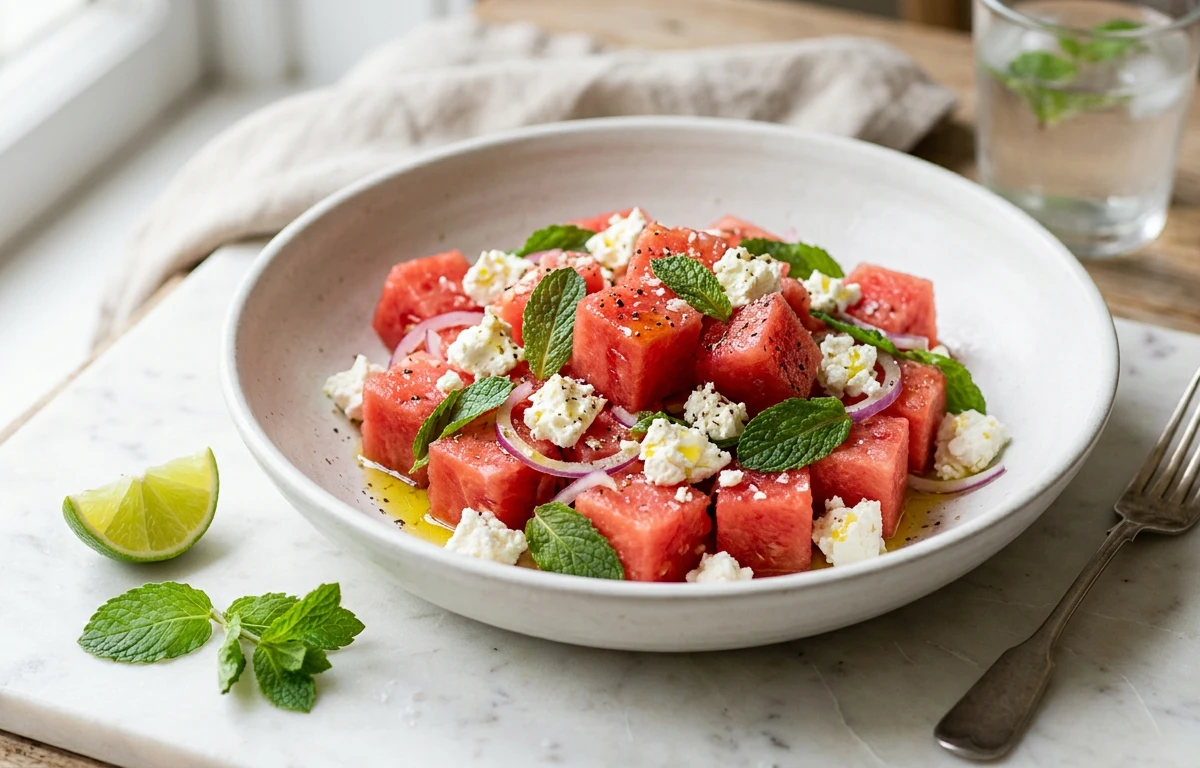
Eating watermelon alongside feta cheese, a handful of nuts, or some seeds slows down sugar absorption.
03
Eat it whole, not juiced.
Juicing removes what little fiber there is and makes it incredibly easy to consume a huge amount of sugar in seconds.
04
Don't eat the whole melon.
It sounds obvious, but it's easy to keep slicing away on a hot day. Be mindful that portions add up, and so does the sugar.
What watermelon is good for
01
Serious hydration
At 92% water, eating watermelon is a delicious way to contribute to your daily fluid needs, especially in hot weather or after exercise.
92%
water
02
Heart & skin health (Lycopene)
It's one of the best food sources of lycopene, an antioxidant linked to lower risk of certain cancers and improved heart health.
Red
Lycopene
03
Blood flow & exercise (Citrulline)
Watermelon is rich in citrulline, an amino acid the body converts to arginine, which helps relax blood vessels and improve circulation.
Rich
Citrulline
04
Low-calorie volume
With only 30 calories per 100g, watermelon provides a lot of satisfying volume, which can help with weight management.
30
calories
What to pair watermelon with
Pairing watermelon is key to blunting its glycemic impact and turning it into a more balanced snack or dish. The classic combinations are classics for a reason.
Eat freely — or be mindful?
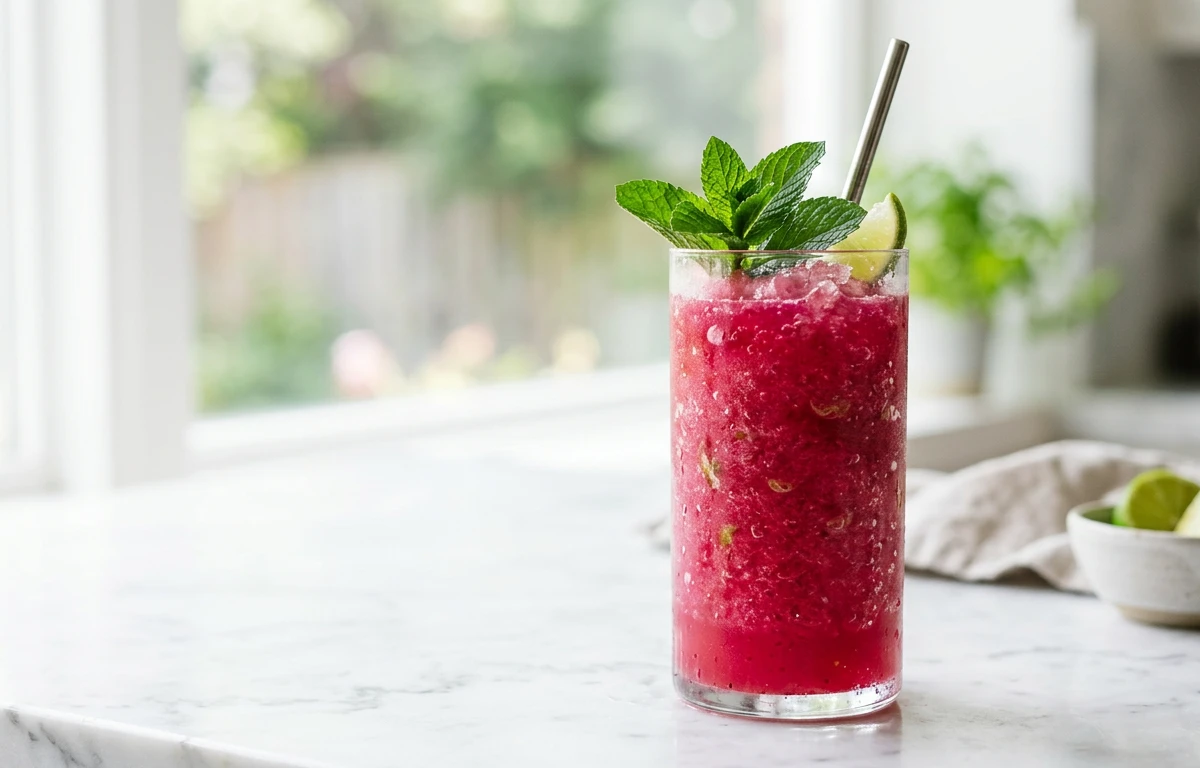
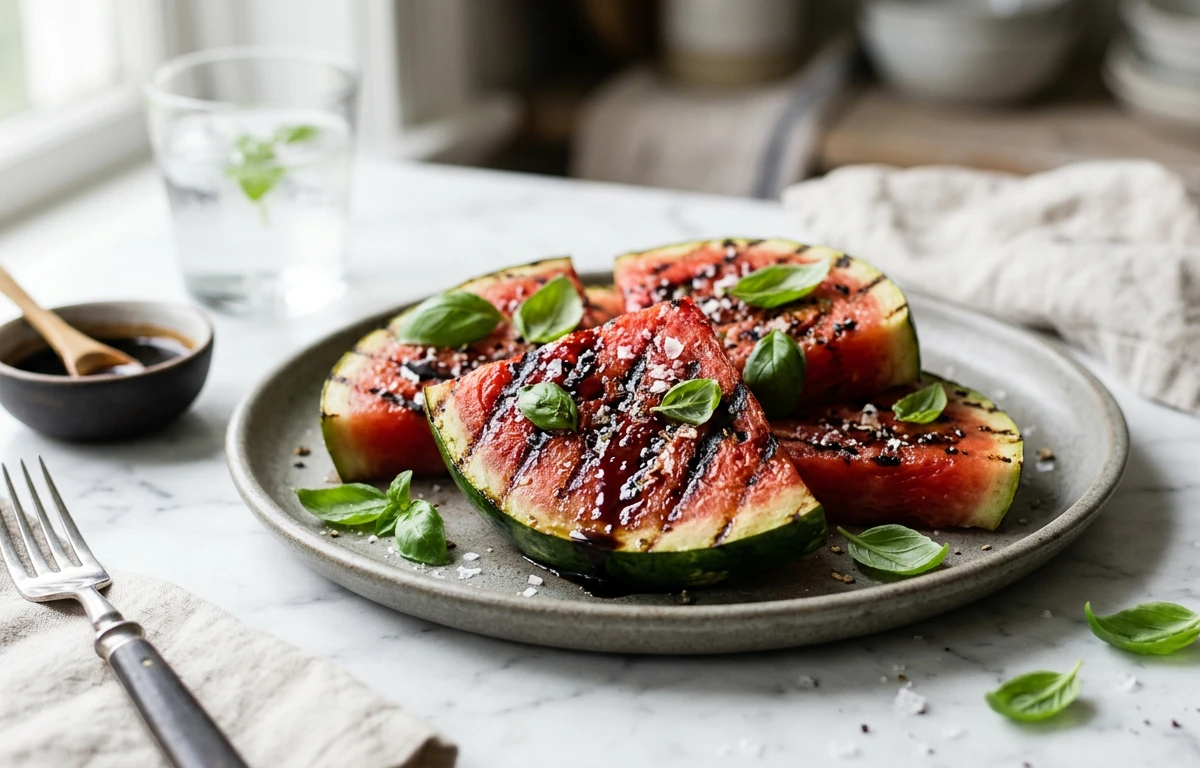
Three ways with watermelon
Go beyond the wedge with these simple recipes that use watermelon's refreshing character in new ways.
Take the guesswork out of healthy eating.
Our meal planner builds balanced weeks of food you'll actually love to eat, factoring in things like glycemic load and smart pairings so you don't have to.
Create my plan →SOURCES & REFERENCES · 3
One more thing
Eating well is rarely about willpower. It’s about having a short list of dinners you actually want to eat. Pick two from this list. Make them next week. The rest will follow.
If you want these on autopilot, our weekly meal planner can drop the picks above into your calendar with one click and build a single grocery list from the merged ingredients.
FREQUENTLY ASKED QUESTIONS
Frequently asked questions
Can people with diabetes eat watermelon?
Yes, but with caution and strict portion control. While the glycemic index is high (72), the glycemic load of a one-cup serving is low. It's best paired with a source of protein or fat, and consumption should be discussed with a doctor or dietitian as part of a personalized meal plan.
Is watermelon just sugar and water?
While it's mostly water and contains natural sugar, it's also a significant source of the antioxidant lycopene and the amino acid citrulline, both of which have health benefits. It's more than just empty calories.
Does watermelon make you gain weight?
It's highly unlikely. Watermelon is very low in calories (about 30 per 100g). You would have to eat an enormous quantity to gain weight from it. Its high water content actually promotes a feeling of fullness, which can help with weight management.
Is it bad that watermelon has so little fiber?
It's not 'bad', it's just a characteristic of the fruit. It means watermelon isn't the best choice if your primary goal is to increase fiber intake, but it excels in other areas, like hydration. A balanced diet includes a variety of fruits and vegetables for this reason.
METHODOLOGY
How this article was created
Built using verified nutrition databases, culinary research, and traditional cooking knowledge — every claim is cross-referenced against the sources listed in the article.
· USDA data· Culinary research· Quality reviewed
Read our methodology →TRANSPARENCY
About this content
Articles are curated using trusted food databases (USDA FoodData Central, IFCT), culinary literature, and dietary guidelines, then structured by our editorial team for clarity, accuracy, and usefulness.
· Verified data sources· Culinary research· Quality reviewed
Read our editorial policy →EXPLORE OUR MEALS
Meals that fit this article

AMERICAN · 1677 CAL
Almonds with Sliced Apple + supplement + iron

MEDITERRANEAN · 809 CAL
Greek Yogurt with Berries Almonds and Granola + supplement + iron

GENERAL_HEALTHY · 705 CAL
Banana with Peanut Butter Pregnancy + supplement + iron

MODERN · 982 CAL
Hummus with Crudits and Pita with Fresh Orange Snack + supplement + iron
TAGGED
KEEP READING