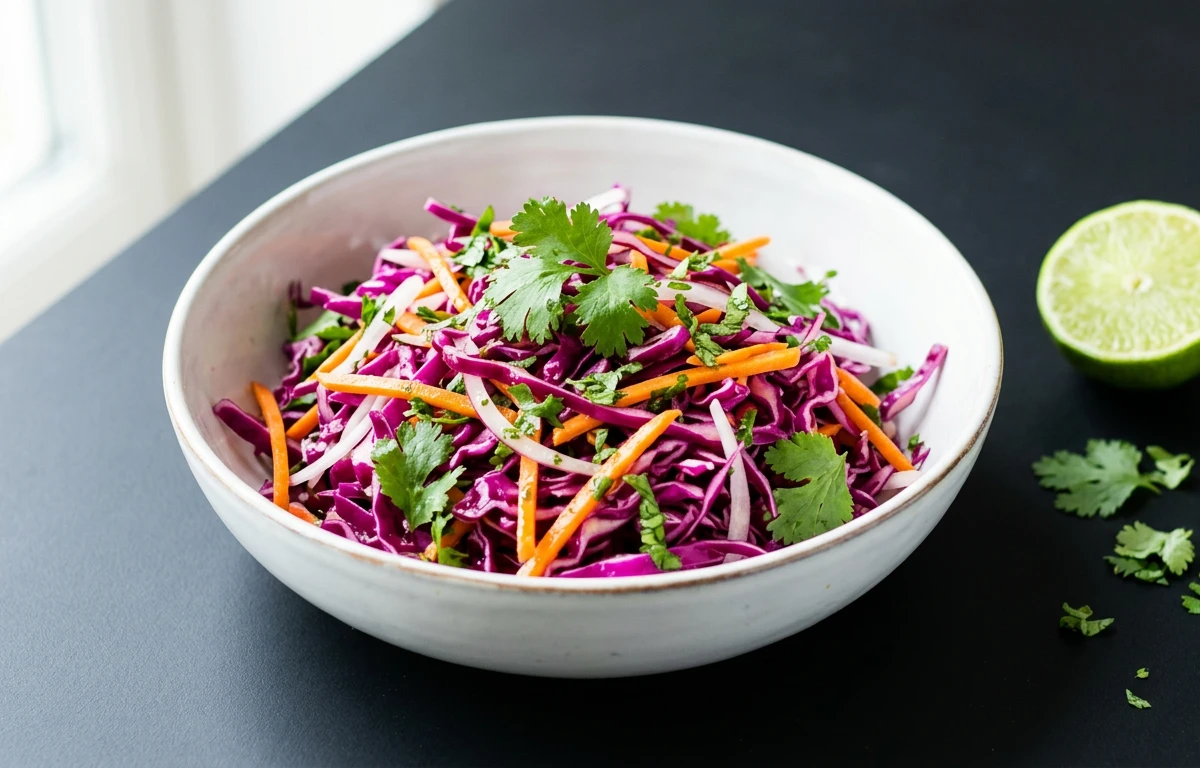
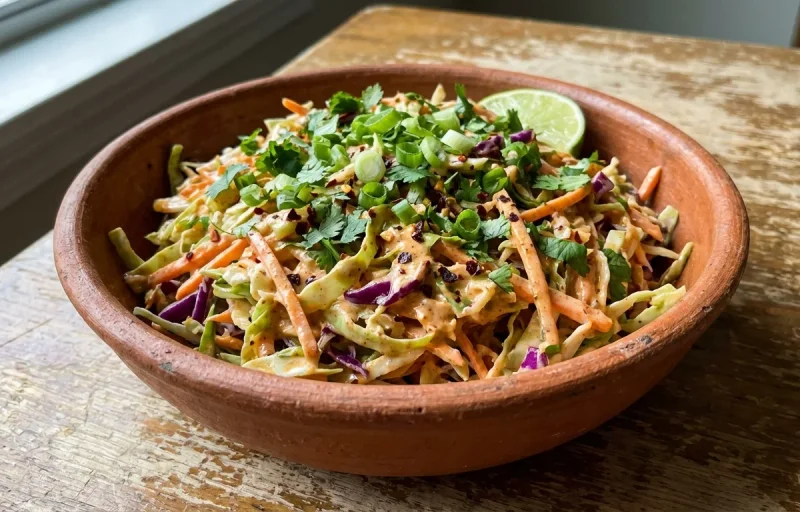
Other
coleslaw.
VegetarianVeganGluten-freeDairy-freeNut-freePeanut-freeSoy-freeEgg-freeShellfish-freeHoney-freeAlcohol-freeHalalKosher
ALSO KNOWN AS
slawcabbage salad
SERVING
CALORIES
130
PROTEIN
1.0g
CARBS
13g
FAT
9.0g
FIBER
2.0g
This ingredient is flagged as naturally gluten-free. Per 100 g, it provides 38.2 µg of vitamin K.
NUTRITION PROFILE · per 100 g
Everything in this ingredient.
MACRONUTRIENTS
Calories130kcal—
Protein1.0g2%
Carbohydrates13g5%
Fiber2.0g7%
Sugar9.0g18%
Total fat9.0g12%
Saturated fat2.0g10%
Trans fat0g—
Cholesterol15mg5%
Water75g—
MINERALS
Sodium170mg7%
Potassium120mg3%
Calcium40mg3%
Iron0.40mg2%
Magnesium10mg2%
Phosphorus28mg2%
Zinc0.11mg1%
Copper0.03mg3%
Manganese0.09mg4%
Selenium0.40µg1%
VITAMINS
Vitamin A150µg17%
Vitamin C17.5mg19%
Vitamin D0µg0%
Vitamin E0.10mg1%
Vitamin K38.2µg32%
Thiamin (B1)0.03mg3%
Riboflavin (B2)0.03mg2%
Niacin (B3)0.17mg1%
Pantothenic acid (B5)0.11mg2%
Vitamin B60.08mg5%
Folate (B9)20µg5%
Vitamin B120µg0%
%DV based on a 2,000 cal diet. Source: USDA FoodData Central. A dash in the %DV column means there’s no established Daily Value for that nutrient.
MEASUREMENT CONVERSIONS
How much is what.
1 cup150g
1 tablespoon9.4g
1 teaspoon3.1g
1 ml0.6g
1 liter625g
COOKING TIPS
In the kitchen.
- 1To prevent a watery slaw, salt the shredded cabbage and let it sit in a colander for 1-2 hours to draw out excess moisture, then rinse and pat dry before adding dressing.
- 2For a healthier alternative, substitute mayonnaise with Greek yogurt or use a light vinaigrette made with olive oil and apple cider vinegar.
- 3Allow the finished coleslaw to chill in the refrigerator for at least 30 minutes before serving to let the flavors meld together.
- 4Incorporate other shredded vegetables like broccoli stems, bell peppers, or jicama for added flavor, color, and nutrients.
STORAGE
Keep it fresh.
- Store prepared coleslaw in an airtight container in the refrigerator at or below 40°F (4°C) and consume within 3-5 days.
- For maximum crunchiness, store the shredded vegetable mix and the dressing separately, combining them just before serving.
FAQ
Frequently asked questions.
Is coleslaw healthy?
Coleslaw is highly nutritious due to its base of cabbage and carrots, providing fiber, Vitamin K, and Vitamin C. However, its health profile depends on the dressing; traditional mayonnaise-based versions are high in fat and calories, while vinegar-based versions are generally lighter.
How many calories and carbs are in coleslaw?
A 100g serving of prepared coleslaw typically contains approximately 130 calories, 13g of carbohydrates, 9g of fat, and 1g of protein. The carb count can vary depending on the amount of sugar added to the dressing.
Is coleslaw vegan?
Standard prepared coleslaw is usually not vegan because the dressing contains mayonnaise, which is made with eggs. To make it vegan, you must use a plant-based mayonnaise or a simple oil-and-vinegar dressing.
Is coleslaw keto-friendly?
Traditional store-bought coleslaw is often high in sugar, making it difficult to fit into a strict keto diet. However, you can make a keto-friendly version at home by using a sugar-free sweetener and full-fat mayonnaise.
How long does coleslaw last in the fridge?
Prepared coleslaw generally stays fresh for 3 to 5 days when stored in an airtight container in the refrigerator. For the best texture, it is recommended to consume it within 1-2 days before the cabbage becomes too watery.
Can I freeze coleslaw?
Freezing is not recommended for mayonnaise-based coleslaw as the dressing will break and separate upon thawing, resulting in a soggy texture. Vinegar-based slaws freeze slightly better, but the vegetables will still lose their characteristic crunch.
Is coleslaw gluten-free?
In most cases, coleslaw is naturally gluten-free as it consists of shredded vegetables and a dressing made of mayo, vinegar, and spices. However, always check the labels of store-bought brands for potential gluten-containing thickeners or cross-contamination.
What does coleslaw taste like?
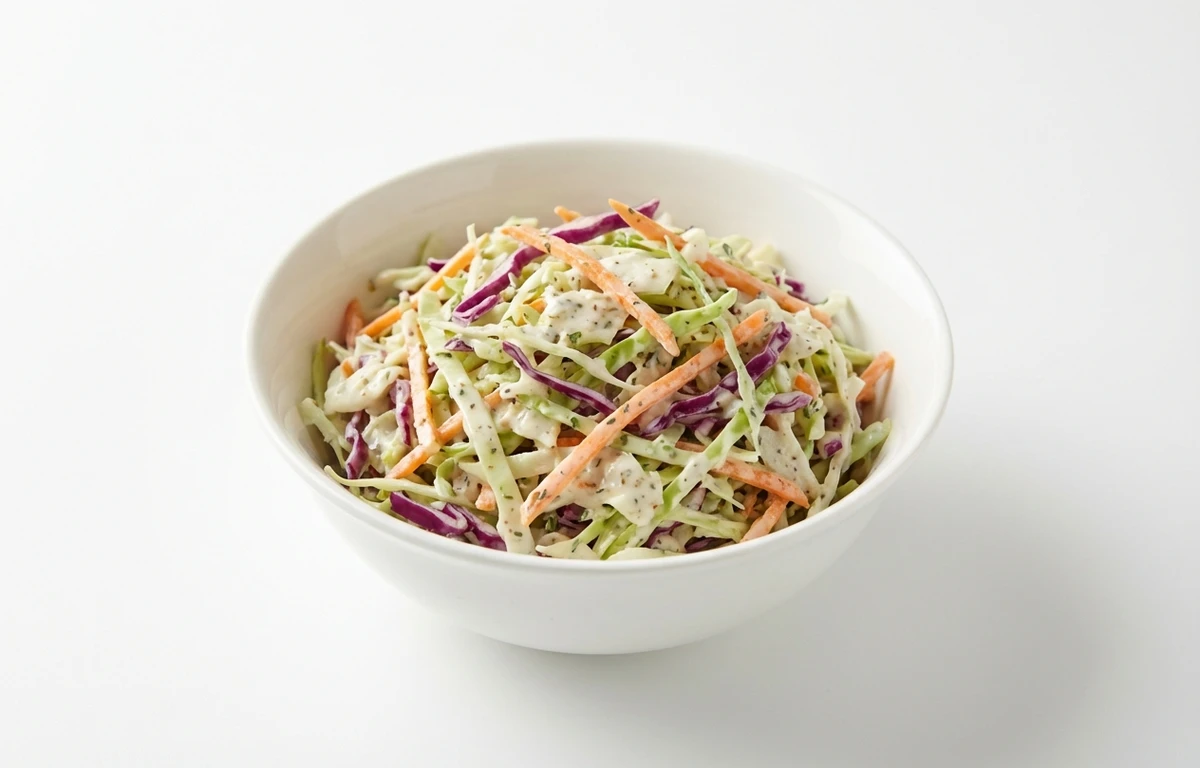
Coleslaw has a refreshing, tangy, and slightly sweet flavor profile with a prominent crunch. The creaminess of the dressing balances the sharp, peppery notes of the raw cabbage and the sweetness of the carrots.
How can I make coleslaw healthier?
To reduce calories and fat, you can substitute half of the mayonnaise with Greek yogurt or use a vinaigrette dressing. Adding more colorful vegetables like bell peppers or radishes can also increase the micronutrient density of the dish.
RECIPES
Cook with coleslaw.
0 recipes · sorted by what’s quick