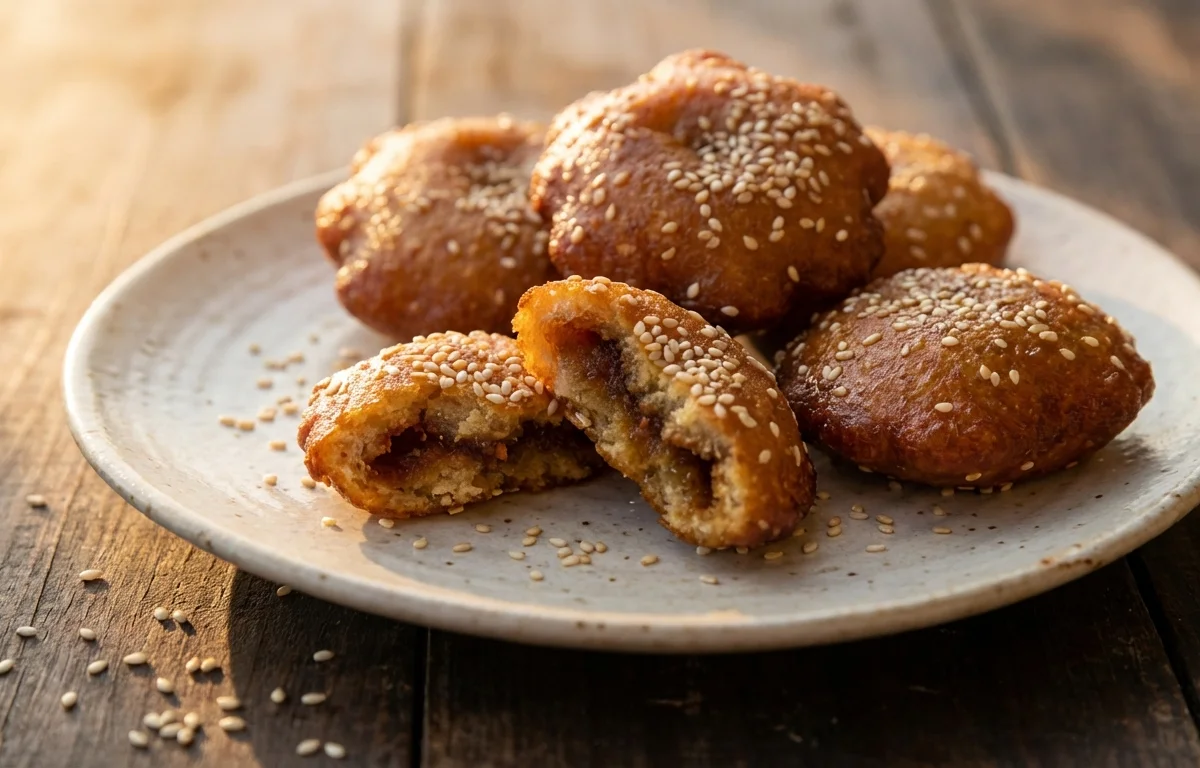
Arisa Pitha
A festive Odia rice cake with a chewy middle and gently crisp edges, made from soaked rice flour and jaggery. These rustic pithas are shaped by hand and fried slowly until deep golden and fragrant.
For 8 servings
- prep · ~30 min
Prepare the rice flour.
1.Wash the rice well until the water runs mostly clear.2.Soak the rice in fresh water for 6 hours.3.Drain the rice completely and spread it on a cloth for 20-30 minutes so it stays damp but not wet.4.Grind the rice to a slightly fine flour and sieve it once.TIPThe rice should be damp while grinding. If it dries out fully, the dough will not bind as well. - boil · ~6 min
Make the jaggery syrup.
Heat jaggery and water in a pan over low heat until the jaggery melts fully. Strain if needed, then return it to the pan and cook briefly until slightly sticky, not thick like candy.
- mix · ~8 min
Mix the dough.
1.Add fennel seeds to the warm jaggery syrup.2.Sprinkle in the rice flour gradually, mixing continuously.3.Keep mixing until a soft, thick dough forms and leaves the sides of the pan.4.Take the pan off the heat and cool until warm enough to handle.TIPDo not pour all the rice flour at once. Add just enough to make a soft dough that can be shaped without cracking. - rest · ~60 min
Rest the dough.
Cover the dough and let it rest for 1 hour so the rice flour absorbs the syrup evenly and the pithas hold their shape better while frying.
- assemble · ~7 min
Shape the pithas.
1.Grease your palms lightly with ghee.2.Divide the dough into 8 equal portions.3.Roll each portion into a ball and flatten gently into a small thick disc.4.Smooth any cracks around the edges with your fingers. - fry · ~15 min
Fry the arisa pitha.
1.Heat oil in a wide pan over low to medium-low heat.2.Slide in 2 or 3 shaped discs at a time without crowding the pan.3.Fry slowly until the bottom turns deep golden, then flip and cook the other side.4.Press very lightly with a spatula as they fry so they puff a little and cook through evenly.5.Lift out and drain well before frying the remaining pithas.TIPKeep the heat low. If the oil is too hot, the outside browns too fast while the center stays dense. - serve
Cool slightly and serve.
What to keep in mind.
7 tips from the recipe — small details that make a real difference to the final dish.
- 1Keep the ground rice slightly damp, not powder-dry, so the dough binds without extra water.
- 2Cook the jaggery only until sticky; a thick syrup makes the dough hard and the pitha dense.
- 3If the dough feels too loose after resting, mix in a spoonful of rice flour before shaping.
- 4Smooth edge cracks well before frying, or the discs may split in the oil.
- 5Fry on low to medium-low heat so the center cooks chewy while the outside turns evenly golden.
- 6Lightly pressing with the spatula helps the pithas puff a bit and prevents a raw middle.
- 7Cool completely before storing; trapped steam softens the crisp edges.
Adapt it for your goals.
Sesame
Add a little toasted sesame to the dough or press some on the surface for a nuttier festive flavor and extra texture.
miniMini
Shape smaller discs for easier frying and serving; they cook more evenly and are ideal for prasad-style portions.
ghee friedGhee-fried
Shallow-fry in a mix of oil and ghee for a richer aroma and more traditional festive taste.
cardamomCardamom
Add a pinch of cardamom with the fennel for a warmer, sweeter fragrance without changing the texture.
Why this is on our healthy list.
Rice-Based Energy
Rice provides easy-to-digest carbohydrates that make this pitha a sustaining festive snack.
Less Refined Sweetener
Jaggery brings sweetness with a deeper flavor than white sugar and is traditionally valued in homemade sweets.
Digestive Fennel Aroma
Fennel seeds add fragrance and are commonly used in Indian sweets for their soothing digestive qualities.
Frequently asked questions
The dough was likely too dry or the edges were not smoothed well. Add a little warm syrup or a few drops of water to soften, then reshape.