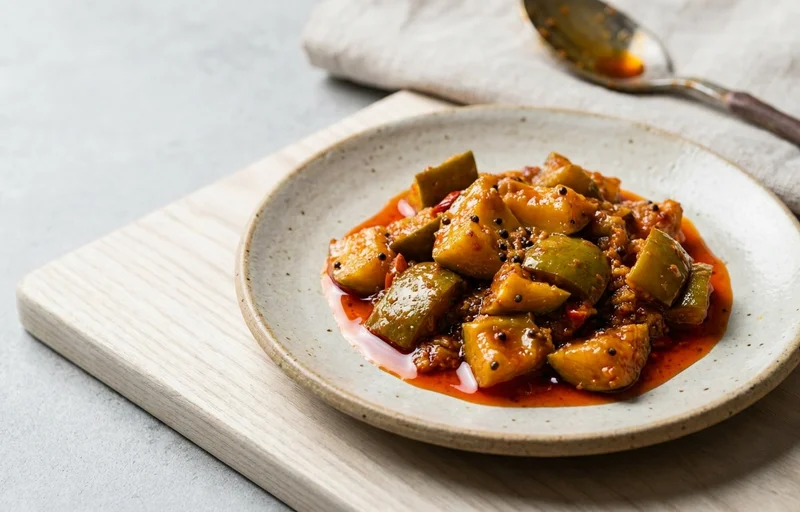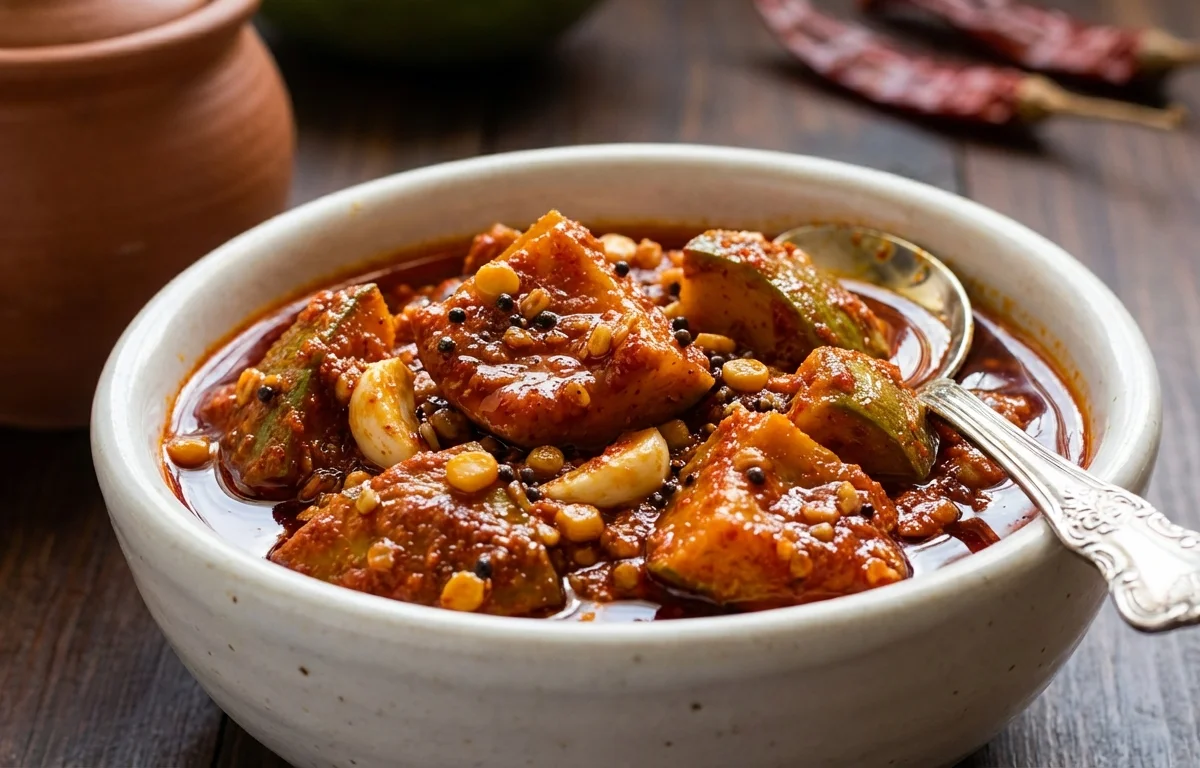
Avakai Pickle
Chunks of raw green mango coated with mustard powder, red chili powder, salt, and sesame oil, then left to mature into a bold Andhra-style pickle with deep heat, tang, and a rich, spicy aroma.
For 8 servings
- prep · ~5 min
Dry the mango and jars completely.
Wipe the raw mango pieces with a clean dry cloth and make sure there is no moisture left. Keep a clean, completely dry glass jar ready for the pickle.
TIPAny moisture can spoil the pickle, so keep the mango, bowl, spoon, and jar fully dry. - roast · ~3 min
Roast the fenugreek seeds lightly.
Heat a small pan on low heat and roast the fenugreek seeds just until aromatic. Cool them fully, then crush them coarsely.
- mix · ~3 min
Mix the spice base.
1.Add mustard powder, red chili powder, salt, and crushed fenugreek seeds to a large dry bowl.2.Pour in the sesame oil.3.Mix well into a thick, loose spice paste. - mix · ~4 min
Coat the mango pieces.
1.Add the raw mango pieces and garlic cloves to the spice paste.2.Toss and mix until every piece is evenly coated.3.Check that the spices and oil cover the mango well.TIPUse clean dry hands or a dry spoon so the spice mix sticks evenly without adding moisture. - assemble · ~3 min
Pack the pickle into the jar.
Transfer the coated mango mixture into the dry glass jar. Pour any remaining spice oil from the bowl over the top and press down gently so the mango stays covered.
- rest · ~10080 min
Let the pickle mature.
Seal the jar and keep it in a cool spot for 7 days. Stir once daily with a clean dry spoon so the oil and spices redistribute evenly as the mango softens.
TIPThe pickle tastes sharper in the first few days and becomes rounder and deeper after a week. - serve
Serve the avakai pickle.
What to keep in mind.
7 tips from the recipe — small details that make a real difference to the final dish.
- 1Choose very sour, firm raw mangoes; softer or less sour fruit turns mushy and gives a flatter avakai.
- 2Let the washed mango pieces air-dry fully before mixing; even tiny droplets can shorten the pickle's shelf life.
- 3Roast fenugreek only until fragrant on low heat; over-roasting makes the pickle noticeably bitter.
- 4Freshly ground mustard powder gives the sharp, nose-tingling bite that defines authentic avakai.
- 5After packing, make sure a thin layer of sesame oil sits on top; exposed mango pieces can spoil faster.
- 6Stir once a day with a completely dry spoon during the first week so the masala coats all the mango evenly.
- 7Wait at least 5 to 7 days before serving if possible; the mango absorbs the spice and the harsh edges mellow.
Adapt it for your goals.
Garlic-free
Skip the garlic for a more traditional spice-forward avakai profile and a cleaner mustard-mango finish.
extra hotExtra-hot
Use a hotter Andhra-style chili powder for a fierier pickle with deeper red color and more punch with curd rice.
chunky avakaiChunky-avakai
Cut the mango slightly larger so the pieces stay firmer after maturing and give a meatier bite.
milderMilder
Reduce the chili powder slightly to make the pickle more approachable while keeping the mustard and sesame oil character.
Why this is on our healthy list.
Raw Mango Antioxidants
Raw green mango brings tart fruit compounds and antioxidants, adding brightness along with some protective plant nutrients.
Digestive Spice Support
Mustard, fenugreek, garlic, and chili contribute pungent compounds traditionally valued for stimulating appetite and digestion.
Healthy Fat Base
Sesame oil provides the rich coating that carries fat-soluble flavors and adds beneficial unsaturated fats from the oil.
Frequently asked questions
Moisture can encourage spoilage and mold. Dry mango, bowls, jars, and spoons help the pickle mature safely and keep longer.



.webp)