
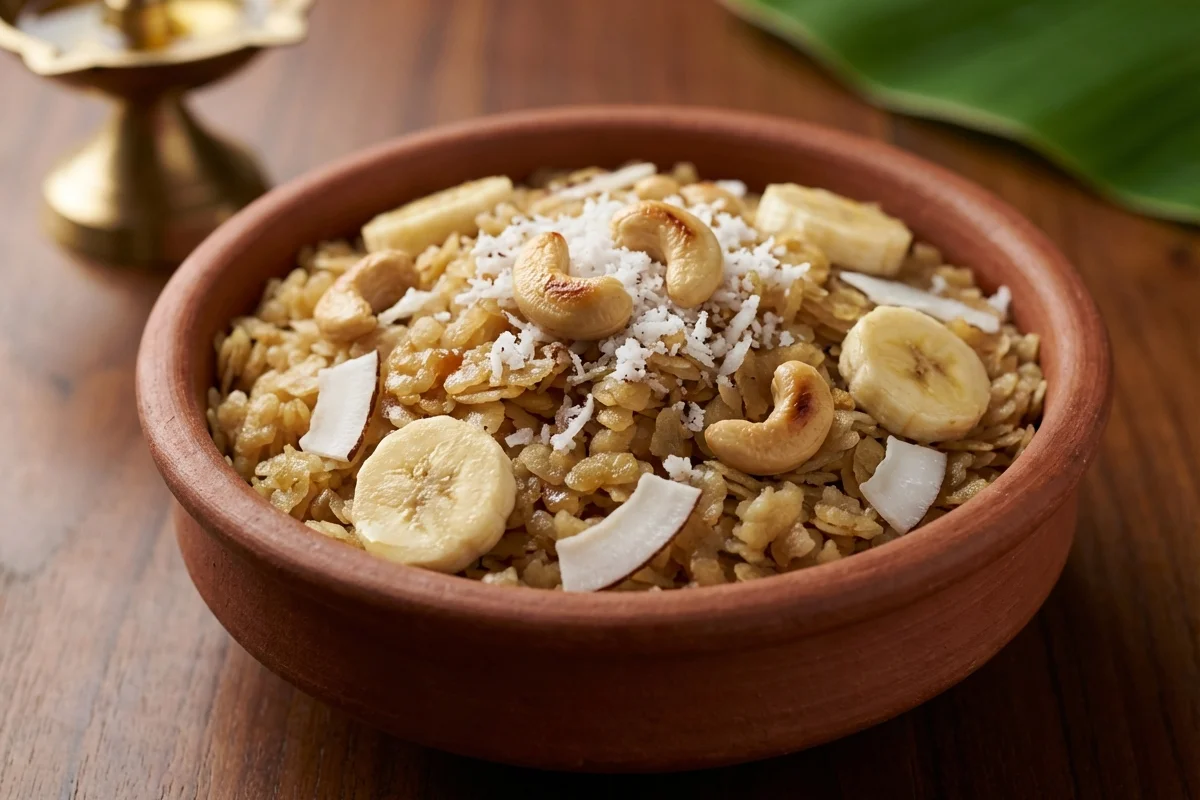
Aval Nanachathu
Soft, moist flattened rice tossed with fresh coconut and jaggery, gently infused with the warmth of cardamom and cumin. A quick Kerala-style sweet snack that comes together in under 10 minutes, perfect with a hot cup of chai or as a comforting evening treat.
For 4 servings
- prep · ~3 min
Prepare the poha.
Take the poha in a large bowl. Sprinkle 2 tablespoons of water evenly over it and gently mix with your fingers. Let it rest for 2-3 minutes until the flakes soften and turn fluffy. If the poha seems dry, sprinkle a little more water. It should be soft but not mushy or clumpy.
TIPUse thick poha for the best texture. Thin poha turns mushy very quickly. - prep · ~2 min
Roast and crush the cumin seeds.
In a small dry pan, roast the cumin seeds on low heat for about 30 seconds until fragrant. Remove from heat, let them cool for a moment, then lightly crush them using a mortar and pestle or between your palms.
TIPDo not over-roast the cumin. The moment you smell the aroma, take it off the heat. - mix · ~1 min
Combine all ingredients.
Add the powdered jaggery, freshly grated coconut, crushed roasted cumin, cardamom powder, and a tiny pinch of salt to the softened poha. Mix everything gently with a light hand until well combined.
TIPUse your fingers to mix instead of a spoon — it helps distribute the jaggery and coconut more evenly without mashing the poha. - rest · ~5 min
Rest for the flavors to meld.
Cover the bowl and let it sit for 5 minutes. This allows the jaggery to release its moisture slightly and the cardamom-cumin aroma to infuse the aval.
- serve
Serve the aval nanachathu.
Give a final gentle mix and transfer to serving bowls. Serve at room temperature as a snack or for breakfast. It pairs beautifully with a hot cup of chai.
What to keep in mind.
6 tips from the recipe — small details that make a real difference to the final dish.
- 1Use thick poha (beaten rice) so the flakes stay distinct and don't turn mushy after sprinkling water.
- 2Sprinkle water gradually over the poha, mixing gently with your fingers, until it becomes soft but not sticky or clumpy.
- 3Roast cumin seeds just until fragrant—about 30 seconds—then crush lightly to release their essential oils.
- 4Let the mixture rest for 5 minutes after combining so the jaggery gently moistens the poha and the spices infuse evenly.
- 5Serve at room temperature; avoid refrigerating as the poha can harden and lose its soft texture.
- 6Use freshly grated coconut for the best moistness and authentic Kerala flavor—avoid dried or desiccated coconut.
Adapt it for your goals.
Nutty Crunch
Add 2 tablespoons of roasted peanuts or chopped cashews for a crunchy contrast. This variation adds protein and a savory-sweet balance, popular as a tea-time snack.
Fruity TwistFruity Twist
Fold in ¼ cup of finely chopped ripe banana or grated apple. The natural sweetness of the fruit complements the jaggery and makes the snack even more moist and refreshing.
Spiced UpgradeSpiced Upgrade
Add a pinch of freshly ground black pepper or a small piece of finely chopped ginger for a mildly pungent kick. This variation warms the palate and is especially comforting on rainy days.
Vegan & Oil FreeVegan & Oil-Free
This recipe is already vegan and oil-free. To keep it so, ensure your jaggery is plant-based (some jaggery is processed with bone char) and use only freshly grated coconut with no added cream.
Why this is on our healthy list.
Rich in Quick Energy
Flattened rice (poha) provides easily digestible carbohydrates, offering a gentle energy lift without heaviness, making it an ideal pre-workout or mid-afternoon snack.
Contains Healthy Fats
Fresh coconut supplies medium-chain triglycerides (MCTs) and lauric acid, which support brain function and may boost metabolism.
Natural Sweetener Source
Jaggery is an unrefined sugar that retains trace minerals like iron and magnesium, unlike refined white sugar, and provides a complex, caramel-like sweetness.
Digestive Support
Cumin and cardamom are traditional digestive aids; cumin can help reduce bloating and gas while cardamom soothes the stomach.
Frequently asked questions
Thin poha will turn mushy very quickly because it absorbs water much faster. For this recipe, always use thick poha so the flakes stay distinct and soft.



.webp)
.webp)