
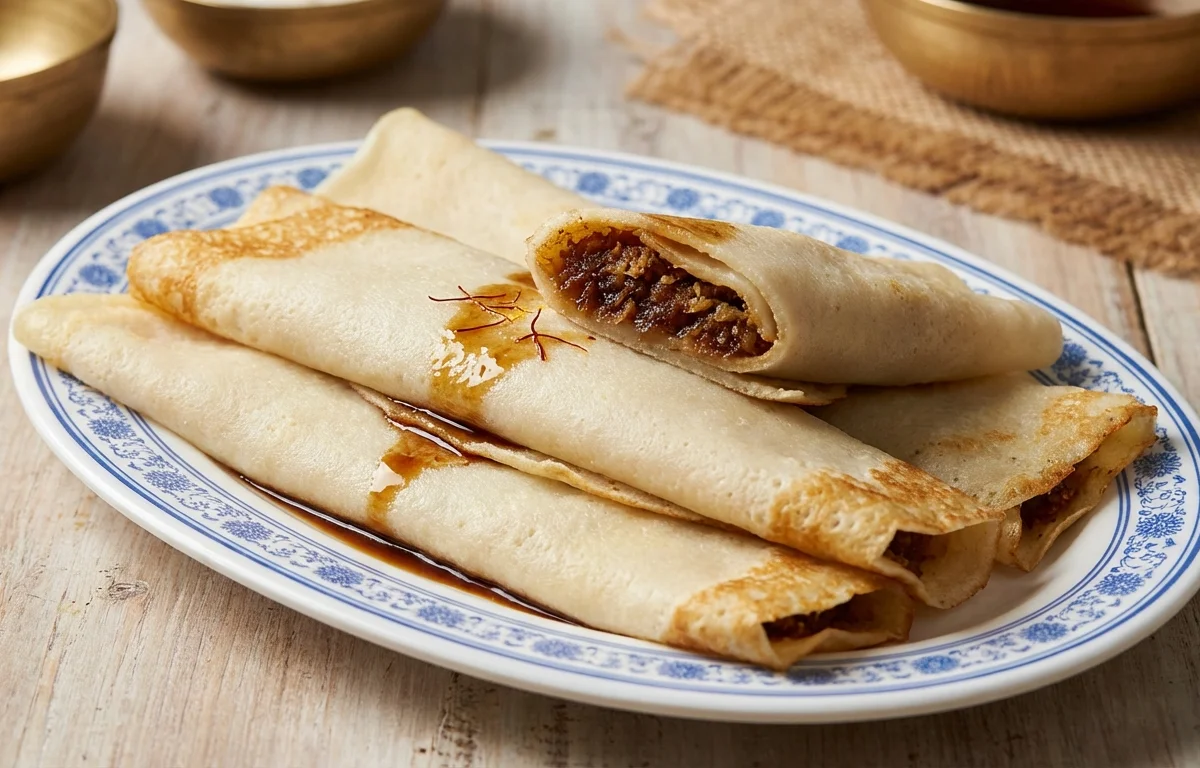
Patishapta Pitha
Thin Bengali crepes made with a rice and flour batter, filled with a fragrant coconut and jaggery mixture. This winter favorite is soft, lightly sweet, and especially lovely served warm.
For 8 servings
- mix · ~15 min
Make the batter.
1.Add rice flour, all-purpose flour, semolina, milk, crushed fennel seeds, and salt to a bowl.2.Whisk until smooth and lump-free.3.Add a little extra milk if needed to make a thin pouring batter.4.Set aside for 15 minutes so the semolina softens.TIPThe batter should be thinner than dosa batter so it spreads easily into soft crepes. - saute · ~10 min
Make the coconut filling.
1.Add grated coconut, jaggery, crushed cardamom seeds, and milk to a pan over low heat.2.Cook, stirring often, until the jaggery melts and coats the coconut well.3.Keep cooking until the mixture turns moist but not wet and starts leaving the sides of the pan.4.Take it off the heat and let it cool slightly.TIPDo not overcook the filling or it will turn chewy and hard to roll. - fry · ~12 min
Cook the crepes.
1.Heat a nonstick pan over low to medium heat and lightly grease it with ghee.2.Pour a small ladle of batter into the center and quickly swirl to make a thin oval crepe.3.Cook until the surface looks set and the bottom is lightly cooked without browning too much.4.Do not flip the crepe.TIPKeep the heat gentle so the crepes stay soft and flexible for rolling. - assemble · ~10 min
Fill and roll the patishapta.
1.Place 2 tablespoons of coconut filling in a line near one side of the crepe.2.Fold the side over the filling and roll it into a neat cylinder.3.Lift it out carefully and repeat with the remaining batter and filling. - serve
Serve the patishapta warm.
What to keep in mind.
7 tips from the recipe — small details that make a real difference to the final dish.
- 1Rest the batter the full 15 minutes so the semolina softens and the crepes cook up supple, not gritty.
- 2If the batter thickens as it sits, loosen it with a splash of milk before each batch so it spreads into thin ovals.
- 3Keep the pan on low to medium heat; too much heat browns the crepes quickly and makes them crack when rolled.
- 4Cook each crepe only until the top loses its wet shine, since overcooking dries it out and makes shaping difficult.
- 5Let the coconut-jaggery filling cool slightly before rolling so steam does not soften and tear the crepe.
- 6Grease the pan very lightly with ghee between crepes; excess fat prevents the batter from gripping and spreading evenly.
- 7Store leftovers covered in the fridge and rewarm gently on a tawa or in the microwave so they stay soft.
Adapt it for your goals.
Nolen-gur
Use date palm jaggery for the filling when in season for a more traditional winter fragrance and deeper Bengali flavor.
khoya filledKhoya-filled
Add a little khoya to the coconut mixture for a richer, more festive filling with a milkier taste.
gluten freeGluten-free
Replace the all-purpose flour with more rice flour or a gluten-free flour blend for those avoiding wheat.
veganVegan
Swap dairy milk with coconut milk or thin almond milk and use coconut oil instead of ghee for a plant-based version.
Why this is on our healthy list.
Energy-rich winter sweet
Rice flour, semolina, milk, coconut, and jaggery make this a sustaining festive dish that is especially comforting in colder weather.
Mineral-containing sweetener
Jaggery is a less refined sweetener than white sugar and also brings a deeper, more complex flavor to the filling.
Good fats from coconut
Fresh coconut adds richness, texture, and satisfying natural fats that make the filling more substantial.
Frequently asked questions
The crepes were likely cooked too long or on heat that was too high. Keep them pale and soft, and roll them as soon as the surface is set.


