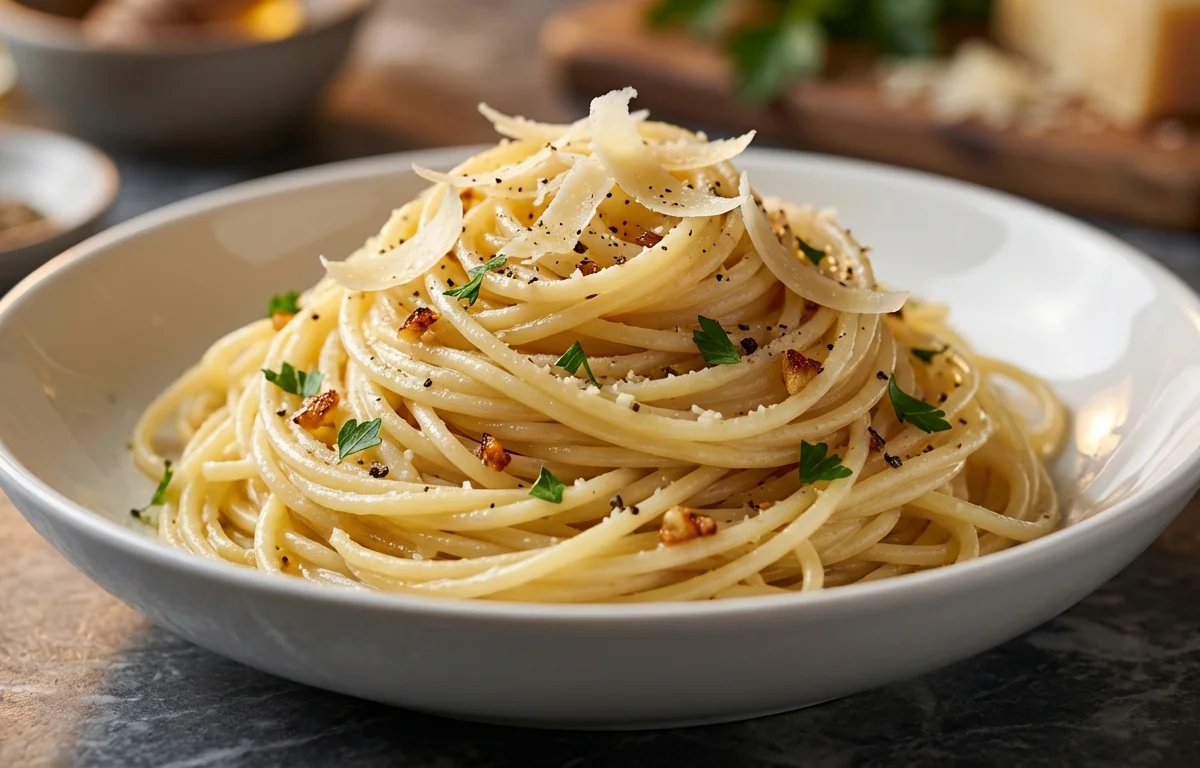
Butter and Parmesan Pasta
A simple, comforting bowl of tender pasta coated in melted butter and nutty Parmesan cheese. Ready in under 20 minutes, it's the perfect quick dinner or side dish that even picky eaters will love.
For 4 servings
- boil · ~10 min
Boil the pasta in salted water.
1.Bring 4 liters of water to a rolling boil in a large pot.2.Add 1 tablespoon salt to the boiling water.3.Add spaghetti and cook according to package directions until al dente (8-10 minutes).4.Just before draining, reserve 1 cup of the starchy pasta water.5.Drain the pasta in a colander.TIPSalting the water is your only chance to season the pasta itself — be generous. - saute · ~3 min
Sauté the garlic in melted butter.
1.While the pasta drains, return the empty pot to medium-low heat.2.Add the butter and let it melt completely without browning.3.Add the minced garlic and gently cook until fragrant (1-2 minutes). - mix · ~2 min
Toss the pasta with the garlic butter.
1.Return the drained pasta to the pot with the garlic butter.2.Add 1/4 cup of the reserved pasta water and toss well with tongs.3.Gradually add more pasta water a splash at a time until the pasta is glossy and a light sauce coats every strand.TIPThe starchy pasta water is key — it emulsifies with the butter to create a silky, restaurant-quality sauce. - mix · ~2 min
Finish with Parmesan and black pepper.
1.Remove the pot from heat.2.Sprinkle the grated Parmesan cheese over the pasta in three additions.3.Toss thoroughly after each addition to ensure even melting and distribution.4.Add the black pepper and give a final toss.TIPAlways add Parmesan off heat to prevent it from clumping or becoming stringy. - garnish
Garnish with fresh parsley and serve immediately.
What to keep in mind.
6 tips from the recipe — small details that make a real difference to the final dish.
- 1Reserve pasta water before draining — the starch helps emulsify the butter into a silky sauce.
- 2Add Parmesan off the heat to prevent clumping and ensure a smooth, creamy texture.
- 3Use freshly grated Parmesan from a block; pre-shredded contains anti-caking agents that won't melt properly.
- 4Cook garlic just until fragrant (1-2 minutes) — burnt garlic turns bitter and overwhelms the dish.
- 5Toss pasta with butter and water immediately after draining to prevent strands from sticking together.
- 6For extra richness, finish with a small pat of butter stirred in just before serving.
Adapt it for your goals.
Citrus-herb
Add the zest of 1 lemon and 1 tablespoon of fresh lemon juice after tossing with butter. The acidity cuts the richness and brightens the dish — perfect for spring or as a lighter side.
high proteinHigh-protein
Toss in 200g of cooked, diced chicken or 150g of crispy pancetta after step 3. This adds substantial protein, turning the pasta into a satisfying main course.
low oilLow-oil
Replace half the butter with an equal amount of olive oil. You get a fruitier flavor with less saturated fat, ideal for everyday cooking without losing the glossy texture.
veganVegan
Substitute butter with 3 tablespoons of vegan butter or olive oil, and use 1 cup of nutritional yeast in place of Parmesan. Nutritional yeast provides a cheesy, umami flavor while keeping the dish plant-based.
spicy arrabiataSpicy-arrabiata
Add 1/2 teaspoon of red pepper flakes along with the garlic. The heat contrasts beautifully with the buttery, nutty Parmesan — great for those who like a kick.
Why this is on our healthy list.
Source of Calcium
Parmesan cheese is rich in calcium, which supports strong bones and teeth. A serving contributes a meaningful amount toward daily needs.
Good Fats for Energy
Butter provides saturated fats that are a concentrated source of energy and aid in absorbing fat-soluble vitamins from other foods.
Moderate Protein from Pasta
Spaghetti offers plant-based protein, helping to build and repair tissues while keeping the meal satisfying.
Customizable Sodium Level
You control the salt added to pasta water and the dish — use less salt in the water or opt for low-sodium Parmesan to reduce overall sodium intake.
Frequently asked questions
Parmesan clumps when added to high heat. Always remove the pot from the burner before sprinkling in the cheese, and toss immediately with the hot pasta and butter to distribute the heat evenly.