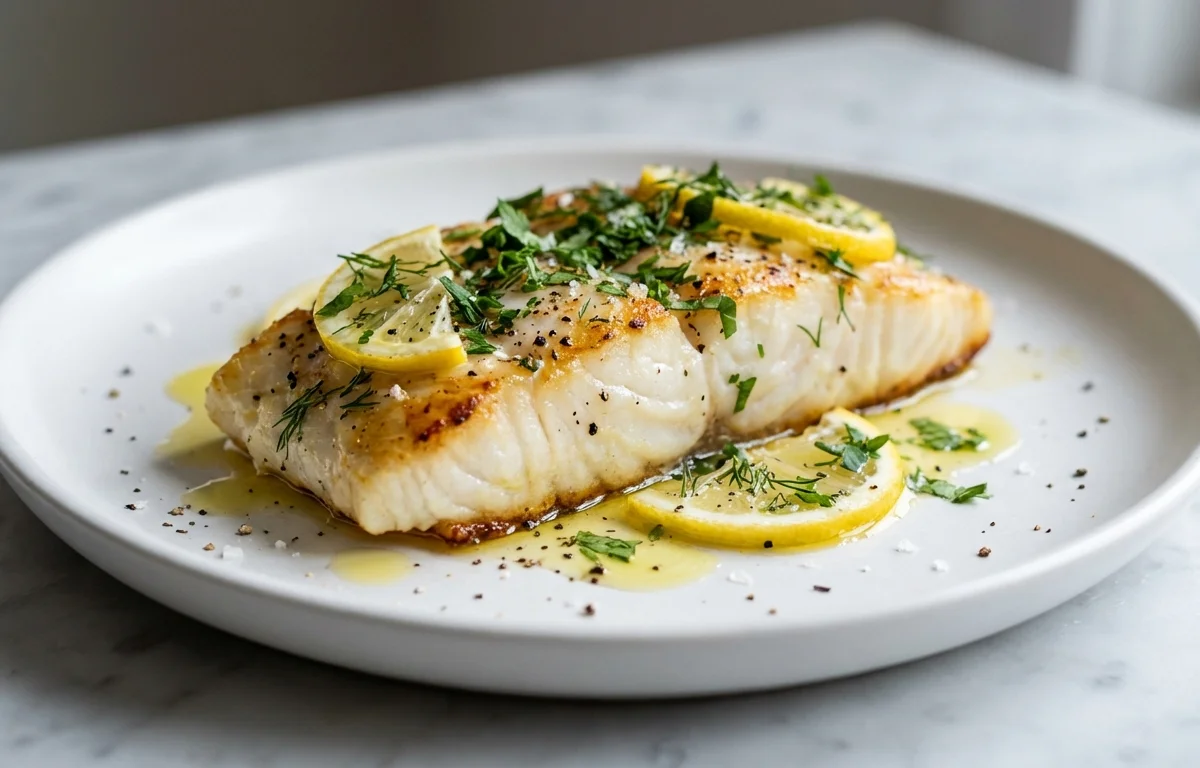
Cod with Lemon and Herbs
Tender, flaky cod fillets pan-seared to golden perfection and finished with a bright, buttery lemon-herb sauce. The fish develops a delicate crust while staying moist inside, and the fresh herbs and citrus make it light yet satisfying. A weeknight dinner that comes together in under 30 minutes.
For 4 servings
- prep · ~5 min
Pat the cod fillets dry and season.
1.Pat the cod fillets completely dry with paper towels — moisture prevents browning.2.Season both sides of each fillet evenly with salt and black pepper.3.Zest the lemon using a microplane and set aside. Cut the lemon in half for juicing.TIPDry fish is the secret to a golden crust. Don't skip the paper-towel step. - fry · ~7 min
Sear the cod fillets until golden.
1.Heat olive oil in a large skillet over medium-high heat until shimmering but not smoking.2.Lay the cod fillets gently in the pan, presentation-side down. Leave space between them.3.Cook undisturbed for 3–4 minutes until the bottom is deeply golden and releases easily.4.Flip carefully with tongs and cook the second side for 2–3 minutes. Fish should flake easily with a fork.TIPResist the urge to move the fish. Let it sit undisturbed to form that golden crust. - saute · ~2 min
Add butter, garlic, and lemon.
1.Reduce heat to low. Add butter and minced garlic to the pan around the fish.2.Sauté the garlic gently for about 30 seconds until fragrant — do not let it brown.3.Squeeze the juice of the lemon into the pan and scatter the lemon zest over the fillets.4.Spoon the bubbling lemon-butter over the fillets a few times to baste.TIPGarlic burns quickly and turns bitter. Keep the heat low once it hits the pan. - garnish · ~1 min
Finish with fresh herbs and serve.
Remove the skillet from the heat. Sprinkle the chopped parsley and dill generously over the fish. Give the pan a gentle swirl to mix the herbs into the sauce. Transfer to plates and spoon any remaining pan sauce over the top. Serve immediately.
TIPAdd the fresh herbs off heat so they stay vibrant and don't turn dark and wilted.
What to keep in mind.
6 tips from the recipe — small details that make a real difference to the final dish.
- 1Pat the cod fillets completely dry with paper towels before seasoning to ensure a golden, crisp crust.
- 2Use a heavy-bottomed skillet and preheat the oil until shimmering to get a proper sear without sticking.
- 3Cook the fillets undisturbed for 3–4 minutes on the first side; they will release easily when the crust is ready.
- 4Keep the heat low when adding garlic to the butter so it softens without browning and turning bitter.
- 5Baste the fish with the lemon-butter sauce by spooning it over the fillets to keep them moist and flavorful.
- 6Add fresh herbs off the heat to preserve their bright color and vibrant flavor.
Adapt it for your goals.
Dairy-free
Replace the butter with an equal amount of extra-virgin olive oil or a plant-based butter substitute for a dairy-free version that still delivers a silky sauce.
extra herbaceousExtra-herbaceous
Add 1 tablespoon each of fresh tarragon and chives along with the parsley and dill for a more complex herb profile that pairs beautifully with lemon.
spicy kickSpicy kick
Stir in 1/4 teaspoon red pepper flakes with the garlic for a gentle heat that cuts through the richness of the butter.
lower fatLower-fat
Reduce the butter to 1 tablespoon and increase the lemon juice by 1 tablespoon to lighten the sauce while keeping it bright and flavorful.
Why this is on our healthy list.
Rich in Lean Protein
Cod is a low-fat, high-quality protein source that supports muscle repair and keeps you full without excess calories.
Heart-Healthy Fats
The olive oil provides monounsaturated fats that may help support cardiovascular health when used in place of saturated fats.
Source of Vitamin D
Cod is a natural source of vitamin D, which is important for bone health and immune function.
Antioxidant Boost from Herbs
Fresh parsley and dill supply antioxidants like flavonoids and vitamin C that help protect cells from oxidative stress.
Frequently asked questions
The cod is done when it flakes easily with a fork and the internal temperature reaches 145°F (63°C). The flesh should turn opaque and separate gently.