
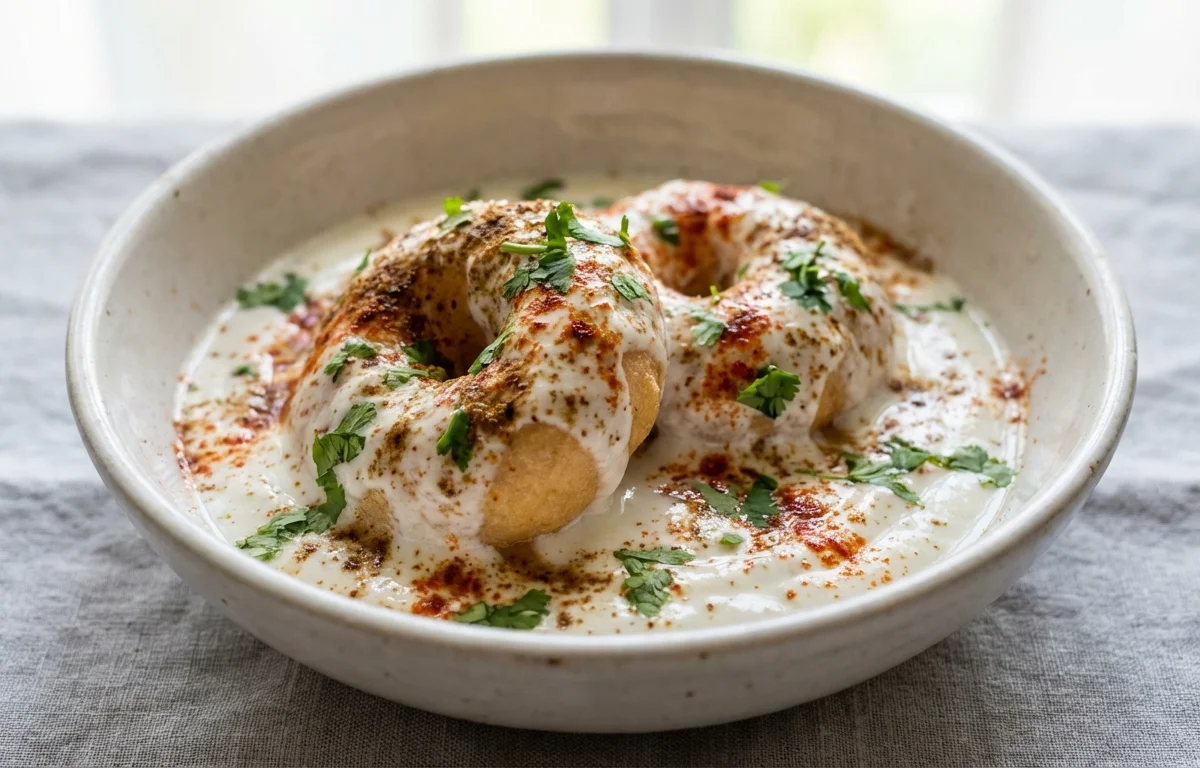
Dahibara
Soft, pillowy lentil fritters soaked in water until fluffy, then dunked in seasoned yogurt and finished with tangy tamarind chutney, spicy red chili, and a sprinkle of roasted cumin. This iconic Odia street food is cool, creamy, and bursting with sweet, sour, and spicy notes in every bite.
For 4 servings
- prep · ~10 min
Soak and grind the urad dal.
1.Wash urad dal thoroughly and soak in water for 4 hours.2.Drain soaked dal completely and add to a mixer grinder with green chili and ginger.3.Add 1-2 tablespoons of ice-cold water gradually and grind to a smooth, fluffy paste.4.Transfer batter to a bowl and whisk vigorously for 2-3 minutes to incorporate air.TIPUse ice-cold water for grinding — it prevents the batter from heating up and keeps the vadas fluffy. - mix · ~1 min
Season the batter.
Add 1 pinch of salt to the batter and mix well until the batter is light and airy.
- fry · ~20 min
Shape and deep-fry the vadas.
1.Heat oil in a kadai over medium heat — test readiness by dropping a tiny bit of batter; it should sizzle and rise immediately.2.Wet your palm, place a spoonful of batter, and gently flatten into a round disc.3.Make a small hole in the center with a wet thumb and slide it carefully into hot oil.4.Fry in batches, turning occasionally, until golden brown and crisp on both sides (4-5 minutes per batch).5.Drain on paper towels to remove excess oil.TIPDon't overcrowd the kadai — the vadas need space to puff up properly. - prep · ~15 min
Soak the fried vadas in water.
Drop the hot fried vadas into a large bowl of room temperature water. Let them soak for 10-15 minutes until soft. Gently press each vada between your palms to squeeze out water and set aside.
TIPSoaking is the secret to soft dahibara — don't skip or rush this step. - mix · ~2 min
Prepare the seasoned yogurt.
Whisk yogurt until completely smooth. Add sugar and 1 pinch of salt, then whisk again. Add 2-3 tablespoons of water to get a thick yet pourable consistency. Keep chilled.
- simmer · ~5 min
Make the tamarind chutney.
1.Combine tamarind paste with ½ cup water in a small pan and bring to a gentle simmer.2.Add jaggery, a pinch of red chili powder, and a pinch of salt.3.Simmer for 3-4 minutes until slightly thickened, then remove from heat and let cool. - saute · ~2 min
Dry-roast cumin seeds for garnish.
Place cumin seeds in a small pan over low heat. Stir continuously for 1-2 minutes until aromatic and slightly darkened. Cool and crush into a powder, or use pre-roasted cumin powder.
TIPDon't walk away — cumin burns fast and turns bitter. - assemble · ~3 min
Assemble the Dahibara.
1.Place the soaked, squeezed vadas in a serving bowl.2.Pour the seasoned yogurt generously over the vadas until they are completely submerged.3.Drizzle tamarind chutney in a zigzag pattern on top.4.Sprinkle roasted cumin powder, red chili powder, and black salt.5.Top with sev and fresh chopped cilantro.TIPAssemble just before serving — the vadas will soak up flavors while staying intact. - serve
Serve immediately.
Serve the Dahibara chilled or at room temperature in individual katoris, making sure each gets yogurt, chutney, and all the garnishes.
What to keep in mind.
7 tips from the recipe — small details that make a real difference to the final dish.
- 1Soak urad dal for exactly 4 hours — under-soaking makes dense vadas, over-soaking turns them greasy.
- 2Whisk the batter vigorously by hand for 2–3 minutes; this incorporates air for that signature pillowy texture.
- 3Always fry vadas on medium heat — too hot and they brown outside but stay raw inside.
- 4Soak the hot vadas in room-temperature water, not cold; cold water makes them turn rubbery.
- 5Press soaked vadas gently between your palms — too hard and they break, too soft and they stay soggy.
- 6Make tamarind chutney ahead and chill; the flavors meld and deepen overnight.
- 7Assemble dahibara only when ready to eat — the fritters turn mushy if they sit in yogurt too long.
Adapt it for your goals.
Low-oil
Instead of deep-frying, bake the vadas in a preheated oven at 375°F for 18-20 minutes, flipping halfway. You'll get the same soft-soaked texture with significantly less oil.
high proteinHigh-protein
Add 2 tablespoons of roasted chana dal (split chickpeas) while grinding the urad dal for a protein boost and a subtly nutty flavor.
veganVegan
Replace yogurt with thick, unsweetened coconut or cashew yogurt whisked with a pinch of salt and sugar. The cooling effect and tangy notes remain intact.
spiced upSpiced-up
Add 1/4 teaspoon of asafoetida (hing) and a pinch of black pepper to the batter for an extra layer of savory warmth that cuts through the yogurt.
Why this is on our healthy list.
Rich in Lentil Protein
Urad dal is packed with plant-based protein and fiber, making dahibara a satisfying snack that supports muscle repair and digestive health.
Probiotic Boost from Yogurt
The thick yogurt used in this dish provides live probiotics, which promote a healthy gut microbiome and aid digestion.
Iron from Tamarind
Tamarind is naturally rich in iron and vitamin C, which enhances iron absorption, supporting red blood cell production and energy levels.
Anti-inflammatory Spices
Cumin, ginger, and black salt contribute antioxidants and anti-inflammatory compounds that may soothe digestion and reduce bloating.
Frequently asked questions
The batter likely had too much water or wasn't whisked enough. Use ice-cold water sparingly and whisk until the batter feels light and fluffy; the vadas should float immediately in the oil.


