
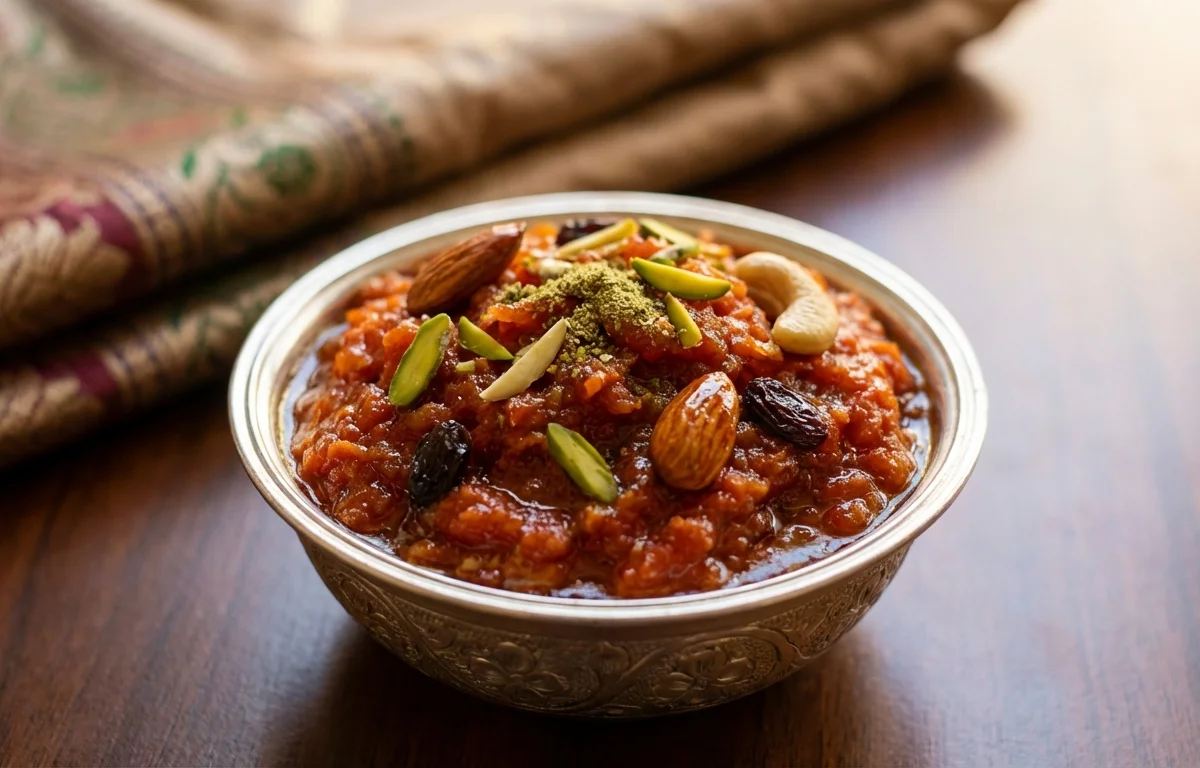
Gajar ka Halwa
A warm, decadent Indian dessert made by slow-cooking grated carrots in milk until velvety and rich. Finished with ghee, cardamom, and a generous sprinkle of nuts, this winter favorite is pure comfort in every spoonful.
For 4 servings
- prep
Prep the carrots and nuts.
1.Peel and grate 500g carrots using a thick grater.2.Crush 4 green cardamom pods and powder the seeds finely.3.Keep broken cashews, slivered almonds, and raisins ready.TIPUse red Delhi carrots for the best color and natural sweetness. - simmer · ~20 min
Cook the carrots in milk.
1.Place the grated carrots in a heavy-bottomed kadai.2.Pour in 500ml milk and add a pinch of salt.3.Bring to a boil, then simmer on medium-low heat, stirring occasionally.TIPStir frequently to prevent the milk from scorching at the bottom. - simmer · ~30 min
Reduce until the milk is absorbed.
Continue cooking until all the milk reduces and the carrots are soft and dry, about 25-30 minutes. The mixture will look glossy and come together.
TIPDon't rush this step — slow reduction builds the rich, milky flavor. - saute · ~8 min
Sauté in ghee and add sugar.
1.Push the carrot mixture to the sides of the pan.2.Add 3 tbsp ghee in the center and let it melt.3.Mix ghee into the carrots. Add 4 tbsp sugar and stir well.TIPAdding sugar releases moisture — keep stirring until it dries up again. - saute · ~10 min
Roast until the halwa leaves the pan.
Sauté continuously on medium heat until the halwa turns a deep reddish-orange, the ghee oozes out at the sides, and the mass leaves the pan cleanly. This takes about 8-10 minutes.
TIPThe halwa is ready when you can draw a spoon through it and the pan stays dry. - temper · ~2 min
Fry the nuts for garnish.
1.Heat a small pan with a drizzle of ghee.2.Add broken cashews and fry until light golden.3.Add raisins and let them puff up for 10 seconds. Remove from heat.TIPFry nuts on low flame — they burn in seconds. - mix
Finish with cardamom and serve.
1.Turn off the heat. Sprinkle the cardamom powder over the halwa.2.Mix in half the fried nuts. Transfer to a serving bowl.3.Top with remaining nuts and slivered almonds. Serve warm.
What to keep in mind.
7 tips from the recipe — small details that make a real difference to the final dish.
- 1Use red Delhi carrots for the deepest color and natural sweetness.
- 2Stir the milk-carrot mixture frequently to prevent scorching at the bottom.
- 3Don't rush the milk reduction — slow cooking builds a velvety, rich texture.
- 4Add sugar only after the milk is fully absorbed to avoid thinning the halwa.
- 5Roast the halwa until ghee separates and the mass leaves the pan cleanly.
- 6Fry nuts on low heat — they burn in seconds and become bitter.
- 7Halwa thickens as it cools; serve warm for the best spoonable texture.
Adapt it for your goals.
Vegan
Replace ghee with coconut oil and milk with full-fat coconut milk — creates a dairy-free version with a subtle tropical sweetness that pairs beautifully with cardamom.
low sugarLow-sugar
Swap half the sugar with jaggery (gur) powder or use a sugar-free sweetener like monk fruit — reduces glycemic impact while adding a deeper, earthy caramel note.
nute freeNute-free
Omit all nuts and raisins; garnish with toasted unsweetened coconut flakes or pumpkin seeds — great for those with nut allergies without losing crunch.
protein boostProtein-boost
Add 2 tablespoons of milk powder or khoya along with the sugar for a richer, fudge-like texture and a higher protein content — perfect for a more indulgent treat.
Why this is on our healthy list.
Rich in Beta-Carotene
Carrots are an excellent source of beta-carotene, which the body converts into vitamin A — essential for healthy vision, immune function, and skin integrity.
Good Source of Healthy Fats
Ghee and nuts provide beneficial fats that aid in the absorption of fat-soluble vitamins from carrots, such as vitamin A and vitamin K.
Contains Antioxidant Spices
Cardamom is rich in antioxidants and has been traditionally used to support digestion and freshen breath, adding both flavor and potential health benefits.
Natural Sweetness with Minerals
Raisins and nuts add natural sweetness along with minerals like iron, potassium, and magnesium — supporting energy metabolism and heart health.
Frequently asked questions
Watery halwa usually means the milk wasn't fully reduced before adding sugar, or the sugar was added too early — always reduce milk completely first, then add sugar and cook until the halwa leaves the pan.


