Gulla Phodi
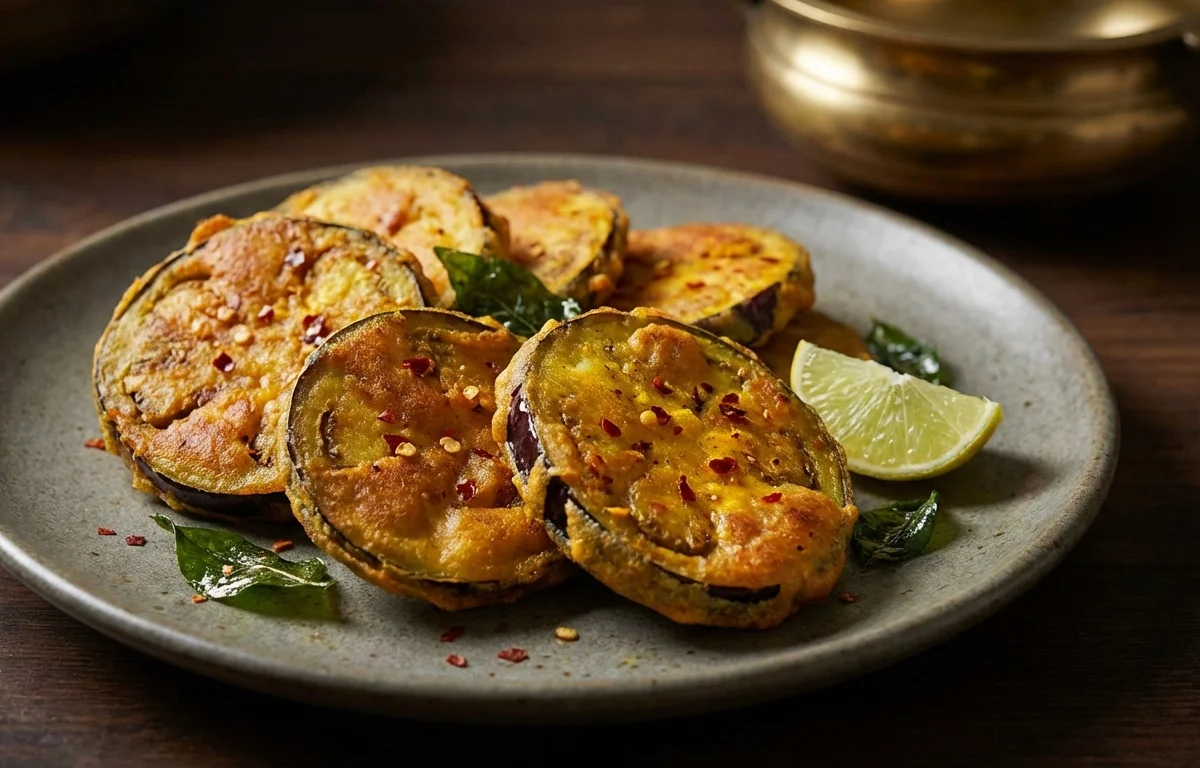
Thin slices of tender brinjal coated in a spiced semolina crust and shallow-fried to golden perfection. A crispy Konkani-style side dish that comes together in minutes, pairing beautifully with dal and rice.
For 4 servings
- prep
Slice the brinjal.
Wash the brinjal and pat dry. Cut into thin, even rounds about 5 mm thick. Spread them on a plate.
TIPUse tender, seedless brinjals for the best texture. Soaking sliced brinjal in salted water for 5 minutes prevents discoloration. - mix
Prepare the spiced semolina coating.
In a mixing bowl, combine semolina, red chili powder, turmeric powder, asafoetida, and salt. Mix well with a spoon.
- prep · ~2 min
Coat the brinjal slices.
1.Take one brinjal slice at a time and press both sides into the semolina mixture.2.Shake off any excess coating and place on a clean plate.3.Repeat with all slices. Let them rest for 2 minutes so the coating sticks.TIPDo not coat the slices too far in advance, or the brinjal will release moisture and make the coating soggy. - fry · ~6 min
Shallow-fry the coated slices.
1.Heat oil in a flat-bottomed pan over medium heat until shimmering.2.Place coated brinjal slices in a single layer without overlapping.3.Fry for 2-3 minutes on one side until golden and crisp.4.Flip carefully and fry the other side for another 2-3 minutes until golden.5.Remove with a slotted spatula and drain on paper towels.TIPKeep the heat at medium. High heat burns the semolina before the brinjal cooks through. - serve
Serve hot.
Transfer the fried gulla phodi to a serving plate. Serve immediately while hot and crispy.
TIPGulla Phodi loses its crispness as it cools. Serve straight from the pan for the best crunch.
What to keep in mind.
7 tips from the recipe — small details that make a real difference to the final dish.
- 1Choose tender, seedless brinjals to avoid bitterness and ensure quick cooking.
- 2Soak sliced brinjals in salted water for 5 minutes to prevent discoloration.
- 3Pat the brinjal slices completely dry before coating to help the semolina stick.
- 4Let coated slices rest for exactly 2 minutes so the crust adheres without turning soggy.
- 5Fry at steady medium heat — high heat burns the semolina before the brinjal cooks through.
- 6Drain on paper towels immediately, but serve within minutes to retain crunch.
- 7Do not coat slices too far ahead; moisture from the brinjal will soften the crust.
Adapt it for your goals.
Low-oil
Air-fry the coated brinjal slices at 180°C for 8-10 minutes, flipping halfway. This reduces oil dramatically while keeping a crisp finish.
high proteinHigh-protein
Add 2 tablespoons of chickpea flour (besan) to the semolina mixture. This boosts protein content and gives the crust a slightly nuttier flavour.
jainJain
Omit asafoetida (since some Jain diets avoid it) and replace with a pinch of cumin powder. Use Jain-friendly oil and serve as is.
Why this is on our healthy list.
Low in Calories
Brinjal is naturally low in calories and high in water content, making Gulla Phodi a light side dish that fits balanced meals.
Rich in Dietary Fiber
Brinjal provides soluble fiber that aids digestion and helps maintain steady blood sugar levels when eaten with dal and rice.
Antioxidant Properties
Turmeric and asafoetida add anti-inflammatory compounds, while brinjal contains nasunin, an antioxidant that supports cell health.
Gluten-Free Friendly
Semolina is naturally low in gluten, and this recipe can easily be made completely gluten-free by swapping with rice flour.
Frequently asked questions
The brinjal slices may be too wet. Pat them thoroughly dry before coating, and press the semolina firmly onto each side.