
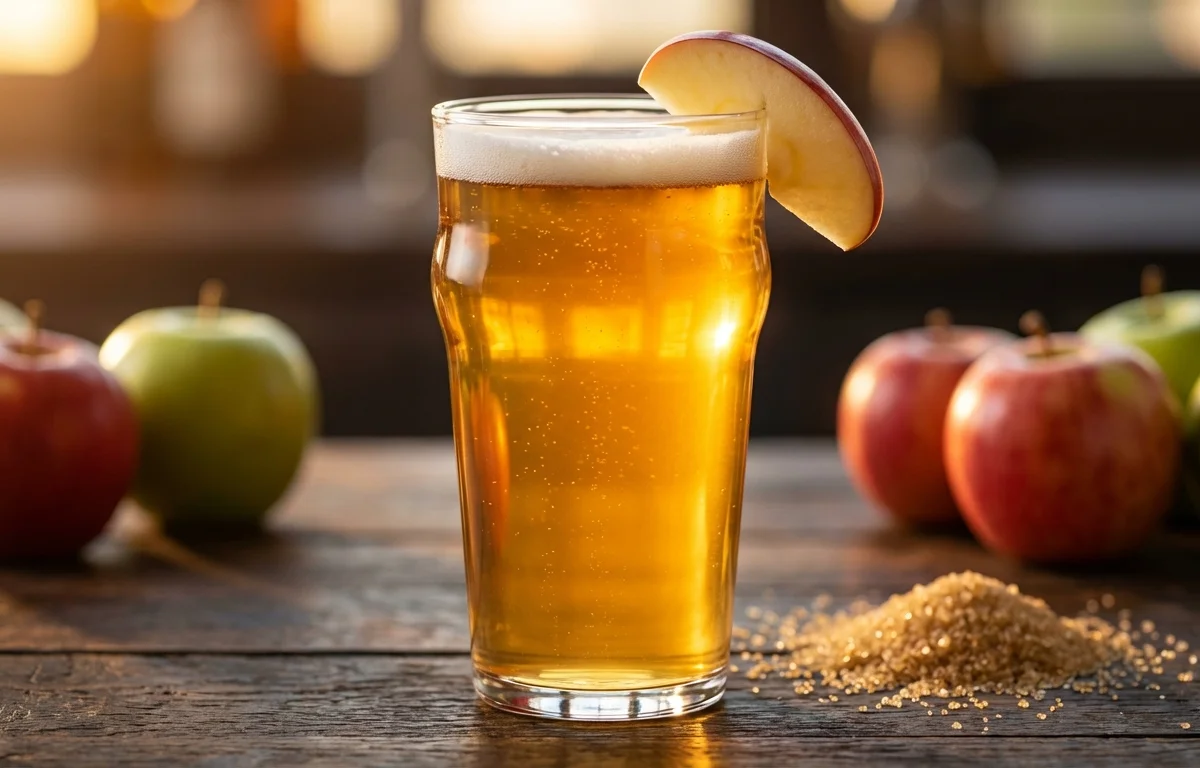
Hard Apple Cider
A crisp, refreshing fermented apple cider with a subtle effervescence and natural apple sweetness balanced by a dry, tangy finish. This simple home-brewed classic requires just a handful of ingredients and some patience, delivering a clean, golden drink that rivals any store-bought bottle.
For 8 servings
- prep · ~10 min
Sanitize all equipment.
Thoroughly clean and sanitize the fermentation bucket, lid, airlock, siphoning tube, and bottles with a no-rinse brewing sanitizer. Any contamination can spoil the cider.
TIPIf you can't find brewing sanitizer, a diluted bleach solution (1 tbsp per gallon of water) works, but rinse very thoroughly. - mix · ~5 min
Pitch the yeast into the apple juice.
Pour the fresh apple juice into the sanitized fermentation bucket. Sprinkle the brewer's yeast over the surface and let it sit for 5 minutes to rehydrate, then stir gently with a sanitized spoon to distribute.
TIPMake sure the apple juice contains no preservatives like potassium sorbate — they will prevent fermentation. - rest · ~14400 min
Seal and begin primary fermentation.
Snap the lid on the bucket, fill the airlock halfway with water or sanitizer, and insert it into the grommet. Place the bucket in a cool, dark spot around 60-70°F. Bubbles should appear in the airlock within 24-48 hours.
TIPA closet or basement works perfectly. Avoid areas with temperature swings. - other · ~14400 min
Rack the cider to a secondary vessel.
After 10-14 days when bubbling has slowed to once every 30 seconds or less, use the siphoning tube to transfer the cider into a clean, sanitized secondary container, leaving the sediment behind. Reattach the airlock and let it clarify for another 7-14 days.
TIPDon't skip this step — leaving the cider on the dead yeast too long can create off-flavors. - mix · ~5 min
Prepare the priming sugar solution.
Boil the water and dissolve the sugar completely. Let it cool to room temperature. Gently stir the cooled sugar solution into the cider just before bottling — this provides the yeast with a final meal to create natural carbonation in the bottle.
TIPStir gently to avoid splashing and introducing oxygen, which can make the cider taste stale. - assemble · ~10 min
Bottle the cider.
Siphon the primed cider into sanitized swing-top bottles, leaving about an inch of headspace at the top. Seal the bottles tightly.
- rest · ~14400 min
Condition bottles at room temperature.
Store the sealed bottles at room temperature (around 70°F) for 7-10 days to allow carbonation to build. Check one bottle after a week — it should hiss when opened.
TIPPlace bottles in a sturdy box or cooler during conditioning. In the rare case of over-carbonation, this contains any mess. - rest
Chill and age.
Once carbonated, move the bottles to the refrigerator or another cold place. The cider improves significantly with a few more weeks of cold aging, but it's drinkable immediately.
TIPHard cider hits its stride at 4-6 weeks of total age from brew day.
What to keep in mind.
7 tips from the recipe — small details that make a real difference to the final dish.
- 1Use only unpasteurized apple juice without preservatives to ensure active fermentation.
- 2Keep fermentation temperature steady between 60-70°F to avoid off-flavors and stuck fermentation.
- 3Sanitize everything that touches the cider—a single contaminant can ruin the whole batch.
- 4Rack the cider off the sediment after primary fermentation to prevent yeasty or sulfur flavors.
- 5Stir priming sugar gently to avoid introducing oxygen, which can stale the cider.
- 6Condition bottles in a sturdy box to contain any mess if a bottle over-carbonates.
- 7Let the cider cold-age for at least a month after bottling for the cleanest, crispest flavor.
Adapt it for your goals.
Spiced hard cider
Add a cinnamon stick, 2 cloves, and a star anise to the secondary fermenter for 3-5 days to infuse warm spice notes—perfect for fall and winter sipping.
hopped hard ciderHopped hard cider
Dry-hop the cider with 0.5 oz of Cascade or Citra hops during secondary fermentation for 3-5 days; the citrusy, herbal notes complement apple's acidity beautifully.
low sugar dry ciderLow-sugar dry cider
Skip the priming sugar and bottle without it to produce a still, bone-dry cider—ideal for low-carb diets or those who prefer a crisp, sharp finish.
bourbon barrel styleBourbon barrel style
Add 2 tablespoons of bourbon or a handful of bourbon-soaked oak chips during secondary aging for a smoky, vanilla-laced complexity reminiscent of barrel-aged ciders.
Why this is on our healthy list.
Low in Added Sugars
Unlike commercial ciders, this recipe uses minimal priming sugar and no additional sweeteners, keeping the final drink relatively low in added sugars.
Probiotic Potential
Unpasteurized apple juice retains naturally occurring beneficial bacteria and wild yeasts, which can support gut health when consumed live.
Naturally Gluten-Free
Made entirely from apple juice and yeast, this cider is a safe, gluten-free alternative to beer for those with celiac disease or gluten sensitivity.
Rich in Antioxidants
Apples are a source of quercetin and vitamin C; fermentation may enhance the bioavailability of these antioxidants.
No Artificial Preservatives
Home-brewed cider contains no sulfites, sorbates, or artificial colorings found in many commercial options.
Frequently asked questions
Yes, but avoid juices with preservatives like potassium sorbate or sodium benzoate—they'll stop fermentation. Pasteurized juice will work, but the flavor may be less complex.


