
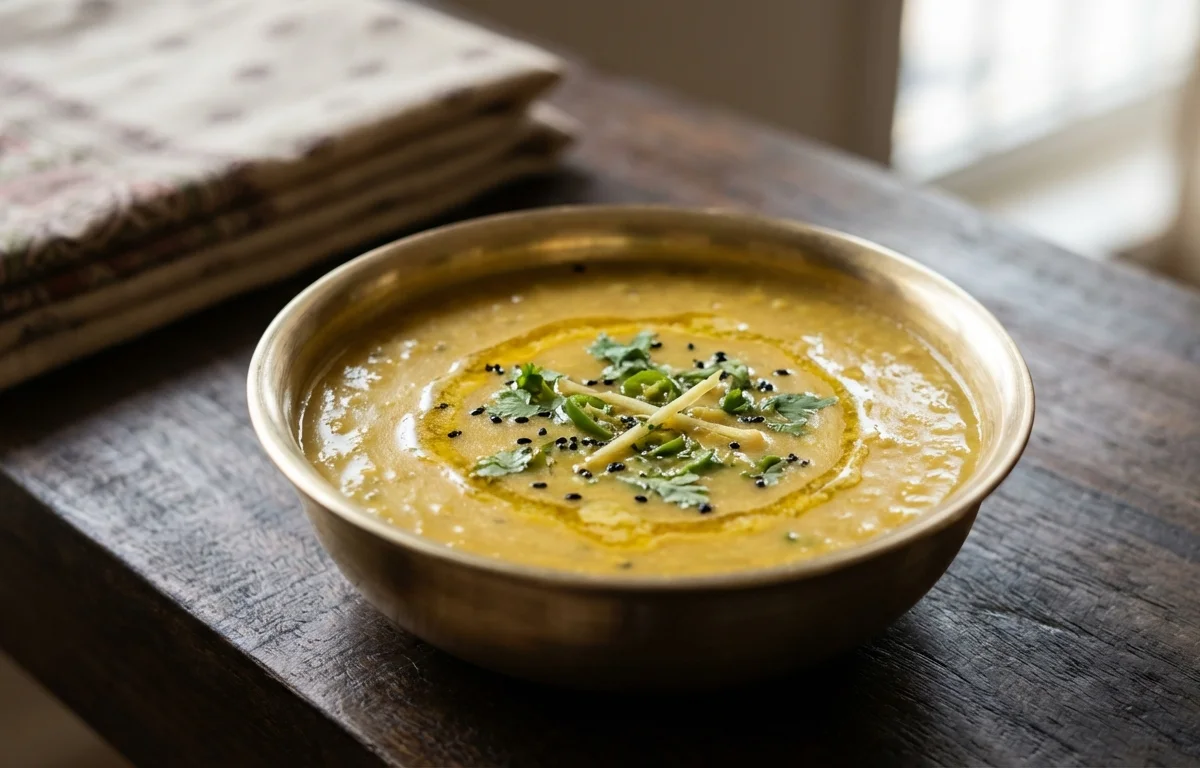
Kancha Moong Dal
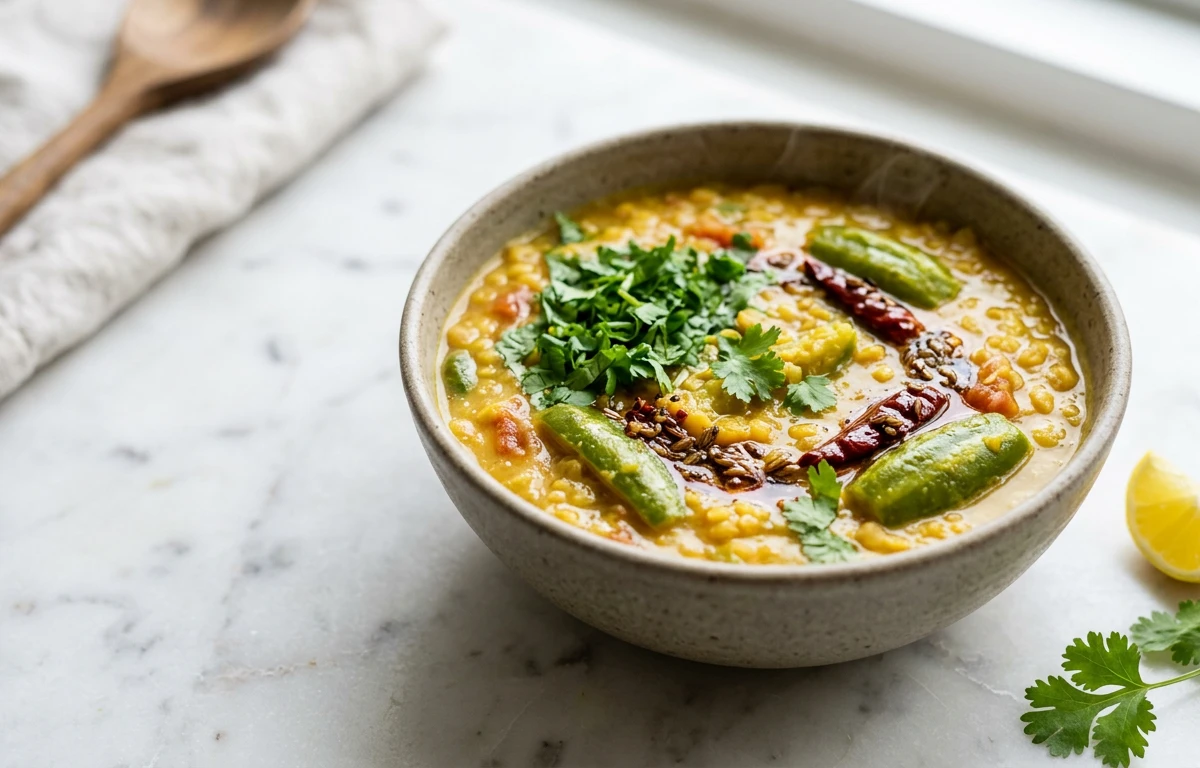
A rustic Bengali-style dry moong dal made with unroasted yellow lentils that hold their shape beautifully. Cooked just right with a fragrant tempering of fennel and ginger, this dal is grainy, aromatic, and deeply comforting. Perfect with steamed rice and a wedge of lemon.
For 4 servings
- prep
Wash and drain the moong dal.
Rinse the moong dal in 2-3 changes of water until the water runs clear. Drain well.
- boil · ~18 min
Boil the dal until just tender.
1.In a saucepan, combine the washed moong dal with 3 cups of water.2.Add turmeric powder, salt, and a pinch of sugar.3.Bring to a rolling boil, then reduce heat to medium-low.4.Simmer uncovered for 15-18 minutes until the dal is soft but each grain holds its shape.5.There should be very little water left — the dal should look moist, not soupy. Drain any excess water if needed.TIPThe hallmark of Kancha Moong Dal is that the grains stay separate and intact, not mushy like regular dal. - temper · ~2 min
Make the tempering.
1.Heat ghee in a small frying pan over medium heat until shimmering.2.Add cumin seeds and fennel seeds. Let them sizzle and crackle for 15-20 seconds.3.Add the bay leaf and broken dried red chilies. Stir for a few seconds until fragrant.4.Add the grated ginger and slit green chilies. Sauté for 30-40 seconds until the raw aroma mellows.TIPUse medium heat — fennel seeds burn quickly and turn bitter. - mix · ~2 min
Fold the tempering into the cooked dal.
Pour the hot tempering directly over the cooked dal. Gently fold everything together with a light hand — avoid mashing the dal grains. Let it sit covered for 2 minutes so the flavours mingle.
- garnish
Garnish with fresh cilantro and serve hot.
Sprinkle chopped cilantro on top. Serve immediately with steamed rice and a wedge of lemon on the side.
What to keep in mind.
6 tips from the recipe — small details that make a real difference to the final dish.
- 1Use unroasted (kancha) moong dal for this recipe, as roasted dal will turn mushy and lose its distinct grainy texture.
- 2Cook the dal uncovered and keep an eye on the water level; you want it moist but not soupy, with each grain intact.
- 3Drain any excess water immediately after cooking to prevent the dal from becoming mushy as it sits.
- 4Make the tempering on medium heat to avoid burning the fennel seeds, which turn bitter quickly.
- 5Fold the tempering into the dal gently with a spatula to keep the grains separate and unbroken.
- 6Let the finished dal rest covered for 2 minutes before serving so the aromas fully infuse the lentils.
Adapt it for your goals.
Vegan
Replace ghee with coconut oil or a neutral oil; the tempering will still work beautifully, and the dal remains entirely plant-based.
protein boostProtein boost
Add 1/4 cup cooked chickpeas or crumbled paneer along with the tempering for extra protein and a heartier meal.
herb switchHerb switch
Substitute fresh mint or curry leaves for cilantro in the final garnish for a refreshing twist that complements the fennel.
Why this is on our healthy list.
High in Plant Protein
Moong dal provides a good amount of plant-based protein, which supports muscle repair and keeps you full longer.
Rich in Dietary Fiber
The unroasted lentils retain their husk's fiber, aiding digestion and promoting a healthy gut.
Low in Fat (when using minimal ghee)
With only 1 tablespoon of ghee for the entire dish, this dal is a low-fat source of sustained energy.
Natural Anti-Inflammatory
Turmeric and ginger in the recipe offer anti-inflammatory properties that may help reduce joint stiffness.
Frequently asked questions
No, roasted moong dal will cook into a soft porridge-like consistency. This recipe relies on unroasted dal to keep each grain distinct and fluffy.



-curry.webp)
.webp)