Kosu Xaak logot Koni
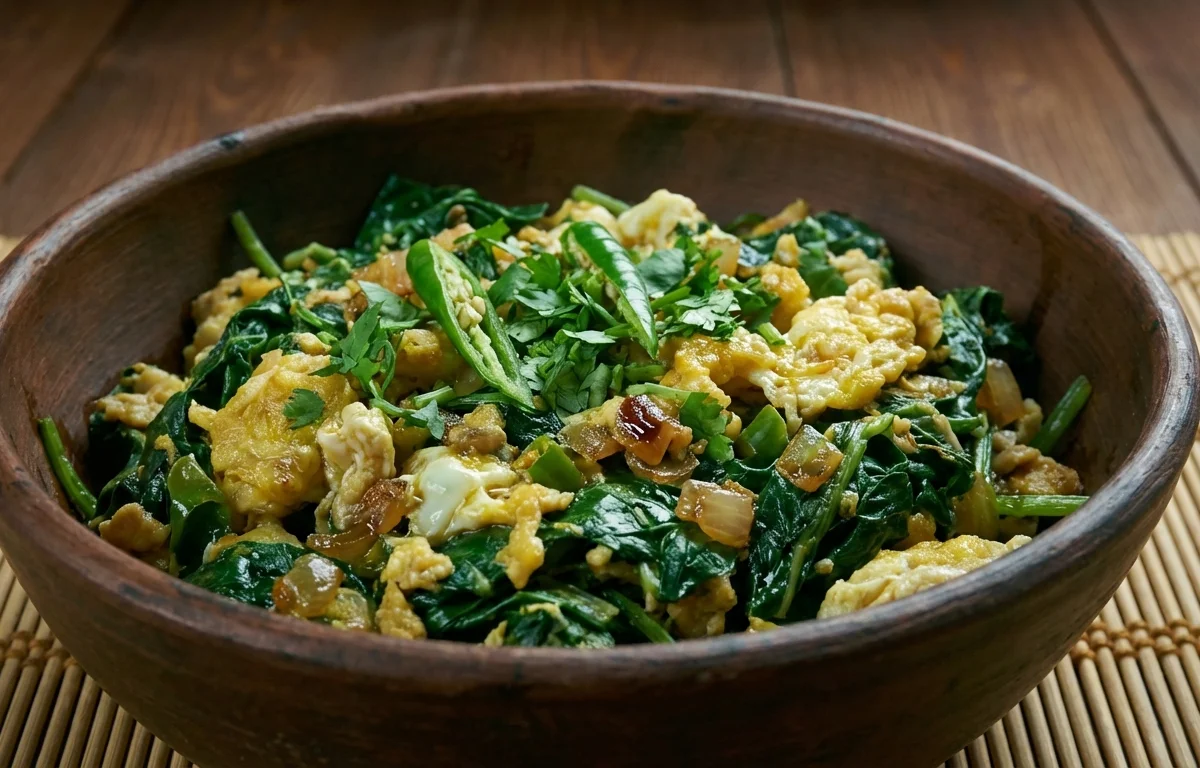
A simple Assamese home-style dish where tender cabbage is cooked with eggs, green chili, and a light touch of spices. It comes together quickly and tastes comforting with plain rice as part of an everyday meal.
For 4 servings
- prep · ~5 min
Prep the vegetables and eggs.
1.Finely shred the cabbage and finely chop the onion.2.Slit the green chili and chop the ginger.3.Crack the eggs into a bowl and beat lightly until just mixed. - saute · ~6 min
Cook the onion, chili, and ginger.
1.Heat mustard oil in a pan over medium heat.2.Add the onion and cook until soft and lightly golden, 4 to 5 minutes.3.Add the green chili and ginger and cook for 1 minute until fragrant.TIPLet the mustard oil heat properly before adding the onion so its sharp raw taste mellows. - saute · ~8 min
Cook the cabbage.
1.Add the shredded cabbage to the pan and mix well.2.Add turmeric powder, black pepper, and salt.3.Cook over medium heat, stirring often, until the cabbage softens and most of its moisture dries, 6 to 8 minutes.TIPKeep the pan uncovered so the cabbage stays light and semi-dry instead of watery. - mix · ~3 min
Add the eggs and stir through.
Lower the heat slightly and pour in the beaten eggs. Stir gently and continuously so the eggs coat the cabbage and cook into soft curds without turning dry.
- serve
Serve hot with plain rice.
What to keep in mind.
6 tips from the recipe — small details that make a real difference to the final dish.
- 1Heat the mustard oil until it just starts to shimmer so its raw pungency mellows before the onions go in.
- 2Keep the cabbage finely shredded for quick, even cooking and better coating from the soft egg curds.
- 3Cook the cabbage uncovered until most moisture evaporates; a wet pan will make the eggs turn steamy and rubbery.
- 4Lower the heat before adding the beaten eggs and stir constantly to get soft curds instead of a dry scramble.
- 5Do not over-brown the onions; light golden onions keep the dish gentle and home-style, not sweet or heavy.
- 6This dish is best eaten fresh, but leftovers can be refrigerated for a day and reheated gently on low heat.
Adapt it for your goals.
Low-oil
Reduce the mustard oil slightly and use a well-heated pan; the dish stays light while keeping its clean cabbage-and-egg character.
high proteinHigh-protein
Add 1-2 extra eggs for richer curds and a more filling rice-side dish without changing the core flavor.
no onionNo-onion
Skip the onion and increase ginger a little for a plainer, lighter version that still tastes distinctly Assamese.
spicierSpicier
Add an extra slit green chili or a little more crushed black pepper if you want more heat with the same simple base.
Why this is on our healthy list.
Protein from Eggs
Eggs add satisfying protein and make this simple cabbage dish more filling as part of an everyday meal.
Vegetable-Rich Comfort Food
Cabbage provides bulk and plant nutrients while keeping the dish light, moist, and suitable for pairing with plain rice.
Gentle, Minimal Spicing
With just ginger, green chili, turmeric, and pepper, the dish gets flavor without relying on heavy gravies or rich masalas.
Frequently asked questions
Yes, but mustard oil gives the dish its characteristic Assamese aroma. If using another oil, add a little extra pepper and ginger to keep the flavor lively.