
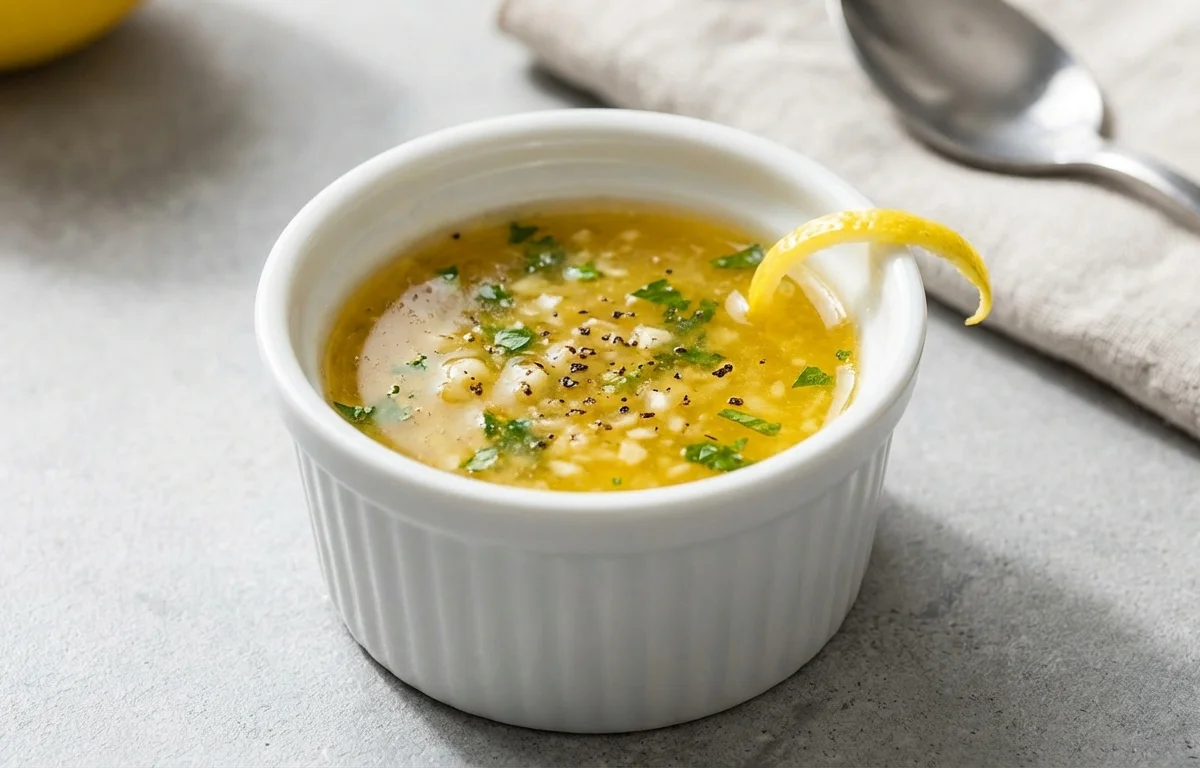
Lemon Butter Sauce
A silky, tangy butter sauce that comes together in under 10 minutes. Bright lemon and rich butter meld into a glossy emulsion that elevates pan-seared fish, roasted vegetables, or grilled chicken from simple to spectacular. The key is cold butter whisked in off the heat for a velvety finish.
For 4 servings
- prep · ~2 min
Prep the lemon and butter.
1.Zest the lemon using a microplane or fine grater, set zest aside.2.Juice the lemon and measure 1½ tablespoons of juice.3.Cut cold butter into 8 small cubes, keep chilled. - saute · ~2 min
Sauté the garlic and build the base.
1.Melt ½ tablespoon of the cold butter in a small saucepan over medium-low heat.2.Add minced garlic and cook until fragrant, about 30 seconds.3.Pour in lemon juice and water, bring to a gentle simmer for 1 minute.TIPKeep heat low to avoid browning the garlic — burnt garlic turns bitter. - mix · ~3 min
Whisk in butter off heat to form the emulsion.
1.Remove the pan from heat completely.2.Add remaining cold butter cubes one at a time, whisking constantly.3.Whisk until all butter is incorporated and sauce is glossy and slightly thickened.4.Season with salt and freshly ground black pepper.5.Stir in lemon zest just before serving.TIPIf sauce gets too thick, whisk in a teaspoon of warm water. If it separates, blend in an ice cube and whisk vigorously. - serve
Serve immediately.
Drizzle warm sauce over pan-seared fish, grilled chicken, steamed asparagus, or roasted vegetables. Serve right away while glossy and warm.
What to keep in mind.
6 tips from the recipe — small details that make a real difference to the final dish.
- 1Use cold butter straight from the fridge for a stable emulsion.
- 2Whisk in butter one cube at a time off heat to prevent breaking.
- 3Add lemon zest at the very end to preserve its bright aroma.
- 4If the sauce splits, whisk in an ice cube to re-emulsify instantly.
- 5Keep the pan off heat when adding butter to avoid greasy separation.
- 6This sauce thickens as it cools; rewarm gently over low heat with a teaspoon of water.
Adapt it for your goals.
Herb-infused
Add 1 tablespoon of finely chopped fresh parsley, chives, or dill after whisking in the butter for a green, herbal note that pairs beautifully with fish or chicken.
capers & shallotsCapers & shallots
Sauté 1 tablespoon of minced shallot with the garlic, then stir in 1 teaspoon of drained capers before serving — a classic piccata twist for chicken or veal.
spicy lemon butterSpicy lemon butter
Add a pinch of red pepper flakes along with the garlic for a gentle heat that cuts through rich fish like salmon or swordfish.
dairy freeDairy-free
Replace butter with 4 tablespoons of vegan butter or clarified coconut oil — whisk off heat just the same; the sauce will be slightly thinner but still glossy.
Why this is on our healthy list.
Rich in Vitamin C
Fresh lemon juice provides vitamin C, which supports immune function and helps the body absorb iron from the meal.
Low in Carbohydrates
This sauce contains minimal carbs from lemon juice and garlic, making it suitable for low-carb and keto-friendly diets.
Source of Healthy Fats
Butter supplies vitamin A and conjugated linoleic acid (CLA) when used in moderation, contributing to satiety and flavor.
Frequently asked questions
Separation happens if the pan is too hot when adding butter or if butter is added too quickly. Always work off heat and whisk in cold cubes one at a time.


