Maasor Tenga
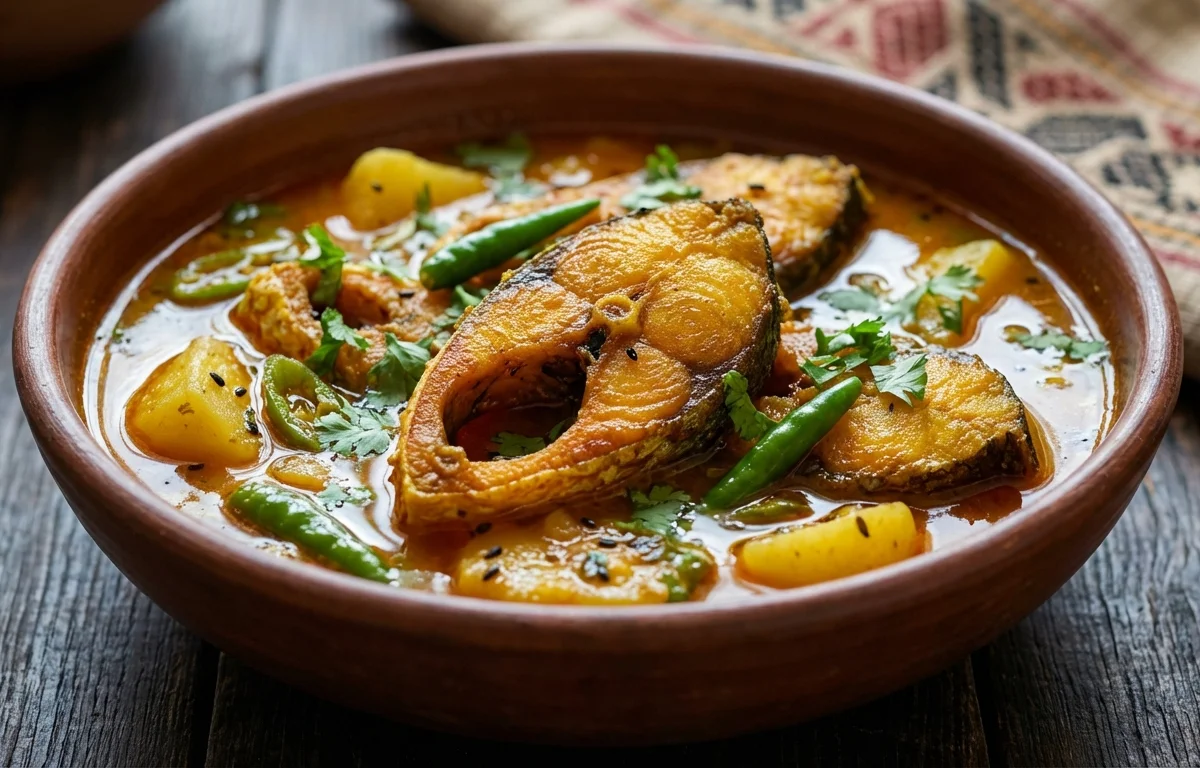
A light and tangy Assamese fish curry made with mustard oil, tomatoes, and lemon. The broth stays delicate and clean, letting the fish shine while the sour notes keep every bite bright and refreshing.
For 4 servings
- prep · ~10 min
Season the fish.
Rub the fish with turmeric powder and a small part of the salt. Set it aside for 10 minutes so the seasoning clings well.
TIPPat the fish dry before seasoning so it fries without sticking. - fry · ~5 min
Lightly fry the fish.
1.Heat mustard oil in a pan over medium heat until it smells sharp and hot.2.Slide in the fish pieces carefully in a single layer.3.Fry both sides lightly until just sealed and pale golden, about 1 to 2 minutes per side.4.Lift the fish out gently and keep aside.TIPDo not fully cook the fish here; it will finish cooking in the curry and stay tender. - temper · ~6 min
Make the base.
1.In the same pan, lower the heat and add fenugreek seeds.2.Let them sizzle for a few seconds until aromatic but not dark.3.Add chopped tomato and cook until soft and pulpy.4.Add slit green chili and stir for 30 seconds.TIPIf fenugreek seeds darken too much, the curry can turn bitter. - simmer · ~4 min
Build the tangy broth.
Pour in the water and add the remaining salt. Bring it to a gentle simmer, then cook for 3 to 4 minutes so the tomato softens into the broth.
- simmer · ~6 min
Cook the fish in the curry.
Add the fried fish pieces to the simmering broth and cook gently for 5 to 6 minutes, turning once if needed, until the fish is cooked through and the flavors come together.
TIPKeep the heat gentle so the fish pieces stay whole. - garnish
Finish with lemon juice and cilantro.
Turn off the heat and stir in the lemon juice. Sprinkle cilantro over the top for a fresh finish.
- serve
Serve the Maasor Tenga hot.
Serve hot with plain steamed rice while the broth is still light and fragrant.
What to keep in mind.
7 tips from the recipe — small details that make a real difference to the final dish.
- 1Heat the mustard oil until it just starts to smoke lightly, then reduce the heat before frying for a cleaner, less raw pungency.
- 2Use a wide pan and keep the fish in a single layer so the steaks seal quickly without breaking.
- 3Only lightly brown the fish in the first fry; overfrying makes it dry once it simmers in the broth.
- 4Do not let the fenugreek seeds turn deep brown, or the delicate sour curry will taste bitter.
- 5Add the lemon juice only after switching off the heat so the tang stays bright and fresh.
- 6If making ahead, keep the broth and fish together but reheat very gently to avoid the fish flaking apart.
- 7Serve it soon after cooking, because Maasor Tenga tastes best when the broth is still light, clear, and lively.
Adapt it for your goals.
More-tangy
Increase the tomato slightly or add a little more lemon at the end if you prefer a sharper, more mouthwatering tenga.
milderMilder
Use fewer green chilies and keep them whole so the curry stays aromatic and gentle but less spicy.
rohu versionRohu-version
Make it with rohu or catla steaks for a more traditional river-fish character and firmer texture.
lighter oilLighter-oil
Use a bit less mustard oil and shallow-sear the fish carefully if you want a lighter everyday version.
Why this is on our healthy list.
Lean Protein from Fish
The fish provides satisfying protein that makes this light curry filling without needing a heavy gravy.
Tomato and Lemon Freshness
Tomatoes and lemon add brightness along with naturally occurring antioxidants and vitamin C-rich ingredients.
Light, Brothy Preparation
Because the curry uses a thin broth instead of cream or coconut milk, it stays comparatively light and easy to enjoy with rice.
Frequently asked questions
Firm fish steaks such as rohu, catla, or other river fish work best because they stay intact in the light broth.