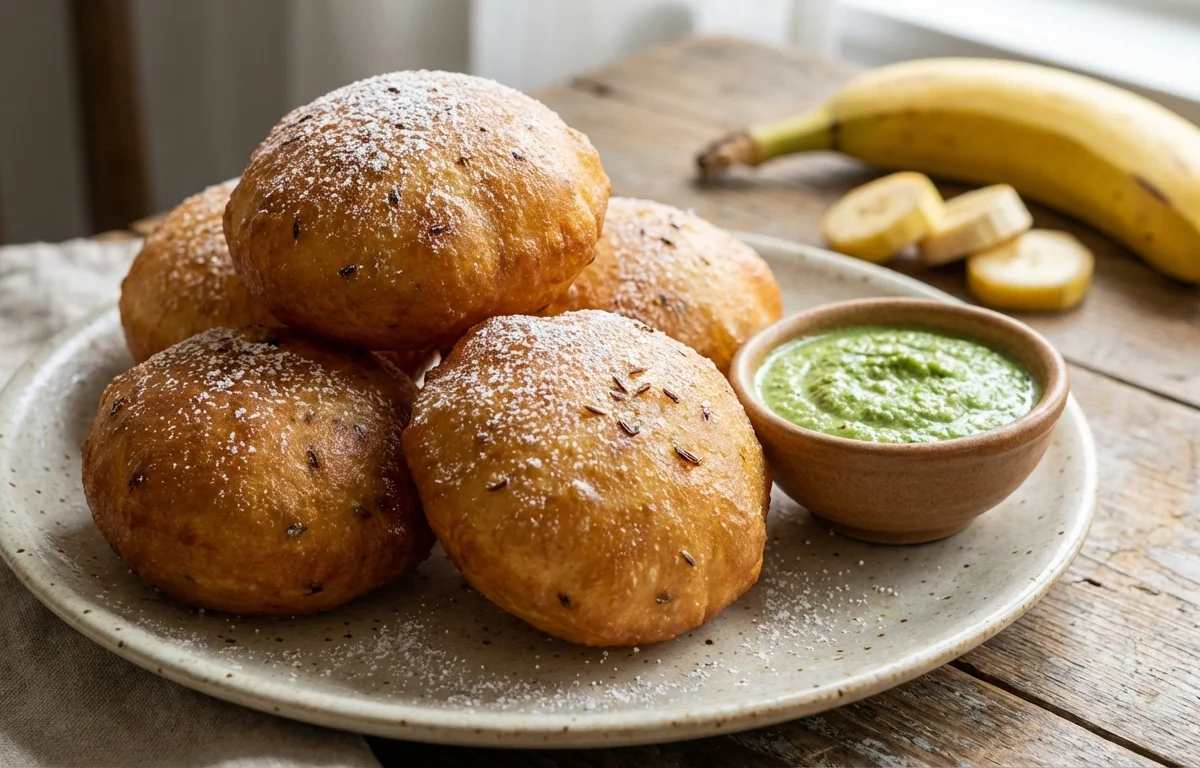
Mangalore Buns
These puffed, lightly sweet banana pooris are a Mangalorean tea-time favorite. Ripe banana, yogurt, and flour come together in a soft dough that fries into golden, fluffy buns with a gently tangy finish.
For 8 servings
- prep · ~2 min
Mash the banana.
Peel the banana and mash it in a bowl until mostly smooth with only a few tiny lumps left.
- mix · ~7 min
Mix the dough.
1.Add yogurt, sugar, cumin seeds, baking soda, and salt to the mashed banana.2.Mix well until the sugar starts to dissolve.3.Add all-purpose flour and bring everything together into a soft dough.4.If needed, grease your fingers with a little oil and knead briefly until smooth.TIPThe dough should feel soft and slightly tacky, not stiff. A tight dough gives dense buns. - rest · ~240 min
Cover and rest the dough.
Lightly grease the dough, cover the bowl, and let it rest at room temperature for 4 hours so it softens and develops a mild tang.
- prep · ~8 min
Divide and shape the dough.
1.Divide the dough into 8 equal portions.2.Grease your work surface and rolling pin lightly with oil.3.Roll each portion into a small round disc, slightly thicker than a poori.TIPDo not dust with extra flour while rolling. Too much loose flour can darken the oil. - fry · ~15 min
Fry the buns until puffed and golden.
1.Heat oil in a deep kadai over medium heat.2.Slide in one rolled disc and gently press with a slotted spoon so it puffs.3.Flip and fry both sides until golden brown.4.Remove and drain, then fry the remaining buns the same way.TIPKeep the heat at medium. Oil that is too hot browns the outside before the center cooks. - serve
Serve warm.
What to keep in mind.
7 tips from the recipe — small details that make a real difference to the final dish.
- 1Use very ripe bananas with brown speckles; they mash smoother and give the classic light sweetness.
- 2If the dough feels loose after mixing, let it sit 5 to 10 minutes before adjusting; the flour will hydrate and firm up.
- 3Rest the dough in a warm spot, not a cold kitchen, so the yogurt and baking soda help create a softer, puffier bun.
- 4Oil your hands and rolling surface instead of dusting flour, or the frying oil can turn murky and the buns may brown too fast.
- 5Roll each disc evenly with a slightly thicker center so it puffs well without turning crisp like a poori.
- 6Fry one bun first as a test; if it darkens too quickly, lower the heat so the inside cooks before the outside overbrowns.
- 7Mangalore buns are best eaten warm, but you can reheat leftovers briefly on a tawa to bring back some softness.
Adapt it for your goals.
Whole-wheat
Replace part of the all-purpose flour with whole wheat flour for a nuttier taste and a slightly more wholesome bun.
jaggery sweetenedJaggery-sweetened
Swap the sugar for grated jaggery for a deeper caramel note that pairs especially well with ripe banana.
spicedSpiced
Add a pinch of crushed black pepper or cardamom for a more aromatic tea-time version without changing the method.
veganVegan
Use a thick unsweetened plant-based yogurt in place of dairy yogurt to keep the same mild tang and soft texture.
Why this is on our healthy list.
Banana-Based Energy
Ripe banana contributes natural carbohydrates and potassium, making these buns a satisfying tea-time snack.
Digestive Spice Support
Cumin seeds add aroma and are traditionally valued for aiding digestion in fried snacks like this one.
Some Fermented Dairy Benefits
Yogurt adds tang, a little protein, and cultured dairy elements while also helping soften the dough.
Frequently asked questions
The usual causes are stiff dough, oil that is too cool, or discs rolled too thin. Keep the dough soft, fry at medium heat, and press gently after sliding each bun into the oil.