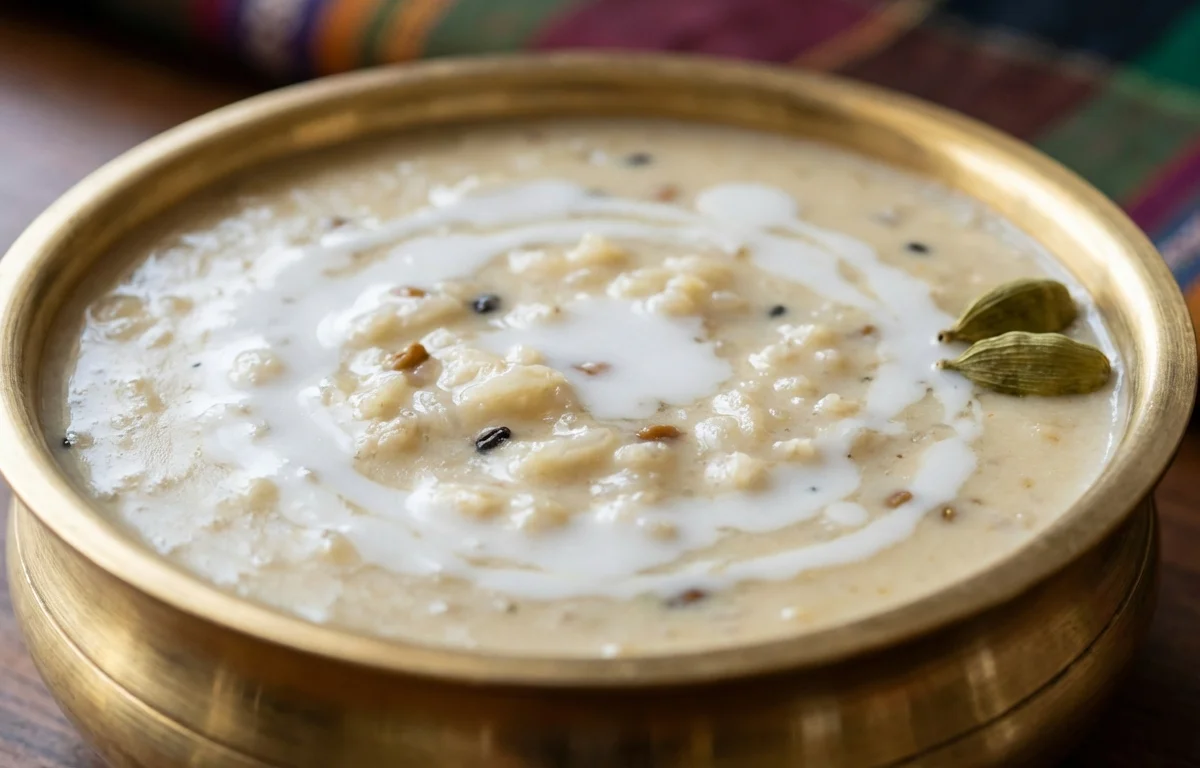
Menthya Ganje
A warm, comforting porridge from Karnataka made with finger millet flour and fenugreek seeds. This slightly nutty, slightly bitter breakfast dish is cooked slowly into a smooth, thick consistency and traditionally enjoyed with a dollop of pickle or curd on the side. Simple, nourishing, and incredibly satisfying on a cool morning.
For 4 servings
- prep · ~2 min
Mix the ragi flour with water to make a smooth slurry.
In a mixing bowl, combine the finger millet flour with 1 cup of the measured water. Whisk thoroughly with a fork or balloon whisk until no lumps remain and the mixture is smooth and thin. Set aside.
- temper · ~3 min
Make the tempering.
1.Heat oil in a heavy-bottomed pot over medium heat.2.Add fenugreek seeds and sauté until they turn a shade darker and release aroma (1 minute).3.Add mustard seeds and let them pop (30 seconds).4.Add cumin seeds and cook for 15 seconds until fragrant.5.Add slit green chili and curry leaves. Stir briefly until leaves crisp up (20 seconds).TIPWatch the fenugreek seeds closely — they turn bitter quickly if overcooked. Pull them off the heat as soon as they darken slightly. - boil · ~3 min
Boil the remaining water.
Pour the remaining 2 cups of water into the pot with the tempering. Add salt. Raise the heat to high and bring the water to a rolling boil.
- simmer · ~10 min
Cook the ragi porridge, stirring constantly.
1.Once the water boils, reduce heat to low.2.Slowly pour in the ragi slurry while stirring continuously with a wooden spoon.3.Keep stirring to prevent lumps from forming. The mixture will thicken quickly.4.Simmer on low heat for 8 to 10 minutes, stirring often, until the porridge turns glossy and leaves the sides of the pot.TIPConstant stirring is key — ragi thickens fast and can burn at the bottom. Use a wooden spoon and scrape the bottom frequently. - rest · ~2 min
Cover and rest for 2 minutes.
Turn off the heat. Cover the pot with a lid and let it rest for 2 minutes. This helps the porridge set to a soft, spoonable consistency.
- serve
Serve warm with pickle or curd.
Spoon the warm Menthya Ganje into serving bowls. Serve immediately with mango pickle, lemon pickle, or a spoonful of fresh curd on the side.
What to keep in mind.
6 tips from the recipe — small details that make a real difference to the final dish.
- 1Whisk the ragi slurry very well to avoid lumps that can ruin the smooth texture.
- 2Stir continuously after adding the slurry; ragi thickens fast and burns easily on the bottom.
- 3For a thinner porridge, add an extra ¼ cup of water while simmering and stir well.
- 4Toast fenugreek seeds only until they darken slightly; over-toasting makes them aggressively bitter.
- 5Serve immediately; leftover porridge thickens into a sliceable pudding that can be reheated with milk.
- 6Make the tempering ahead and store it; you can finish the porridge in 10 minutes at breakfast.
Adapt it for your goals.
Dairy-enriched
Replace ½ cup of water with warm milk (dairy or plant-based) while simmering for a creamier, richer porridge that's more filling and kid-friendly.
Savory boostSavory-boost
Add a pinch of asafoetida (hing) to the tempering for a deeper savory backbone, and garnish with finely chopped coriander and grated coconut.
Sweet versionSweet version
Skip the tempering spices and salt; instead, stir in 2 tbsp of jaggery or brown sugar during the last 2 minutes of cooking, and top with ghee and roasted nuts.
Lighter / low oilLighter / low-oil
Use only ½ tsp oil for the tempering and dry-roast the fenugreek and cumin seeds in the pot before adding water — still aromatic but much lower in fat.
Why this is on our healthy list.
Rich in Millet Fiber
Finger millet (ragi) is a whole grain packed with dietary fiber that supports digestion and helps maintain steady energy levels.
Natural Source of Calcium
Ragi is one of the best non-dairy sources of calcium, which is important for bone density and muscle function.
Fenugreek's Digestive Support
Fenugreek seeds contain soluble fiber and compounds that may help soothe the stomach and support gut health.
Low in Fat and Guilt-Free
With just a teaspoon of oil for the tempering, this porridge is naturally low in fat yet satisfying — ideal for a light breakfast or a convalescent meal.
Frequently asked questions
Yes, store-bought ragi flour works perfectly. Just whisk it thoroughly with part of the water to ensure a smooth, lump-free slurry before cooking.