
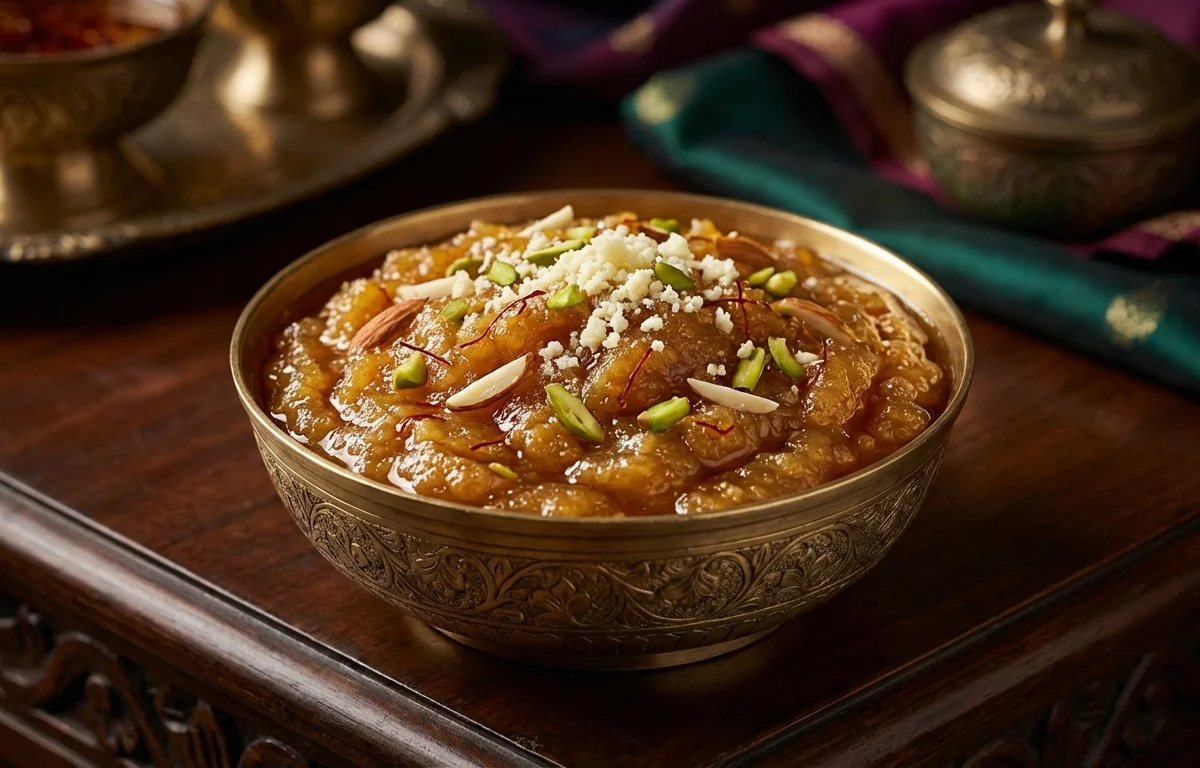
Moong Dal Halwa
A rich, decadent Indian dessert made from split yellow moong dal slow-cooked in ghee, sugar, and milk until it transforms into a luscious, grainy, melt-in-the-mouth halwa. This labor of love is a winter favorite, often prepared for festivals and special occasions, and garnished with cardamom and nuts for a royal finish.
For 6 servings
- prep
Soak and grind the moong dal.
1.Wash 1 cup moong dal thoroughly and soak in water for 4 hours.2.Drain the soaked dal completely and transfer to a mixer grinder.3.Add ¼ cup water and grind to a coarse paste with a slight grainy texture.TIPDon't make the paste too smooth. A coarse, suji-like texture gives the authentic halwa mouthfeel. - fry · ~30 min
Roast the dal paste in ghee.
1.Heat ¾ cup ghee in a heavy-bottomed pan over medium-low heat.2.Add the ground dal paste and start stirring immediately.3.Roast continuously, scraping the sides and bottom, for 25-30 minutes until the paste turns golden brown and releases a nutty aroma.TIPKeep the heat on low to medium-low. Rushing this step with high heat will burn the dal and ruin the halwa. - mix · ~5 min
Add warm milk to the roasted dal.
Pour ½ cup warm milk into the pan while stirring continuously. The mixture will sizzle and bubble up. Keep stirring until the milk is fully absorbed and the mixture thickens again.
- simmer · ~10 min
Cook with sugar until the halwa leaves the sides.
1.Add ¾ cup sugar and crushed cardamom seeds to the pan.2.Stir continuously as the sugar melts and releases some moisture.3.Cook for 8-10 minutes until the halwa thickens, turns glossy, and starts leaving the sides of the pan.TIPThe halwa is ready when you see ghee oozing from the sides. This is the classic sign of a perfectly cooked halwa. - fry · ~2 min
Fry the nuts and garnish.
1.In a separate small pan, heat 1 tablespoon of ghee from the roasting process (or fresh ghee).2.Fry the slivered almonds and cashews until light golden.3.Pour the fried nuts along with the ghee over the halwa and fold gently. - serve
Serve the halwa warm.
Transfer the Moong Dal Halwa to a serving bowl. Sprinkle slivered pistachios on top. Serve warm as a dessert.
TIPMoong dal halwa is best enjoyed warm. You can reheat leftovers gently in a pan or microwave.
What to keep in mind.
7 tips from the recipe — small details that make a real difference to the final dish.
- 1Soak the moong dal for a full 4 hours to ensure it grinds evenly without becoming too pasty.
- 2Grind the dal to a coarse, grainy consistency — a smooth paste will yield a sticky, pudding-like texture.
- 3Use a heavy-bottomed pan to prevent the dal from scorching during the long roasting process.
- 4Stir the dal paste constantly while roasting to ensure even browning and avoid burnt patches.
- 5The halwa is perfectly done when you see ghee visibly separate and pool around the edges of the pan.
- 6Warm the milk before adding it — cold milk can seize the hot dal mixture and cause lumps.
- 7Store leftover halwa in an airtight container in the fridge for up to a week; reheat gently with a splash of milk.
Adapt it for your goals.
Lactose-free
Replace ghee with a neutral oil like coconut or avocado oil, and use plant-based milk such as almond or oat milk. The texture will be slightly less rich, but the halwa remains delicious for those avoiding dairy.
fruit essenceFruit-essence
Add 1 tablespoon of rose water or kewra water along with the cardamom for a floral aroma. This variation is popular in Mughlai cuisine and imparts an elegant fragrance.
saffron deluxeSaffron-deluxe
Soak a generous pinch of saffron threads in 2 tablespoons of warm milk for 10 minutes, then add this infused milk when the recipe calls for milk. The halwa will take on a gorgeous golden hue and a luxurious aroma.
Why this is on our healthy list.
Rich in Plant Protein
Moong dal is packed with plant-based protein, making this dessert more satiating than typical sugar-heavy sweets.
Digestive Support
The gentle roasting and cardamom in this halwa aid digestion, helping the body process the ghee and sugar more comfortably.
Heart-Healthy Fats
Ghee provides butyrate and healthy fats that support gut health and may aid in the absorption of fat-soluble vitamins from the nuts.
Frequently asked questions
The dal paste was likely ground too smooth or not roasted long enough. Stick to a coarse grind and roast until the mixture thickens and releases ghee.


