
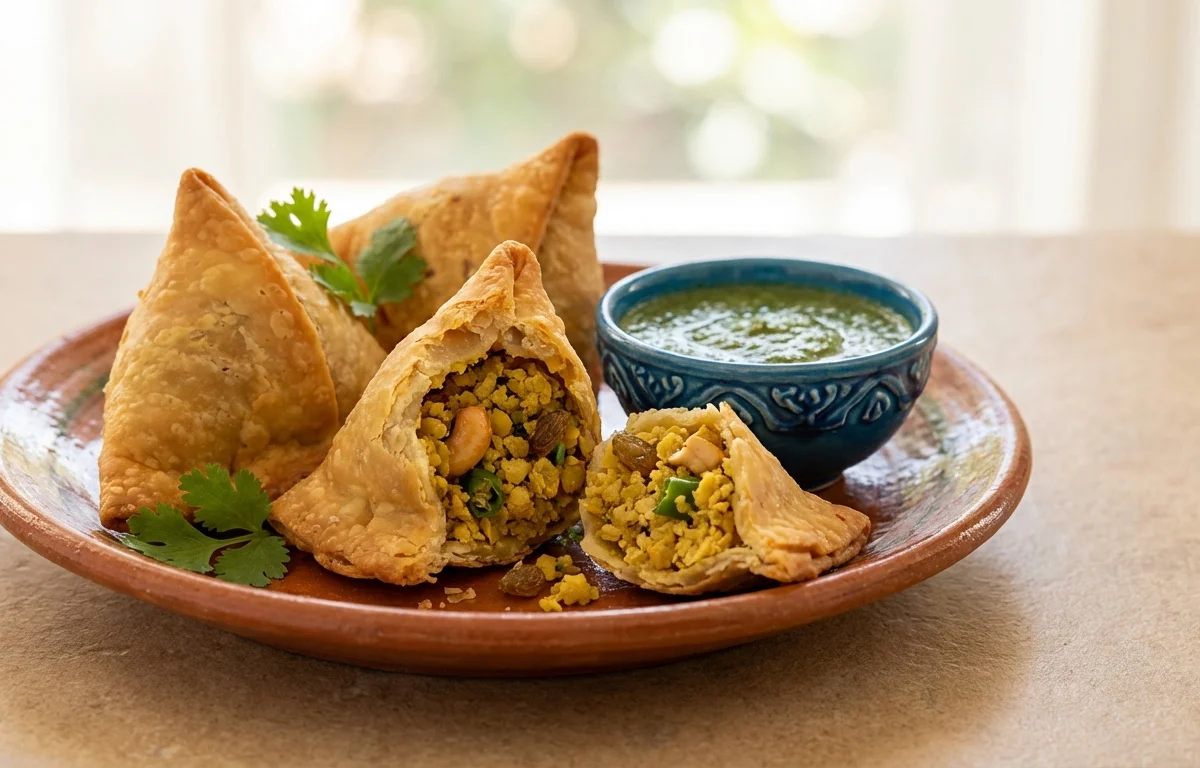
Moong Dal Samosa
Crispy, flaky pastry filled with a spicy and tangy roasted moong dal stuffing. This classic Rajasthani snack is a perfect tea-time treat, offering a delightful crunch and savory flavor in every bite.
For 4 servings
Prepare the Moong Dal Filling
- Wash the yellow moong dal thoroughly and soak it in ample water for at least 2 hours.
- Drain the water completely using a colander. Transfer the soaked dal to a grinder and pulse a few times to get a coarse, crumbly paste. Do not add any water while grinding.
- Heat 2 tbsp of oil in a non-stick pan over medium heat. Add hing, followed by the coarsely crushed fennel and coriander seeds. Sauté for 30 seconds until fragrant.
- Add the ground dal paste to the pan. Cook on low-medium heat for 10-12 minutes, stirring continuously to break up any lumps. The goal is to roast the dal until it's dry.
- Stir in the besan, turmeric powder, red chili powder, and 1 tsp of salt. Mix well and continue to roast for another 5-7 minutes until the mixture is dry, aromatic, and resembles coarse sand. The raw smell of dal and besan should be gone.
- Turn off the heat. Add the amchur, garam masala, and optional sugar. Mix everything well and transfer the filling to a plate to cool down completely.
Prepare and Rest the Dough
- In a large mixing bowl, combine the maida, ajwain, and 0.75 tsp of salt.
- Pour in the melted ghee. Using your fingertips, rub the ghee into the flour for 3-4 minutes. This process, called 'moyan', is crucial for a flaky crust. The mixture should resemble breadcrumbs and hold its shape when pressed in your fist.
- Gradually add water, a little at a time, and knead to form a stiff and firm dough. Do not over-knead, and avoid making the dough soft.
- Cover the dough with a damp cloth and let it rest for at least 30 minutes.
Shape the Samosas
- After resting, knead the dough for one more minute until it's smooth.
- Divide the dough into 8 equal-sized balls.
- Take one ball and roll it into a thin oval shape, about 6-7 inches long and 4 inches wide. It should not be too thick or too thin.
- Cut the oval in half crosswise, creating two semi-circles.
- Take one semi-circle and apply a little water along the straight edge. Form a cone by bringing the two ends of the straight edge together, overlapping them slightly. Press firmly to seal the seam.
- Hold the cone in your hand and fill it with 1.5 to 2 tablespoons of the cooled moong dal filling. Gently press the filling down, but do not overfill.
- Apply a little water on the inner rim of the cone's opening. Pinch the open edges together firmly to seal the samosa. Ensure there are no gaps.
- Repeat the process with the remaining dough and filling to make 16 samosas.
Fry the Samosas to Perfection
- Heat the oil for deep frying in a kadai or deep pan over a low flame. The oil should be just warm, not hot. To test, drop a tiny piece of dough; it should take a few seconds to rise to the surface.
- Carefully slide 4-5 samosas into the oil. Do not overcrowd the pan. Fry on a consistent low heat for 12-15 minutes, turning them occasionally.
- Frying on low heat is the secret to a crispy, non-greasy, and blister-free crust. Be patient during this step.
- Once the samosas are firm and a pale golden color, increase the heat to medium. Fry for another 2-3 minutes until they are golden brown and crisp all over.
- Using a slotted spoon, remove the samosas from the oil and drain them on a wire rack or paper towels to remove excess oil.
- Serve hot with green chutney or tamarind chutney.
What to keep in mind.
6 tips from the recipe — small details that make a real difference to the final dish.
- 1The dough must be stiff and firm. A soft dough will absorb too much oil and won't result in a crispy crust.
- 2Rubbing the ghee into the flour (moyan) is the most critical step for achieving a flaky, 'khasta' texture.
- 3Ensure the moong dal filling is completely dry and at room temperature before you start stuffing the samosas.
- 4Fry the samosas on consistently low heat. If the oil is too hot, they will brown quickly on the outside but remain uncooked inside, and the crust will develop blisters.
- 5Seal the samosa edges very well with a bit of water to prevent them from opening up while frying.
- 6Store leftover samosas in an airtight container at room temperature for up to 2 days. Reheat in an oven or air fryer at 180°C (350°F) to restore crispness.
Adapt it for your goals.
Healthier Cooking Method
For a lower-calorie version, brush the assembled samosas with oil and bake at 180°C (350°F) for 20-25 minutes, or until golden and crisp. You can also air-fry them at 180°C (350°F) for 15-18 minutes.
Spicier FillingSpicier Filling
Add 1-2 finely chopped green chilies and 1 teaspoon of grated ginger to the filling along with the spices for an extra kick of heat and flavor.
Richer FillingRicher Filling
Incorporate 2 tablespoons of chopped cashews or golden raisins into the filling mixture for a delightful crunch and a hint of sweetness.
Healthier DoughHealthier Dough
Replace half of the maida with whole wheat flour (atta) for a more fibrous and nutritious pastry. The texture will be slightly denser.
Why this is on our healthy list.
Rich in Plant-Based Protein
Moong dal is an excellent source of plant-based protein, which is essential for muscle building, tissue repair, and overall body function.
Good Source of Dietary Fiber
The combination of moong dal and whole spices like fennel and coriander provides dietary fiber, which aids in digestion, promotes gut health, and helps maintain stable blood sugar levels.
Provides Essential Minerals
This snack contains minerals like iron and magnesium from the dal and spices, which are crucial for preventing anemia, supporting nerve function, and maintaining energy levels.
Frequently asked questions
This is usually due to three reasons: the dough was too soft, not enough fat (ghee) was rubbed into the flour, or the oil was too hot during frying. A stiff dough and frying on low, steady heat are key to a perfect crispy crust.


