
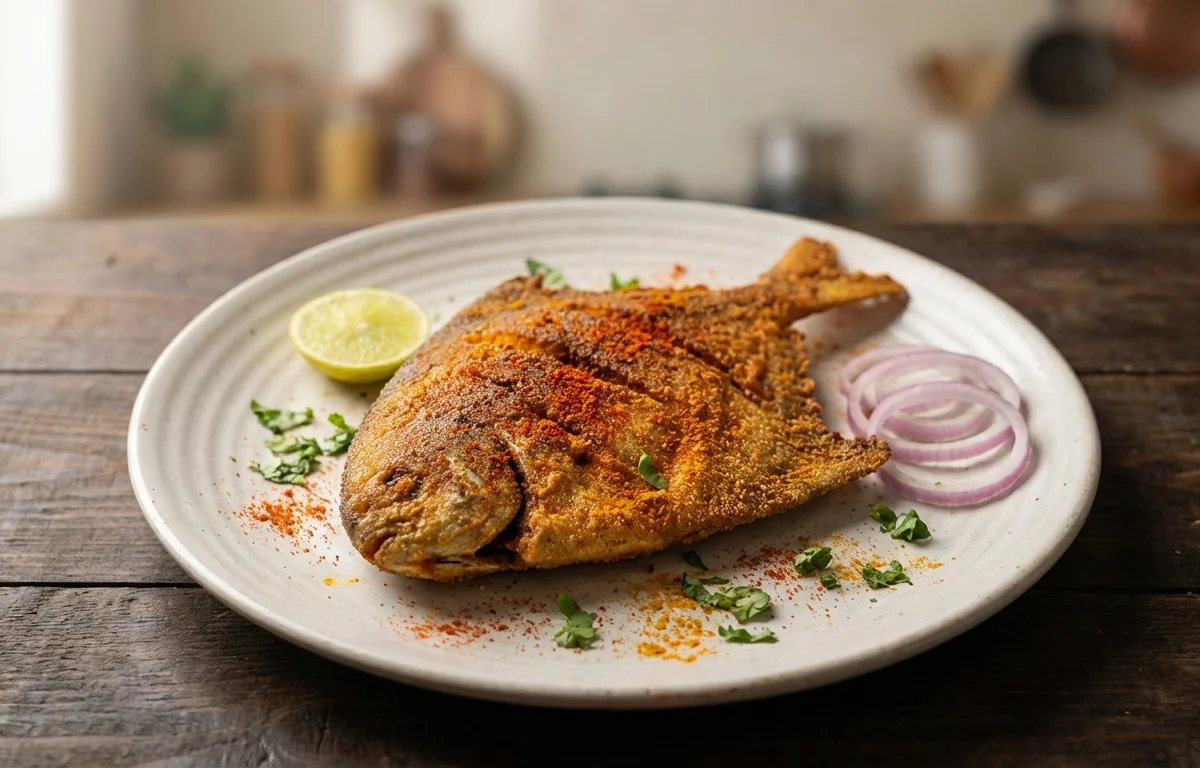
Pampada Bhaja
Crispy, golden pan-fried rice papads that puff up beautifully in seconds. A classic Bengali side dish that adds a delicate crunch to any meal, pairing wonderfully with steamed rice and dal. Ready in just a few minutes with minimal ingredients.
For 4 servings
- prep · ~1 min
Heat the tawa or frying pan.
Place a tawa or flat frying pan over medium heat. Let it warm up for about a minute until hot but not smoking.
TIPThe pan must be evenly hot before adding oil, otherwise the papad sticks and doesn't puff properly. - fry
Add oil and spread across the tawa.
Drizzle 2 teaspoons of oil onto the hot tawa. Use a spoon or paper towel to spread a thin, even layer across the cooking surface.
- fry
Place the pampad on the tawa and press gently.
Lay one pampad flat on the hot oiled surface. Using a folded cloth or spatula, press down gently all over for 5-10 seconds so it makes full contact with the pan.
TIPPress lightly but firmly — this helps the papad puff up evenly across its surface. - fry
Flip and cook the other side.
Once the underside turns light golden and crisp (about 15-20 seconds), flip the pampad using tongs. Press down gently again and cook for another 15-20 seconds until golden and fully puffed.
- fry · ~3 min
Remove and repeat with remaining pampads.
Transfer the fried pampad to a plate lined with paper towels. Wipe the tawa clean with a paper towel, add a fresh thin layer of oil, and fry the next pampad. Repeat until all 4 are done.
TIPWiping the pan between batches prevents burnt oil residue from sticking to the next papad. - serve
Serve immediately with steamed rice and dal.
Arrange the crisp pampads on a plate. They lose their crunch if left out too long, so serve right away alongside bhaat and dal, or enjoy as a crunchy side with any Bengali meal.
TIPDo not cover or stack hot pampads — the trapped steam makes them soggy.
What to keep in mind.
6 tips from the recipe — small details that make a real difference to the final dish.
- 1Use a well-seasoned cast iron tawa for the most even heat and best puff.
- 2Always wipe the pan clean between batches to avoid burnt bits sticking to the next papad.
- 3Press the papad gently but firmly with a folded cloth or spatula to ensure even puffing.
- 4Do not stack or cover hot pampads — steam will make them soggy within minutes.
- 5Fry one at a time; crowding the pan prevents proper puffing and even browning.
- 6Store leftover uncooked pampads in an airtight container away from moisture to keep them crisp.
Adapt it for your goals.
Air-fryer
Skip the oil and cook in an air fryer at 180°C for 2-3 minutes, flipping once — yields a lighter, lower-fat version with the same crisp texture.
microwaveMicrowave
Place a single pampad on a microwave-safe plate and microwave on high for 30-40 seconds — it puffs up without any oil, ideal for a quick, low-calorie snack.
spicedSpiced
Sprinkle a pinch of roasted cumin powder, black salt, or red chilli powder onto the hot fried pampad for an extra layer of savoury flavour.
jainJain
Use a dry-roast method on a non-stick pan with no oil — the papad still puffs and crisps, suitable for Jain diets that avoid root vegetables and certain oils.
Why this is on our healthy list.
Low in Fat
Uses only 2 tsp oil for 4 papads — a fraction of the oil absorbed by deep-fried snacks, making it a light and crisp side.
Gluten-Free Base
Made from rice flour, these papads are naturally gluten-free and suitable for those with celiac sensitivity or gluten intolerance.
Minimal Ingredients
Contains only rice papad and a small amount of oil — no preservatives, artificial flavours, or complex additives.
Quick Energy Source
Rice-based papads provide easily digestible carbohydrates, offering a fast energy boost when paired with a balanced meal of dal and vegetables.
Frequently asked questions
The pan was not hot enough, or the oil layer was too thick — ensure the tawa is hot before adding oil and press the papad gently to force even steam expansion.



-curry.webp)
.webp)