
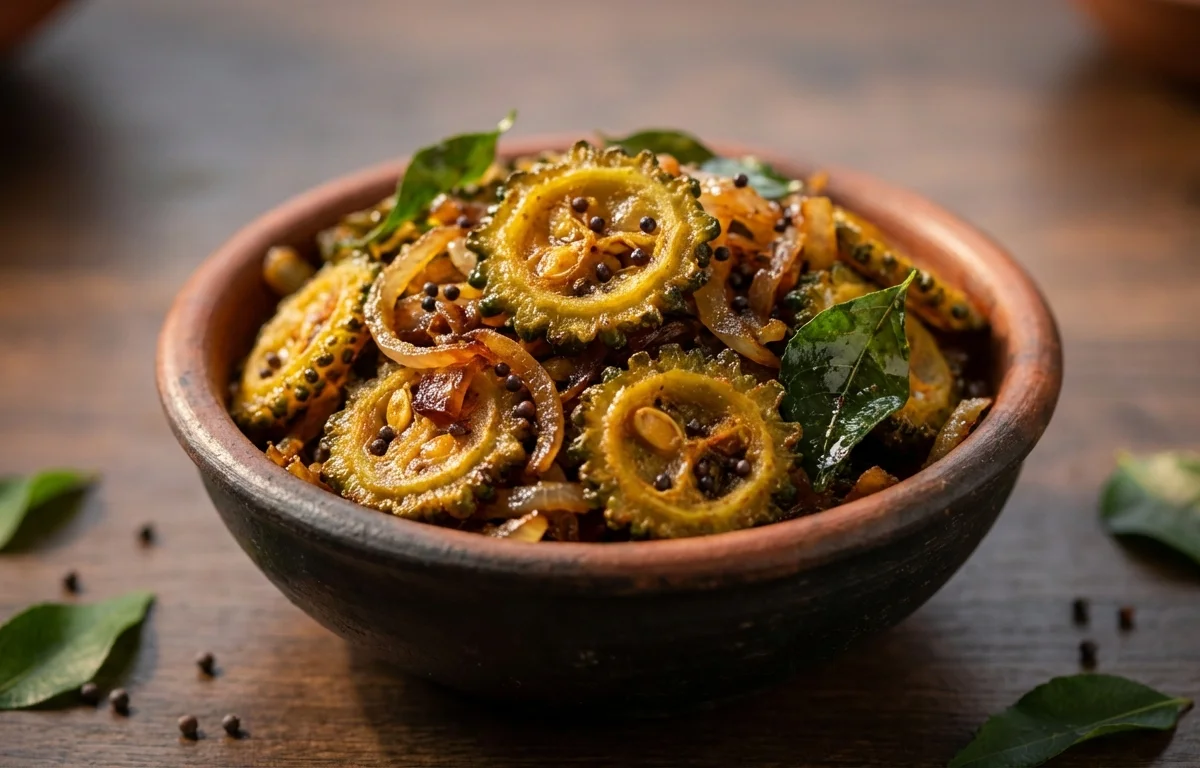
Pavakka Fry
Thin slices of bitter gourd are tossed with onions, spices, and a little coconut, then pan-fried until tender and lightly crisp at the edges. It is a homestyle Kerala side that pairs especially well with rice and dal.
For 4 servings
- prep · ~10 min
Slice the pavakka and onions.
1.Wash the bitter gourd well and trim the ends.2.Slice it thinly into rounds and remove any hard mature seeds.3.Slice the onions thinly and slit the green chilies.TIPThin, even slices cook faster and help the edges turn lightly crisp. - temper · ~2 min
Heat the oil and splutter the mustard seeds.
Place a wide pan over medium heat and add the oil. When hot, add the mustard seeds and let them crackle, then add the curry leaves.
- saute · ~5 min
Cook the onions and chilies.
Add the sliced onion and green chili to the pan. Cook for 4 to 5 minutes, stirring often, until the onions soften and turn light golden.
- saute · ~3 min
Add the pavakka and spices.
1.Add the sliced bitter gourd and mix well with the onions.2.Sprinkle in turmeric powder, red chili powder, coriander powder, and salt.3.Stir well so the slices are evenly coated with the spices. - fry · ~12 min
Pan-fry until tender and lightly crisp.
Cook on medium-low heat for 10 to 12 minutes, stirring every 2 minutes, until the bitter gourd is tender and browned in spots. Keep the pan uncovered so the fry stays dry.
TIPDo not cover the pan for long, or the pavakka will steam and lose its fried texture. - garnish · ~1 min
Mix in the grated coconut.
Add the grated coconut and toss for 1 minute just to warm it through and coat the fry evenly.
- serve
Serve hot.
Serve the pavakka fry hot as a side with rice, dal, curd rice, or a simple Kerala meal.
What to keep in mind.
6 tips from the recipe — small details that make a real difference to the final dish.
- 1Slice the pavakka as evenly and thinly as possible so it softens before the onions over-brown.
- 2If your bitter gourd is very mature, remove the hard white seeds completely or the fry can taste woody.
- 3Use a wide pan rather than a deep kadai so moisture escapes and the slices brown instead of steaming.
- 4Stir every couple of minutes, but not constantly; brief contact with the pan helps develop crisp edges.
- 5Add the grated coconut only at the end, or it can darken too much and lose its fresh sweetness.
- 6This fry reheats well in a skillet over low heat; avoid microwaving if you want to keep the dry texture.
Adapt it for your goals.
Low-oil
Use a very wide nonstick pan and reduce the oil slightly; the fry will be less rich but still dry and flavorful.
extra spicyExtra-spicy
Increase green chilies or red chili powder for a sharper heat that balances the bitter gourd well.
no coconutNo-coconut
Skip the grated coconut for a plainer, more bitter-forward fry that keeps longer and pairs nicely with curd rice.
shallotShallot
Replace onion with thinly sliced Kerala shallots for a sweeter, more traditional homestyle flavor.
Why this is on our healthy list.
Vegetable-Forward Side
Bitter gourd makes this a light, savory side dish with more vegetable content than heavily starchy accompaniments.
Moderate Use of Oil
The dish gets its texture mainly from pan-frying and moisture reduction rather than deep-frying.
Includes Beneficial Spices
Turmeric, chili, coriander, curry leaves, and mustard seeds add flavor along with plant compounds from whole spices and herbs.
Coconut Adds Satiety
A small amount of fresh grated coconut gives richness and helps make this simple side feel more satisfying.
Frequently asked questions
Use thin slices, remove any hard mature seeds, and let the onions turn lightly golden before adding the pavakka. Good browning also mellows the harsh bitter edge.


