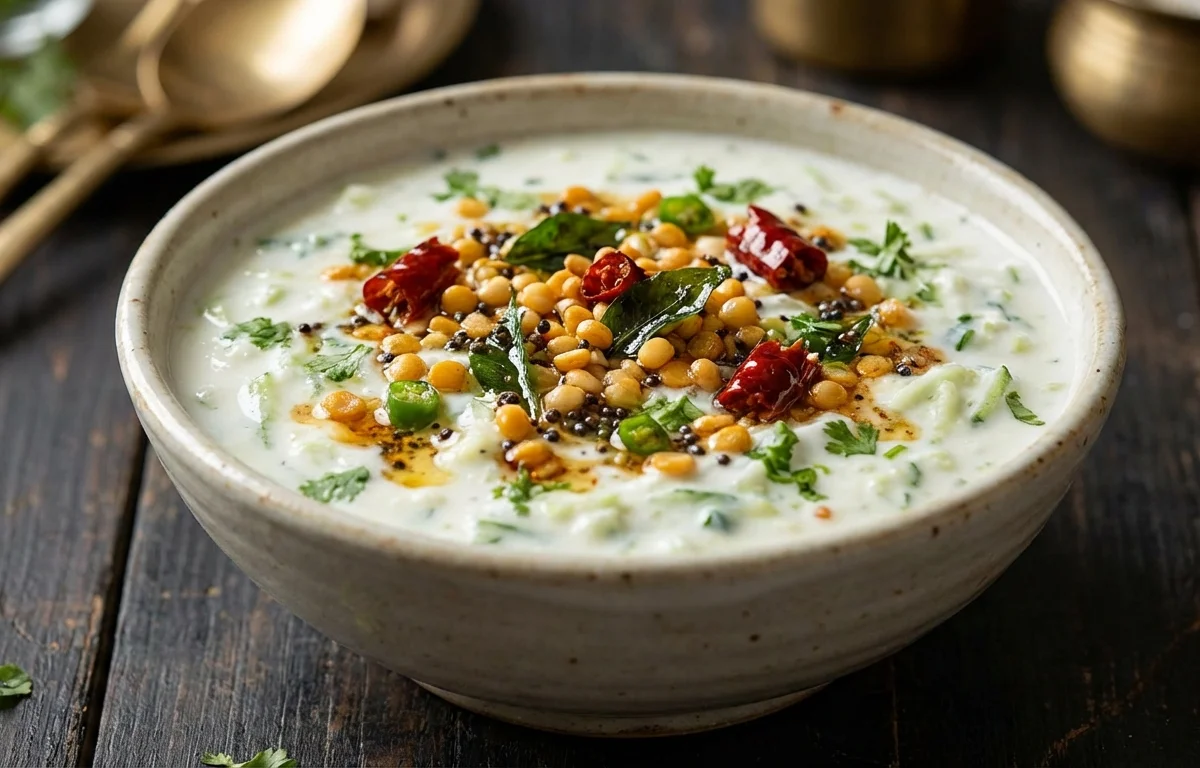
Perugu Pachadi
Cool, creamy yogurt pachadi with finely chopped cucumber, green chili, and a quick tempering of mustard seeds and curry leaves. This Andhra-style side is light, fresh, and perfect with rice, pulao, or spicy curries.
For 4 servings
- prep · ~5 min
Prep the vegetables.
1.Finely chop the cucumber.2.Finely chop the green chili.3.Grate the ginger.4.Chop the coriander leaves. - mix · ~2 min
Mix the pachadi base.
Add yogurt, cucumber, green chili, ginger, coriander leaves, and salt to a bowl. Whisk and mix until creamy and evenly combined.
- temper · ~1 min
Make the tempering.
1.Heat oil in a small pan over medium heat.2.Add mustard seeds and let them splutter.3.Add urad dal and cook until lightly golden.4.Add curry leaves and asafoetida, then cook for a few seconds until fragrant. - assemble · ~1 min
Finish the pachadi.
Pour the hot tempering over the yogurt mixture and stir gently. Serve right away or chill briefly before serving.
- serve
Serve the perugu pachadi.
What to keep in mind.
7 tips from the recipe — small details that make a real difference to the final dish.
- 1If the cucumber is very watery, lightly squeeze or drain it for a few minutes so the pachadi stays thick.
- 2Use chilled, well-whisked yogurt for the smoothest texture and the most refreshing finish.
- 3Let the mustard seeds fully splutter before adding urad dal; otherwise the tempering can taste raw.
- 4Cook the urad dal only until light golden, since it darkens quickly in the hot oil.
- 5Pour the tempering over the yogurt immediately and stir gently so the curry leaf and hing aroma blooms into the pachadi.
- 6Add salt just before serving if making ahead, because cucumber can release more water as it sits.
- 7Briefly chill after mixing, but not too long after tempering if you want the urad dal to keep a little crunch.
Adapt it for your goals.
Low-spice
Reduce or skip the green chili for a milder pachadi that still keeps its cooling yogurt-cucumber character.
onion addedOnion-added
Mix in a few tablespoons of very finely chopped onion for extra bite and texture, especially good with plain rice.
veganVegan
Use unsweetened plant yogurt and a pinch of extra salt; this keeps the same cooling style without dairy.
thicker dipThicker-dip
Use thicker curd or hung yogurt for a scoopable version that works well as a dip alongside snacks or roti.
Why this is on our healthy list.
Cooling and Hydrating
Cucumber and yogurt make this side naturally refreshing, which pairs especially well with hot, spicy Andhra meals.
Gut-Friendly Ingredients
Yogurt contributes beneficial cultures, while ginger and asafoetida are traditional additions often used in comfort foods.
Light Yet Satisfying
With mostly yogurt, cucumber, and a small tempering, this pachadi adds creaminess and flavor without feeling heavy.
Frequently asked questions
Yes, you can make it a few hours ahead and refrigerate it. For the freshest texture, add the tempering and salt closer to serving.




.webp)