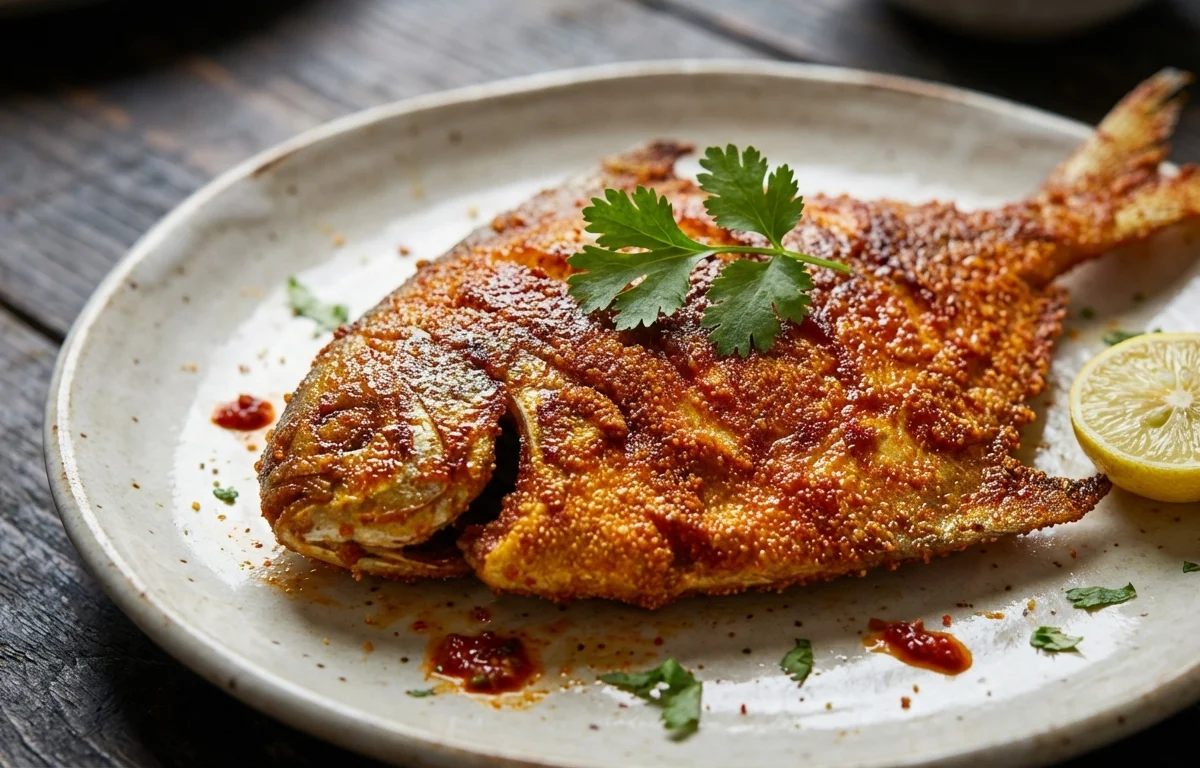
Pomfret Masala Fry
Crispy, golden pan-fried pomfret coated in a bold, tangy spice paste. This coastal Indian favorite has a smoky charred crust on the outside and tender, flaky fish inside. Ready in under 30 minutes, it pairs beautifully with dal and rice or simply with a squeeze of lemon and sliced onions.
For 4 servings
- prep · ~5 min
Clean and prep the pomfret.
1.Rinse the pomfret under cold water and pat completely dry with paper towels.2.Using a sharp knife, make 3-4 deep diagonal gashes on both sides of each fish.3.Place the fish in a large mixing bowl and set aside. - mix · ~3 min
Prepare the masala paste.
1.In a small bowl, combine ginger-garlic paste, red chili powder, coriander powder, cumin powder, garam masala, turmeric powder, and dry mango powder.2.Add lemon juice and salt, then mix into a thick, smooth paste.3.Add rice flour and mix once more until fully incorporated.TIPThe paste should be thick enough to cling to the fish. If it's too dry, add a few drops of water. - prep · ~15 min
Marinate the fish.
1.Using your hands or a spoon, coat each pomfret generously with the masala paste.2.Gently rub the paste into the gashes and cavity of the fish.3.Let the fish rest for 10-15 minutes to absorb the flavors.TIPDon't marinate for more than 30 minutes, or the lemon juice will start to 'cook' and break down the delicate fish. - fry · ~10 min
Shallow fry the pomfret.
1.Heat 2 tablespoons of oil in a heavy tawa or cast-iron skillet over medium-high heat.2.Once the oil is shimmering, carefully place two marinated fish in the pan.3.Fry for 4-5 minutes until the underside is deep golden brown and crisp.4.Gently flip the fish, drizzle another tablespoon of oil around the edges, and cook the other side for another 4-5 minutes.5.Transfer to a paper towel-lined plate and repeat the process with the remaining oil and fish.TIPResist the urge to move the fish around. Let it sear undisturbed to build a perfect crust that releases naturally from the pan. - garnish
Garnish and serve immediately.
Transfer the fried pomfret to a serving platter. Scatter the sliced onion rings on top, sprinkle with fresh coriander leaves, and tuck lemon wedges on the side.
TIPServe with a squeeze of lemon just before eating for a final pop of tangy freshness.
What to keep in mind.
6 tips from the recipe — small details that make a real difference to the final dish.
- 1Pat the fish bone-dry before marinating to help the masala paste adhere better.
- 2Use a well-seasoned cast-iron skillet for the crispiest, most even crust.
- 3The fish releases from the pan when it's ready; don't force it or the skin will tear.
- 4Let the oil shimmer before adding the fish — a sizzling start seals in juices.
- 5Serve immediately; pomfret loses its crunch fast, so reheat on a hot pan if needed.
- 6For extra char, finish the fried fish over a gas flame or grill for 30 seconds per side.
Adapt it for your goals.
Air-fryer
Skip the shallow fry — brush the marinated fish with oil and air-fry at 200°C for 10-12 minutes, flipping once. This reduces oil by over half while keeping the crust crisp.
gluten freeGluten-free
The recipe already uses rice flour, which is naturally gluten-free, making this dish safe for celiac or gluten-sensitive diners. Ensure your garam masala and dry mango powder are certified gluten-free.
no fish version (paneer)No-fish version (paneer)
Replace pomfret with thick 1.5cm paneer slices. Gash gently, apply the same masala, and shallow-fry 3-4 minutes per side. A great vegetarian option with a similar protein punch.
Why this is on our healthy list.
Rich in Omega-3 Fatty Acids
Pomfret is a fatty fish packed with heart-healthy omega-3s that support brain function and reduce inflammation.
Digestive-Aid Spices
Ginger, garlic, cumin, and turmeric all aid digestion, reduce bloating, and possess anti-inflammatory properties.
Low-Carb Meal Option
With only a small amount of rice flour as a binder, this dish is naturally low in carbohydrates and suitable for low-carb diets.
Frequently asked questions
Yes, but thaw it completely in the refrigerator, pat very dry, and proceed with marinating — excess water will ruin the crust.