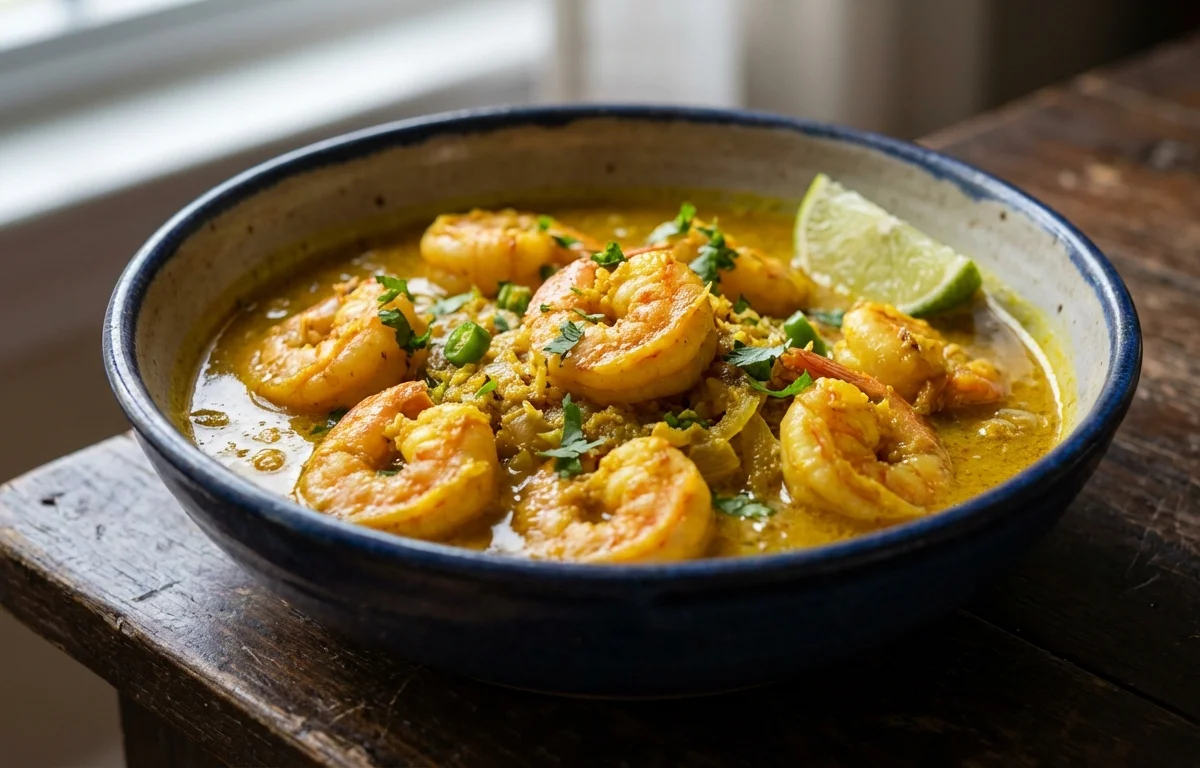
Prawn Hinga Udda
A light, aromatic Bengali prawn curry where the earthy, pungent aroma of asafoetida (hing) takes center stage. Juicy prawns are gently simmered in a thin, mustard-kissed gravy fragrant with nigella seeds and green chilies. This quick, everyday recipe lets the natural sweetness of fresh prawns shine through.
For 4 servings
- prep
Clean and prepare the prawns.
Devein the prawns, remove their shells and rinse gently. Pat them completely dry with a kitchen towel.
TIPEnsure prawns are dry before adding to the pan; excess water will dilute the gravy. - temper · ~3 min
Smoke the mustard oil and temper spices.
Heat mustard oil in a pan over medium-high heat until it reaches its smoking point and turns pale yellow. Reduce heat to low and add nigella seeds, letting them crackle for 10-15 seconds. Add asafoetida and turmeric powder, stirring for just 5 seconds until fragrant.
TIPHeating mustard oil to its smoke point is crucial to reduce its raw pungency. - simmer · ~2 min
Add water and green chilies.
Pour in warm water carefully, as the oil may splutter. Add the slit green chilies and bring the liquid to a gentle simmer.
- simmer · ~4 min
Cook the prawns in the thin gravy.
Gently add the prawns to the simmering liquid. Season with salt and cook for 3-4 minutes until the prawns are just opaque and curled. Do not overcook.
TIPPrawns cook very fast. Remove the pan from heat the moment they turn pink and firm. - garnish
Finish and serve hot.
Turn off the heat. Sprinkle fresh chopped coriander leaves on top and serve immediately with steamed rice.
What to keep in mind.
8 tips from the recipe — small details that make a real difference to the final dish.
- 1Pat the prawns bone-dry with paper towels before cooking to prevent diluting the thin gravy.
- 2Always heat mustard oil until it smokes and turns pale yellow to tame its raw pungency.
- 3Use warm water when adding to the pan to maintain a steady simmer and prevent shocking the oil.
- 4Cook the prawns just until they turn opaque and curl — about 3-4 minutes — to keep them tender.
- 5Slit the green chilies lengthwise but keep them whole so they infuse the gravy without making it too fiery.
- 6Serve immediately after cooking; this curry is meant to be enjoyed fresh, as leftover prawns can turn rubbery.
- 7For the best aroma, add the asafoetida directly to the hot oil after the nigella seeds crackle.
- 8Adjust the number of green chilies based on your heat preference, but keep at least two for fragrance.
Adapt it for your goals.
Low-fat
Reduce mustard oil to 1 tablespoon and use a non-stick pan to cut calories while keeping the authentic tempering technique; the thin gravy remains flavorful but lighter.
with vegetablesWith vegetables
Add small cubes of potato or pointed gourd (potol) along with the water and simmer for 5 minutes before adding prawns, turning this into a heartier one-pot meal.
coconut milkCoconut-milk
Swap 1 cup of water with thin coconut milk for a richer, slightly sweet gravy that balances the pungent asafoetida; this variation is common in coastal Bengali homes.
no seafoodNo-seafood
Replace prawns with firm paneer cubes or boiled chickpeas for a vegetarian version that still absorbs the hing-and-mustard flavors beautifully.
extra spicyExtra-spicy
Add 1/2 teaspoon red chili powder along with the turmeric and use 5 green chilies for a fiery version that still lets the hing shine.
Why this is on our healthy list.
Rich in Lean Protein
Prawns provide high-quality, low-fat animal protein that supports muscle repair and satiety, making this dish a light yet filling meal.
Low in Calories
With minimal oil and no heavy cream or coconut, this thin gravy is naturally low in calories and fits well into weight-conscious diets.
Supports Digestion
Asafoetida (hing) is traditionally used in Bengali cooking to aid digestion and reduce bloating, especially in seafood dishes.
Anti-Inflammatory Spices
Turmeric contains curcumin, a known anti-inflammatory compound, while mustard oil provides omega-3 fatty acids that support joint health.
No Artificial Additives
The recipe relies on whole spices and fresh ingredients, free from preservatives or processed thickeners, keeping it clean and natural.
Frequently asked questions
Yes, but thaw them completely in the refrigerator, pat them very dry with paper towels, and reduce the cook time slightly since frozen prawns release more water.