
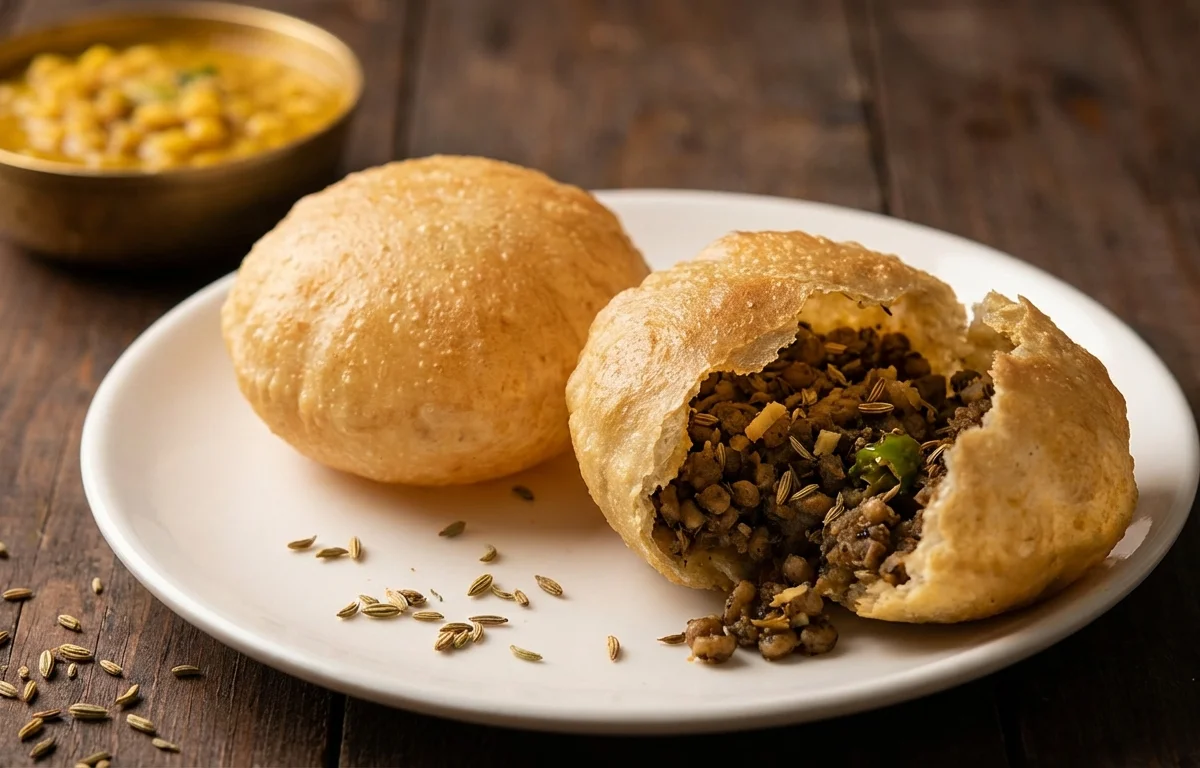
Radhaballabhi
This festive Bengali stuffed fried bread is made with a soft maida dough and a fragrant urad dal filling seasoned with fennel, ginger, and hing. It puffs beautifully in hot oil and is usually served warm for breakfast or special meals.
For 8 servings
- prep · ~7 min
Soak and grind the urad dal.
1.Wash the urad dal well and soak it in water for 6 hours.2.Drain the dal completely so the filling does not turn wet.3.Grind it with ginger to a coarse paste without adding water, or with just a few drops if needed.TIPKeep the ground dal fairly coarse for a textured filling that stays inside the bread. - saute · ~8 min
Cook the filling.
1.Heat 1 tbsp oil in a pan over medium heat.2.Add cumin seeds, fennel seeds, and asafoetida and cook until fragrant, about 20 seconds.3.Add the ground dal paste, red chili powder, and half of the salt.4.Cook, stirring often, until the mixture turns dry, aromatic, and starts leaving the sides of the pan, 6 to 8 minutes.TIPDry filling is the key to easy stuffing and good puffing during frying. - rest · ~15 min
Cool the filling.
Transfer the filling to a plate and let it cool completely. Divide it into 8 equal portions once cool enough to handle.
- knead · ~20 min
Make the dough.
Mix all-purpose flour, sugar, the remaining salt, and ghee in a bowl. Add water little by little and knead into a soft, smooth dough. Cover and rest for 20 minutes.
TIPA softer dough helps the radhaballabhi puff better and keeps the outer layer tender. - assemble · ~12 min
Stuff and shape the breads.
1.Divide the rested dough into 8 equal balls.2.Flatten one ball into a small disc and place one portion of filling in the center.3.Bring the edges together and seal well.4.Gently roll it into a small round bread, using light pressure so the filling spreads evenly without breaking out. - fry · ~12 min
Deep fry the radhaballabhi.
1.Heat the oil for deep frying in a kadai over medium heat until moderately hot.2.Slide in one shaped bread and press lightly with a slotted spoon so it puffs.3.Fry until lightly golden on both sides, about 1 to 2 minutes total.4.Remove and drain, then fry the remaining breads the same way.TIPDo not fry on very high heat or the outside will brown before the inside cooks through. - serve
Serve hot.
What to keep in mind.
7 tips from the recipe — small details that make a real difference to the final dish.
- 1Drain the soaked urad dal very well before grinding; extra moisture makes the stuffing leak while rolling.
- 2Cook the dal filling until it is crumbly and leaves the pan, not pasty, so the breads puff instead of bursting.
- 3Let the filling cool completely before stuffing, or the warm steam will soften the dough and tear it.
- 4Roll from the center outward with light pressure so the filling spreads evenly without breaking the surface.
- 5Keep the oil moderately hot; if it is too cool the radhaballabhi turns greasy, and if too hot it browns before puffing.
- 6Fry one at a time and gently press with a slotted spoon right after it rises to help it balloon fully.
- 7Serve immediately after frying for the best contrast between the tender bread and the fragrant dal center.
Adapt it for your goals.
Whole-wheat
Replace part of the maida with atta for a nuttier, more rustic radhaballabhi with a slightly heartier bite.
no onion no garlic festiveNo-onion-no-garlic festive
Keep the classic hing, fennel, ginger, and dal profile as written for a traditional puja-style serving.
spicierSpicier
Increase the red chili powder or add a pinch of crushed black pepper to the filling for more heat.
shallow friedShallow-fried
Cook like a stuffed paratha with less oil if you want the same flavors in a less puffed, more everyday format.
Why this is on our healthy list.
Protein from Urad Dal
The urad dal filling adds plant protein and makes this fried bread more sustaining than plain luchi or puri.
Digestive Spices
Ginger, fennel, cumin, and a pinch of hing bring traditional digestive support along with aroma and warmth.
Satisfying Festive Breakfast
The combination of flour, dal, and ghee makes it filling and suitable for special breakfasts or celebratory meals.
Frequently asked questions
The usual causes are wet filling, a dough that is too tight, poor sealing, or oil that is too cool. Keep the stuffing dry and fry in moderately hot oil.



-curry.webp)
.webp)