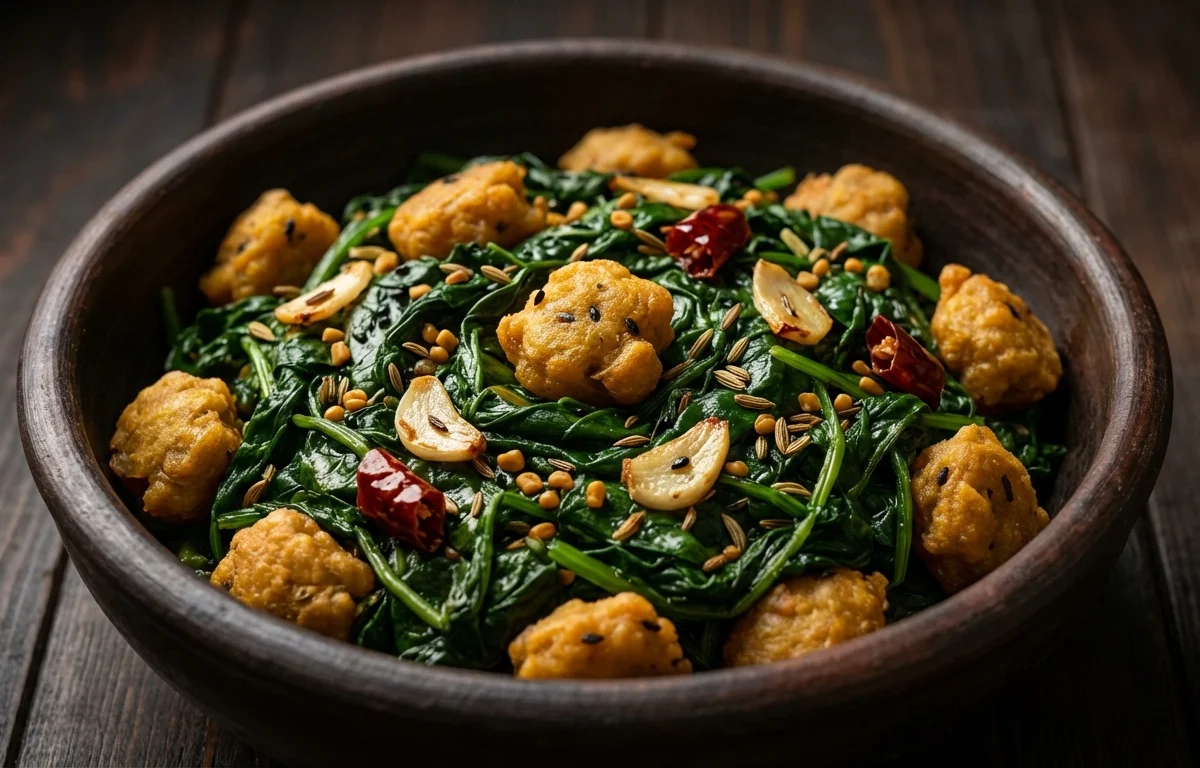
Saaga Bhaja
A simple eastern Indian stir-fry of leafy greens cooked with garlic, green chili, and a light tempering. It is quick, earthy, and lightly spiced, making it a lovely side with rice and dal.
For 4 servings
- prep · ~10 min
Prepare the greens.
1.Pick through the amaranth leaves and remove any thick stems.2.Wash the leaves very well in several changes of water to remove grit.3.Drain completely and roughly chop the leaves. - saute · ~3 min
Heat the oil and temper the spices.
1.Heat mustard oil in a kadai over medium heat until it just begins to smoke lightly.2.Lower the heat and add panch phoron.3.Add sliced garlic and green chili, then cook until the garlic turns lightly golden and fragrant.TIPLet the mustard oil heat properly first so its raw sharpness mellows. - saute · ~7 min
Cook the greens.
1.Add the chopped amaranth leaves to the kadai.2.Sprinkle in the salt and mix well.3.Cook over medium heat, stirring often, until the leaves wilt and the moisture dries out.TIPDo not cover the pan; open cooking helps the greens stay bright and prevents a watery bhaja. - serve
Serve hot with rice.
What to keep in mind.
7 tips from the recipe — small details that make a real difference to the final dish.
- 1Drain the washed amaranth thoroughly before chopping, or the bhaja will steam instead of fry.
- 2Heat mustard oil until it just smokes, then lower the flame before adding panch phoron so the spices bloom without burning.
- 3Slice the garlic evenly so some pieces do not turn bitter before the rest become golden.
- 4Cook the greens uncovered and stir often; Saaga Bhaja should be dry and lightly glossy, not wet.
- 5Add salt only after the greens hit the pan, since salting early can draw out extra water.
- 6If the amaranth stems are tender, finely chop and add them first for a minute before the leaves.
- 7This dish reheats well in a hot pan for a few minutes; avoid microwaving too long or the greens can turn soggy.
Adapt it for your goals.
Low-oil
Use a little less mustard oil and cook in a wider pan so the greens still dry out quickly; good if you want a lighter everyday side.
jainJain
Skip the garlic and rely on panch phoron and green chili for aroma; suitable for those avoiding root vegetables.
mixed greensMixed-greens
Replace part of the amaranth with spinach or red saag for a softer texture and slightly milder, sweeter flavor.
spicierSpicier
Add an extra slit green chili or finely chopped chili for a sharper heat that pairs especially well with plain rice and dal.
Why this is on our healthy list.
Leafy Green Richness
Amaranth leaves bring the benefits of dark leafy greens, adding plant compounds and everyday nourishment in a simple form.
Lightly Cooked Side Dish
This bhaja uses few ingredients and no heavy sauce, making it a straightforward vegetable side that feels light with a meal.
Garlic and Chili Aroma
Garlic and green chili add bold flavor without needing rich gravies, helping the dish stay punchy and minimal.
Frequently asked questions
Yes, but the taste will be milder and the texture softer. Spinach also releases water quickly, so cook it uncovered until dry.