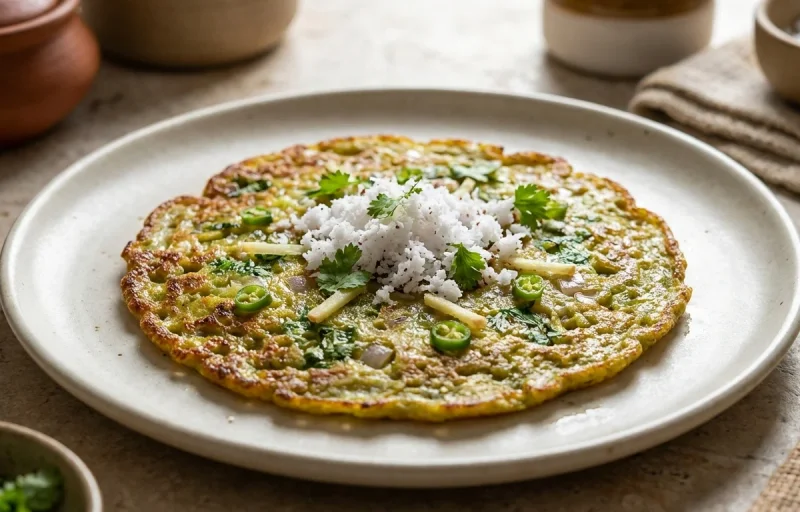
Saga Pitha
A rustic steamed rice cake from Odisha, packed with finely chopped leafy greens and gentle spices. The soft, mildly spiced parcels are typically enjoyed fresh off the steamer with a drizzle of mustard oil or a side of chutney.
For 4 servings
- prep
Prepare the greens.
1.Wash the spinach and amaranth leaves thoroughly to remove all grit.2.Pat dry and finely chop the greens. Set aside in a large mixing bowl.TIPDon't skip drying the leaves — excess water makes the dough sticky. - saute · ~2 min
Temper the spices for the dough.
1.Heat 1 tsp mustard oil in a small pan over medium heat until it reaches its smoking point.2.Add cumin seeds and let them crackle for 30 seconds.3.Immediately pour the tempered oil over the chopped greens in the bowl.TIPHeating mustard oil to its smoke point removes its raw pungency and makes it digestible. - mix · ~5 min
Form the dough.
1.Add the ginger-garlic paste, chopped green chili, turmeric powder, and salt to the greens.2.Mix in the rice flour gradually.3.Pour in hot water a little at a time while mixing with a spoon.4.Knead into a firm but pliable dough. The heat from the water partially cooks the flour.TIPUse water just off the boil. If the dough cracks, add a splash more hot water. - prep · ~3 min
Shape the pithas.
1.Divide the dough into 8 equal portions.2.Roll each portion into a ball, then flatten into a 3-inch disc about ½ cm thick.3.Place the shaped discs on a greased steaming tray or plate.TIPKeep your palms lightly oiled with the remaining mustard oil to prevent sticking. - steam · ~18 min
Steam the pithas.
1.Bring water to a rolling boil in the steamer base.2.Line the steamer basket with a damp muslin cloth.3.Arrange the pitha discs in a single layer with space between them.4.Cover and steam over medium-high heat for 15-18 minutes.5.Check doneness by inserting a toothpick — it should come out clean.TIPDo not lift the lid during the first 12 minutes. The steady steam is what cooks them through. - serve · ~1 min
Finish and serve hot.
1.Carefully remove the steamed pithas from the cloth.2.Drizzle with the remaining 1 tsp mustard oil while still warm.3.Serve immediately with mint chutney or tomato chutney.
What to keep in mind.
6 tips from the recipe — small details that make a real difference to the final dish.
- 1Use very fine rice flour for a tender, non-grainy texture in the pithas.
- 2Knead the dough while the water is still hot to partially gelatinize the rice flour.
- 3Grease your palms with mustard oil to shape the discs without sticking.
- 4Don't lift the steamer lid for the first 12 minutes—steady steam is crucial.
- 5Test doneness with a toothpick; it should come out clean and the disc should be springy.
- 6Serve these pithas warm, as they become firmer and less tender when cooled.
Adapt it for your goals.
High-protein
Replace 1/4 cup of rice flour with roasted chana dal (besan) or moong dal flour. This adds a protein boost and a slightly nuttier flavor, perfect for a more filling breakfast.
low oilLow-oil
Skip the final drizzle of mustard oil; instead, brush the steamed pithas with a splash of lemon juice or serve with a tangy yogurt dip. This reduces fat without sacrificing moisture.
veganVegan
This recipe is naturally vegan. To keep it wholly plant-based, just ensure your chutney (e.g., mint or tomato) contains no yogurt or dairy-based ingredients.
leafy variationLeafy variation
Swap half the amaranth leaves with finely chopped fenugreek (methi) or dill leaves. This yields a slightly bitter, aromatic contrast that pairs beautifully with the mustard oil.
Why this is on our healthy list.
Rich in Leafy Greens
Spinach and amaranth leaves pack a double dose of iron, vitamin A, and folate, supporting healthy blood and vision.
Naturally Gluten-Free
Made solely from rice flour, this dish is safe for those with celiac disease or gluten sensitivity.
Low in Fat
With only a small quantity of mustard oil used, this steamed dish is a light, low-fat option compared to fried snacks.
Digestive Spices
Cumin seeds and ginger-garlic paste add warmth that aids digestion, while mustard oil is traditionally known to stimulate appetite.
Frequently asked questions
Yes, wrap the dough tightly in a damp cloth and refrigerate for up to 24 hours. Let it come to room temperature before shaping and steaming.