Shengdanyachi Chutney
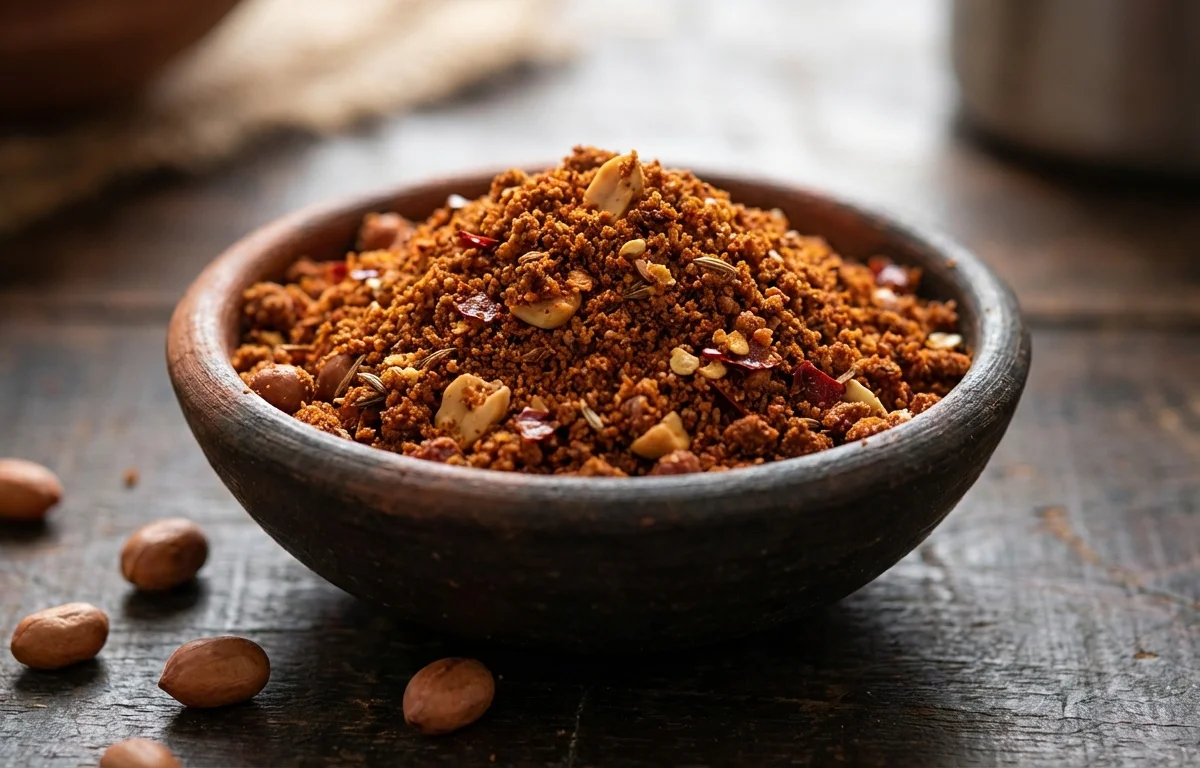
A robust, nutty chutney from Maharashtra made with roasted peanuts, garlic, and a hit of spice. This dry chutney has a rustic, crunchy texture and a bold, earthy flavor. Spoon it over rice, spread it on chapati, or serve it as a zesty side with dal, khichdi, or vada pav.
For 4 servings
- roast · ~5 min
Dry roast the peanuts.
Heat a heavy-bottomed pan over medium-low heat and add the raw peanuts. Dry roast, stirring frequently, until the skins darken slightly and the peanuts smell nutty and aromatic. This takes 4-5 minutes. Transfer to a plate and let them cool completely.
TIPUse medium-low heat — peanuts can scorch fast on high heat. The skin should blister but not blacken. - mix · ~1 min
Grind the chutney base.
Once cooled, rub the peanuts gently between your palms to loosen the skins. Transfer to a mixer grinder jar along with garlic cloves, dried red chilies, cumin seeds, salt, and tamarind paste. Pulse first, then grind in short bursts until the mixture resembles coarse breadcrumbs. Don't let it turn into a paste — the texture should be dry and crumbly.
- temper · ~2 min
Make the tempering.
1.Heat oil in a small tadka pan over medium heat until shimmering.2.Add mustard seeds and let them pop and splutter completely.3.Toss in curry leaves and a pinch of asafoetida. Fry for 10-15 seconds until fragrant, then remove from heat. - mix · ~5 min
Combine and rest.
Pour the hot tempering over the ground chutney and mix thoroughly with a spoon. Let the chutney sit for 5 minutes so the flavors meld together.
What to keep in mind.
6 tips from the recipe — small details that make a real difference to the final dish.
- 1Rub the cooled peanuts between your palms to remove skins easily without crushing the kernels.
- 2Grind in short bursts to achieve a coarse, crumbly texture — a paste will ruin the rustic bite.
- 3Let the tempering cool slightly before mixing to prevent the hot oil from steaming the chutney soggy.
- 4Use fresh curry leaves for the most aromatic tempering; stale leaves add little flavor.
- 5Store in an airtight jar at room temperature for up to 2 weeks — refrigeration can make it clumpy.
- 6Add a pinch of sugar along with salt if you prefer a mild sweet-sour balance.
Adapt it for your goals.
No-oil
Skip the tempering and simply stir in the dry spice powders (mustard seed powder, asafoetida, crushed curry leaves) directly into the ground chutney. Lower in fat, yet still flavorful.
extra spicyExtra-spicy
Add 1-2 more dried red chilies or a pinch of Kashmiri red chili powder for deeper heat and color.
jainJain
Omit garlic and asafoetida (or use hing that is Jain-friendly). Add a pinch of roasted cumin powder to keep the earthy profile intact.
coconut peanutCoconut-peanut
Replace half the peanuts with roasted, desiccated coconut for a sweeter, slightly creamy texture — popular in coastal Maharashtrian variations.
Why this is on our healthy list.
Rich in Plant Protein
Peanuts provide a good amount of plant-based protein, making this chutney a satisfying addition to vegetarian meals.
Heart-Healthy Fats
Peanuts contain monounsaturated and polyunsaturated fats, which support heart health when eaten in moderation.
Digestive Aid
Cumin seeds and asafoetida are traditionally used in Indian cooking to aid digestion and reduce bloating.
Low in Added Sugar
The tanginess comes from natural tamarind, not sugar, making this chutney a low-sugar condiment option.
Frequently asked questions
Yes, but reduce the dry roasting time to just 1–2 minutes to warm them through, and skip the skin-removing step.



.webp)