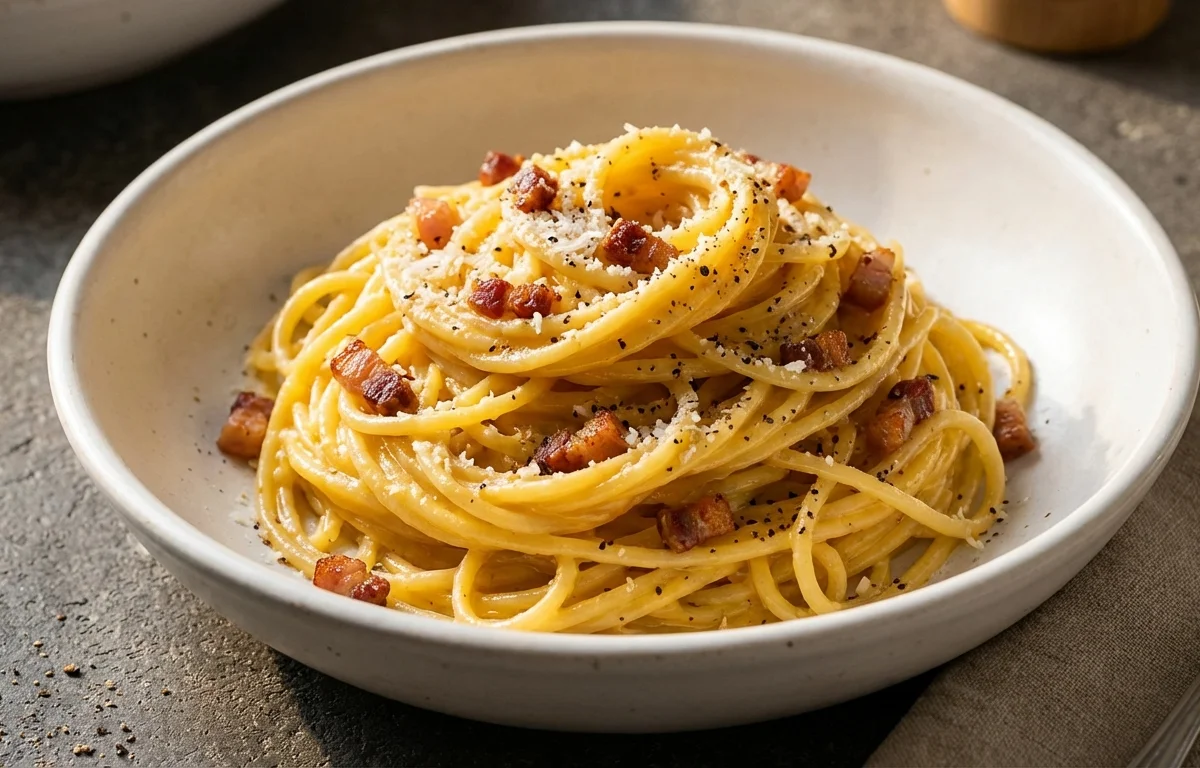
Spaghetti Carbonara
A classic Roman pasta dish where hot spaghetti meets a silky sauce of eggs, grated pecorino, and crispy guanciale. The heat of the pasta gently cooks the eggs into a creamy, golden coating without any cream—just pure, simple ingredients coming together in minutes.
For 4 servings
- prep
Bring a large pot of water to a rolling boil.
Fill a large pot with water and add the salt. Bring to a rolling boil over high heat.
- saute · ~10 min
Render the guanciale until golden and crispy.
1.Place the guanciale batons in a cold large skillet.2.Set over medium heat and cook, stirring occasionally, until the fat renders and the guanciale is golden and crispy (8-10 minutes).3.Remove from heat and set aside, keeping all the rendered fat in the pan.TIPStarting in a cold pan helps the fat render slowly without burning the meat. - mix
Whisk together the egg and cheese mixture.
1.In a medium mixing bowl, combine the whole eggs, egg yolks, and grated pecorino romano.2.Add most of the cracked black pepper, reserving some for garnish.3.Whisk vigorously until the mixture is smooth and well combined. - boil · ~10 min
Cook the spaghetti until al dente.
Drop the spaghetti into the boiling salted water and cook according to package instructions until just al dente. Reserve 1 cup of the starchy pasta water before draining.
TIPReserve more pasta water than you think you'll need—it's the key to a silky sauce. - assemble
Toss hot spaghetti with guanciale and its rendered fat.
Transfer the drained hot spaghetti directly into the skillet with the guanciale and its fat. Toss vigorously with tongs to coat every strand. Remove the skillet from the heat.
TIPThe pan should be off the heat before adding the egg mixture to prevent scrambling. - mix · ~2 min
Add the egg-cheese mixture to create a creamy sauce.
1.Pour the egg and pecorino mixture over the hot pasta.2.Add 1/4 cup of reserved pasta water.3.Toss continuously and vigorously with tongs for 1-2 minutes until the eggs form a creamy, glossy sauce that clings to each strand.TIPIf the sauce is too thick, add more pasta water a tablespoon at a time until it reaches a silky consistency. - serve
Plate immediately and finish with pecorino and black pepper.
Divide the carbonara among warm serving bowls. Finish with the reserved black pepper and an extra generous grating of pecorino romano. Serve immediately.
TIPWarm the serving bowls beforehand to keep the pasta from cooling too quickly.
What to keep in mind.
6 tips from the recipe — small details that make a real difference to the final dish.
- 1Use room-temperature eggs so they emulsify smoothly with the hot pasta.
- 2Reserve at least 1 cup of pasta water—starchy water is essential for a silky sauce.
- 3Never add the egg mixture with the pan still on the heat or the eggs will scramble.
- 4Toss the pasta vigorously for a full 1-2 minutes to build a creamy emulsion.
- 5If the sauce looks too thick, stream in extra pasta water a tablespoon at a time.
- 6Warm your serving bowls to keep the carbonara hot and creamy until the last bite.
Adapt it for your goals.
Pancetta carbonara
Substitute guanciale with pancetta. Easier to find in many markets, it still provides rich pork flavor and rendered fat, though it is less intensely seasoned than guanciale.
gluten freeGluten-free
Use gluten-free spaghetti (e.g., rice or corn-based). Ensure you cook it very al dente and reserve extra pasta water, as gluten-free pasta releases less starch.
extra pepperyExtra peppery
Double the amount of freshly cracked black pepper, adding half during the egg mixing and half at the end. For heat lovers who want a bolder, spicier carbonara.
lighter eggLighter egg
Replace the 3 egg yolks with 2 additional whole eggs. Yields a less rich, slightly lighter sauce while still maintaining a creamy texture.
Why this is on our healthy list.
Rich in Protein
Eggs and guanciale provide high-quality complete protein, supporting muscle repair and satiety.
Source of Calcium
Pecorino romano is packed with calcium, essential for strong bones and teeth.
Contains B Vitamins
Eggs are a natural source of B vitamins (B12, riboflavin), important for energy metabolism and nerve function.
Frequently asked questions
The pan was likely too hot when you added the egg mixture. Always remove the skillet from the heat before pouring in the eggs, and use the residual heat of the pasta to cook them gently while tossing.