
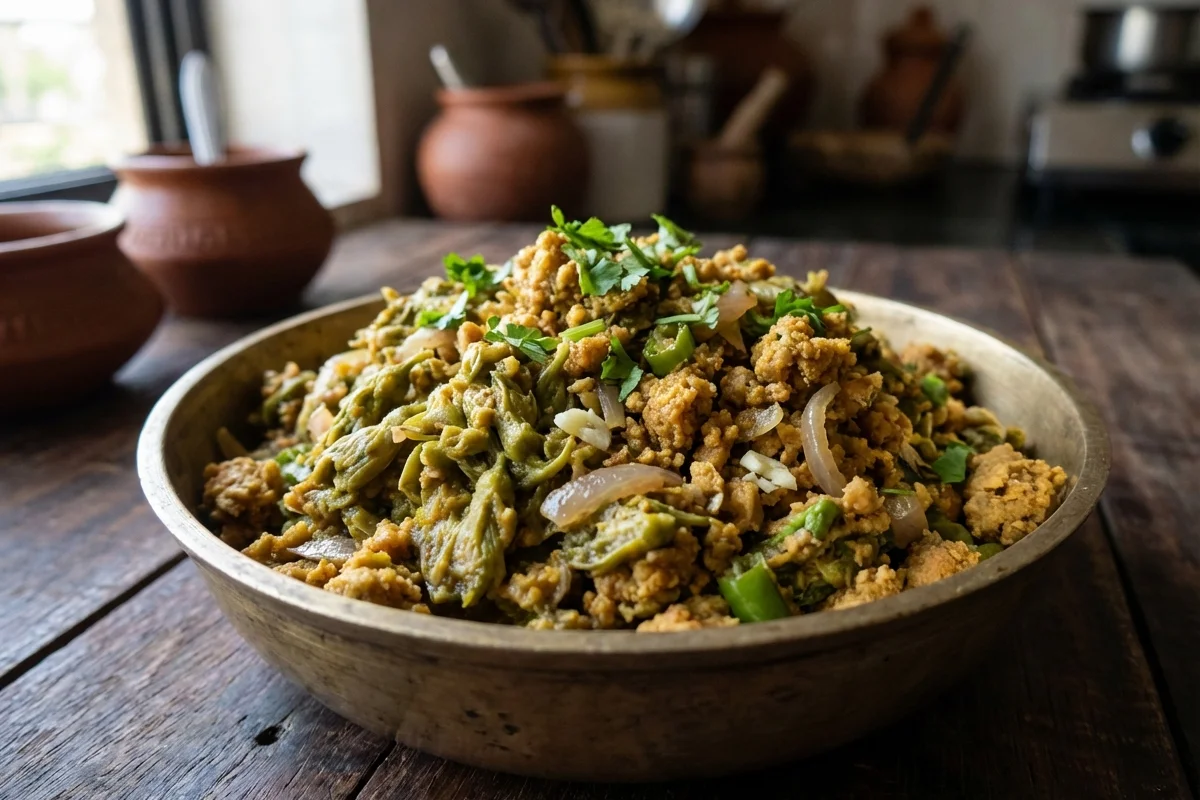
Teetaphool Bhaji
Delicate clusters of neem flowers tossed with tender eggplant and a gentle mustard tempering. This Bengali springtime favorite celebrates the bittersweet charm of neem — a beloved seasonal ritual that pairs beautifully with hot rice and ghee.
For 4 servings
- prep · ~5 min
Wash and drain the neem flowers.
Pick the tender neem flower clusters off the stems. Wash them gently in a bowl of water, then drain well. Pat dry with a kitchen towel so they don't release too much water in the pan.
TIPUse only the young, pale green flower clusters — mature buds turn intensely bitter. - prep · ~3 min
Cube the eggplant.
Cut the eggplant into small, even cubes about 1 cm in size. No need to soak in water — a little bitterness from the skin adds character to this dish.
- temper · ~3 min
Make the mustard oil tempering.
1.Heat mustard oil in a kadai over medium heat until it reaches smoking point.2.Remove from heat briefly, let the smoke subside, then return to medium-low heat.3.Add nigella seeds and dried red chili — let them crackle for 15 seconds.4.Add crushed garlic and green chilies; sauté until garlic turns pale gold (30 seconds).TIPHeating mustard oil to smoking removes its raw pungency — don't skip this step. - saute · ~7 min
Cook the eggplant until tender.
1.Add the cubed eggplant to the kadai and stir well to coat with the tempered oil.2.Sprinkle the pinch of turmeric and stir again.3.Cover and cook on low heat for 5-7 minutes, stirring halfway, until the eggplant is soft and slightly collapsed.TIPNo water needed — the eggplant will release its own moisture and steam gently under the lid. - saute · ~5 min
Add the neem flowers and season.
1.Uncover the kadai and add the drained neem flowers.2.Sprinkle salt and sugar over the mixture.3.Toss everything together gently, then sauté uncovered on medium-low heat for 4-5 minutes until the flowers soften and meld with the eggplant.TIPKeep the heat gentle — high heat will scorch the delicate neem flowers and make them unpleasantly bitter. - garnish · ~1 min
Finish with ghee and serve hot.
Remove from heat. Drizzle a teaspoon of raw ghee over the bhaji and give it one final gentle stir. Transfer to a serving bowl and serve immediately with steamed rice.
What to keep in mind.
6 tips from the recipe — small details that make a real difference to the final dish.
- 1Pick only the pale green neem flower clusters—mature buds are unpleasantly bitter.
- 2Heat mustard oil to its smoking point first to mellow its sharp raw pungency.
- 3Do not add water when cooking eggplant; it releases enough moisture to steam.
- 4Toss neem flowers in last and cook gently on medium-low to avoid scorching.
- 5A pinch of sugar is key—it balances the natural bitterness without making it sweet.
- 6Finish with raw ghee off the heat for a fragrant, buttery final touch.
Adapt it for your goals.
Vegan
Skip the ghee finish or replace it with a teaspoon of raw coconut oil—keeps the dish fully plant-based while adding a subtle sweetness that marries well with neem.
low oilLow-oil
Reduce mustard oil to 1 tablespoon and use a non-stick pan; the eggplant and flowers release enough moisture to cook without sticking, lowering the fat content.
Why this is on our healthy list.
Rich in Antioxidants
Neem flowers are traditionally prized for their detoxifying properties, and eggplant provides nasunin, an antioxidant that supports cellular health.
Low in Calories
This dish is naturally low-calorie, relying on eggplant and neem flowers rather than heavy fats or starches, making it a light yet satisfying side.
Supports Digestion
Neem's gentle bitterness is believed in Ayurveda to stimulate digestive enzymes, while nigella seeds aid in reducing bloating and gas.
Frequently asked questions
Fresh neem flowers are seasonal (spring) and available at Indian grocery stores or farmers' markets in South Asia. You can also order them online in season.





-curry.webp)
.webp)