
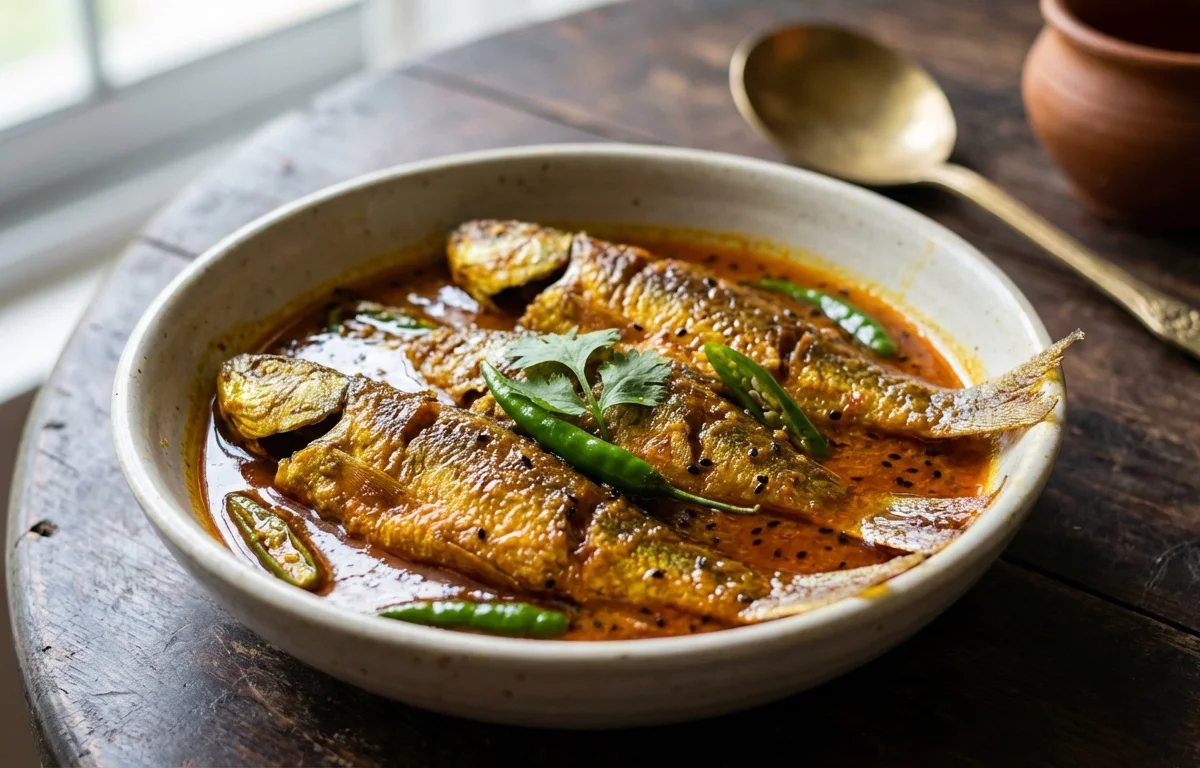
Tel Koi
A quintessential Bengali fish curry where tender koi fish is slow-cooked in mustard oil with minimal spices. The fish simmers gently in its own juices and shimmering oil, creating a rich, aromatic gravy that pairs perfectly with steamed rice.
For 4 servings
- prep · ~10 min
Prep the fish.
Clean the koi fish thoroughly under running water. Pat completely dry with kitchen towels. Make 2-3 shallow diagonal slits on each side of every fish. Sprinkle a pinch each of turmeric and salt all over the fish, rubbing gently into the slits. Set aside for 10 minutes.
- fry · ~10 min
Shallow fry the fish.
1.Heat 4 tbsp mustard oil in a kadai over medium heat until it reaches its smoking point.2.Reduce heat slightly and slide in the fish, 2 at a time, without crowding.3.Fry for 2-3 minutes per side until golden and crisp. Do not move the fish too early or the skin will tear.4.Remove with a slotted spoon and set aside on a plate.TIPMustard oil must smoke to lose its raw pungency. Wait for the white fumes to appear before adding fish. - saute · ~7 min
Build the aromatic base.
1.In the same kadai with the remaining oil, add sliced onion. Sauté on medium heat until soft and translucent (4-5 min).2.Add minced garlic and ginger paste. Cook, stirring, until the raw smell fades (1 min).3.Add turmeric powder, red chili powder, cumin powder, and a pinch of salt. Stir briskly for 30 seconds so spices bloom without burning.TIPAdd a splash of water if the spices stick to the pan or darken too fast. - simmer · ~10 min
Simmer the fish in the gravy.
1.Pour in the hot water and add the slit green chilies. Stir gently and bring to a gentle boil.2.Carefully slide the fried fish back into the pan in a single layer.3.Cover the kadai and simmer on low heat for 8-10 minutes. The oil will separate and float on top, and the gravy will reduce slightly.TIPDo not stir once the fish is in. Gently shake the pan by its handles to prevent sticking. - garnish · ~2 min
Finish and serve.
Turn off the heat. Sprinkle chopped cilantro over the top. Let the dish rest for 2 minutes so the flavors settle. Serve hot.
TIPThe gravy thickens slightly as it rests. It tastes even better after 30 minutes.
What to keep in mind.
6 tips from the recipe — small details that make a real difference to the final dish.
- 1Pat the koi fish completely dry before frying to prevent oil splatter and ensure crisp skin.
- 2Score the fish slits deep enough to allow spices to penetrate, but not so deep that the fish breaks apart during cooking.
- 3Let the mustard oil reach its smoking point and then cool slightly before adding the fish to avoid burning the spices.
- 4Fry the fish in batches; overcrowding lowers the oil temperature and makes the skin soggy.
- 5Resist stirring once the fish goes back into the gravy — gently shake the pan instead to avoid breaking the delicate flesh.
- 6Let the dish rest for 2-5 minutes after turning off the heat; the gravy thickens and flavors meld beautifully.
Adapt it for your goals.
Low-Oil
Reduce mustard oil to 3 tbsp and skip the shallow-fry step — instead, gently poach the marinated fish directly in the simmering gravy. The dish becomes lighter while retaining its characteristic warm pungency.
Herb ForwardHerb-Forward
Add a handful of fresh curry leaves along with the green chilies, and finish with a sprinkle of dried fenugreek (methi) leaves for an extra layer of earthy, citrusy fragrance.
One Pot MealOne-Pot Meal
Add ½ cup of soaked parboiled rice along with the hot water in step 4, and cook covered until the rice is tender. The rice absorbs the flavorful oil and fish essence, turning the dish into a complete meal.
Why this is on our healthy list.
Rich in Omega-3s
Koi (climbing perch) is a freshwater fish naturally high in omega-3 fatty acids, which support heart and brain health.
Anti-Inflammatory Spices
Turmeric and ginger in this dish provide curcumin and gingerol, known for their anti-inflammatory and digestive benefits.
Low in Carbohydrates
This protein-forward curry contains minimal carbs and no added sugar, making it suitable for low-carb or keto-friendly meals when served without rice.
Frequently asked questions
Yes, substitute with any firm, mild freshwater fish like tilapia, rohu, or catfish. Adjust cooking time if using fillets instead of whole fish.



-curry.webp)
.webp)