
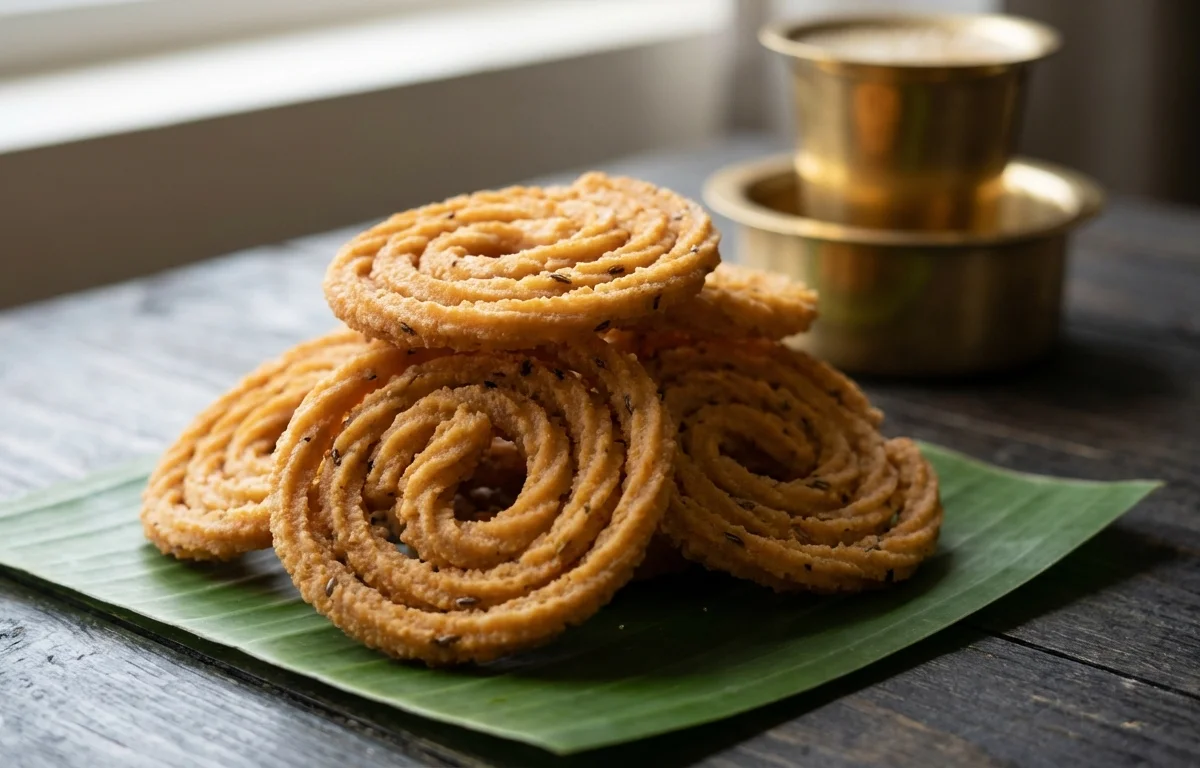
Thenkuzhal Murukku
A light, crisp South Indian murukku made with rice flour and urad dal flour, Thenkuzhal has a delicate bite and mild spicing. It is a festive favorite that stores beautifully and pairs well with tea or coffee.
For 8 servings
- prep · ~3 min
Prepare the flour mixture.
1.Add rice flour and urad dal flour to a wide bowl.2.Add cumin seeds, asafoetida, and salt.3.Mix well so the seasonings are evenly distributed. - mix · ~7 min
Rub in the butter and make the dough.
1.Add softened butter and rub it into the flour until the mixture looks sandy.2.Pour in water a little at a time.3.Mix and gather into a smooth, soft dough without making it sticky.TIPA soft dough gives lighter murukku. If the dough cracks while pressing, add 1 to 2 tsp water and knead again. - prep · ~10 min
Shape the murukku.
1.Grease the murukku press lightly inside.2.Fit the thenkuzhal plate with three holes.3.Fill the press with a portion of dough.4.Press the dough into small spirals on parchment or a clean plate.TIPShape only a few at a time so they do not dry out before frying. - fry · ~15 min
Deep fry the thenkuzhal.
1.Heat oil in a kadai over medium heat until moderately hot.2.Slide 2 to 3 shaped murukku gently into the oil.3.Fry until the bubbling reduces and the murukku turns crisp without browning too much.4.Turn once or twice for even frying, then lift out and drain.TIPKeep the oil at medium heat. Very hot oil darkens the murukku quickly, while low heat makes it absorb more oil. - rest · ~10 min
Cool the murukku completely.
Let the fried thenkuzhal cool on a plate or rack until fully crisp. Store only after they are completely cool.
- serve
Serve or store in an airtight container.
What to keep in mind.
7 tips from the recipe — small details that make a real difference to the final dish.
- 1Roast the urad dal flour just until aromatic, then cool fully; warm flour can make the dough greasy and heavy.
- 2If the dough breaks while pressing, knead in a teaspoon or two of water so the thenkuzhal extrudes smoothly.
- 3Do not overcrowd the kadai; frying only 2 to 3 at a time keeps the oil temperature steady and the shape intact.
- 4Fry on medium heat until the sizzling noticeably subsides; that is the best cue that the inside has turned crisp.
- 5Avoid frying to a deep golden color—thenkuzhal tastes best when pale and lightly cooked, not heavily browned.
- 6Keep the remaining dough covered while shaping batches so the surface does not dry out and crack in the press.
- 7Cool completely before storing, or trapped steam will soften the murukku and spoil its delicate crunch.
Adapt it for your goals.
Vegan
Replace butter with hot oil or vegan butter to keep the same crisp texture without dairy.
pepper spicedPepper-spiced
Add coarsely crushed black pepper for a sharper, more traditional heat than the mild cumin-led version.
sesameSesame
Mix in a little white sesame for extra nuttiness and a more aromatic festive murukku.
garlicGarlic
Add a small amount of garlic paste or garlic powder for a bolder tea-time snack flavor.
Why this is on our healthy list.
Contains Lentil Protein
The urad dal flour adds plant protein and makes the snack more substantial than rice flour alone.
Digestive Spice Support
Cumin and asafoetida are classic seasonings in South Indian cooking that add flavor while supporting easier digestion.
Gluten-Free Ingredients
Made from rice flour and urad dal flour, this recipe does not rely on wheat-based flour.
Frequently asked questions
The dough is likely too dry. Add a little water, knead again, and keep the dough soft but not sticky.


