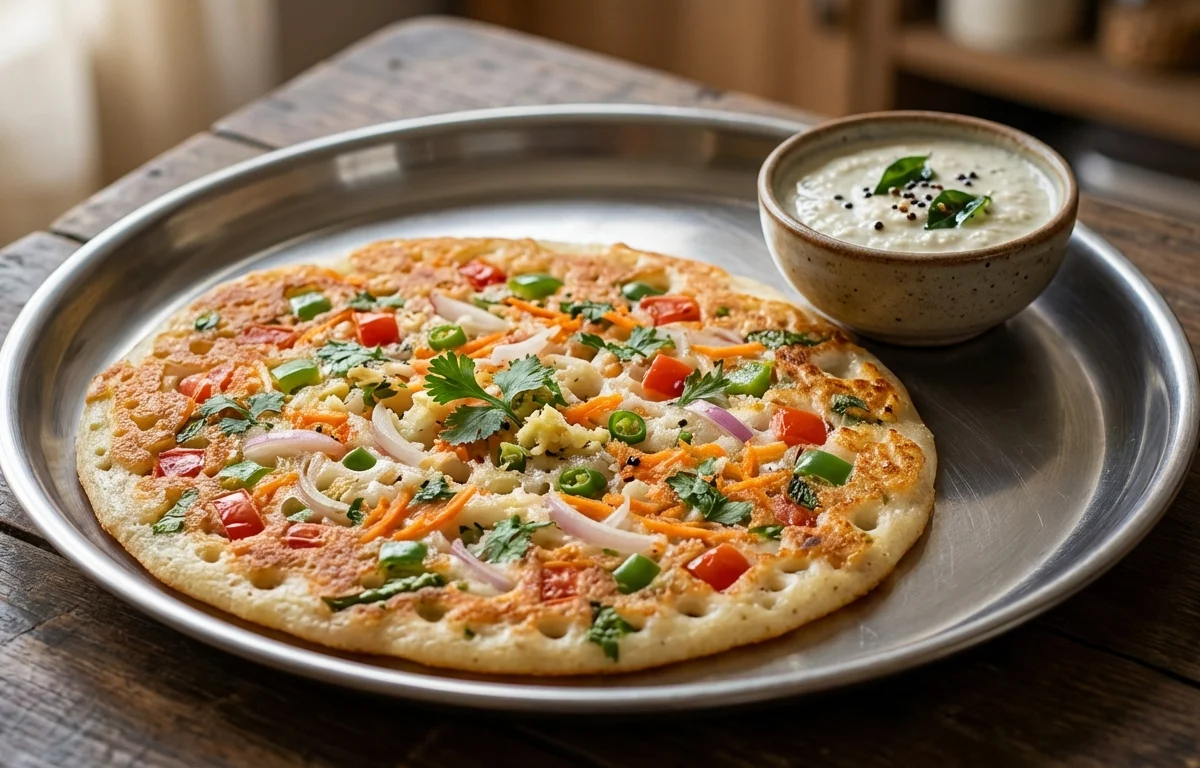
Vegetable Uthappam
Crispy, golden-brown South Indian rice pancakes loaded with colorful vegetables like onion, tomato, bell pepper, and carrots. A savory twist on the classic uthappam that turns simple fermented batter into a satisfying meal — perfect with coconut chutney and sambar.
For 4 servings
- prep
Mix the vegetable topping.
1.Combine chopped onion, tomato, bell pepper, grated carrot, green chili, ginger, and coriander leaves in a bowl.2.Add 1 pinch of salt from the measured amount and mix gently. Set aside. - prep · ~1 min
Season the batter.
Pour the idli batter into a large bowl. Add the remaining salt and mix well. The batter should be of thick pouring consistency — slightly thicker than dosa batter. If too thick, add 1-2 tablespoons of water.
TIPWet your hands or ladle lightly before handling batter to prevent sticking. - fry · ~5 min
Cook the uthappam.
1.Heat a non-stick tawa over medium heat. Drizzle 0.5 teaspoon of oil and wipe gently with a cut onion or paper towel.2.Pour a ladleful of batter onto the center and gently spread into a thick circle — about 6-7 inches in diameter and 0.5 inch thick. Do not spread it too thin like a dosa.3.Immediately scatter a generous spoonful of the vegetable mix evenly on top. Press gently with the spatula so the vegetables embed into the batter.4.Drizzle 0.5 teaspoon oil around the edges and a few drops on top.5.Cover with a lid and cook on medium-low heat until the base turns golden and crisp (about 2-3 minutes).6.Uncover, flip carefully with the spatula, and cook the veggie side for another 2 minutes until lightly charred and the vegetables are cooked.TIPKeep the heat medium-low — high heat will burn the bottom before the vegetables cook through. - serve
Serve the uthappam hot.
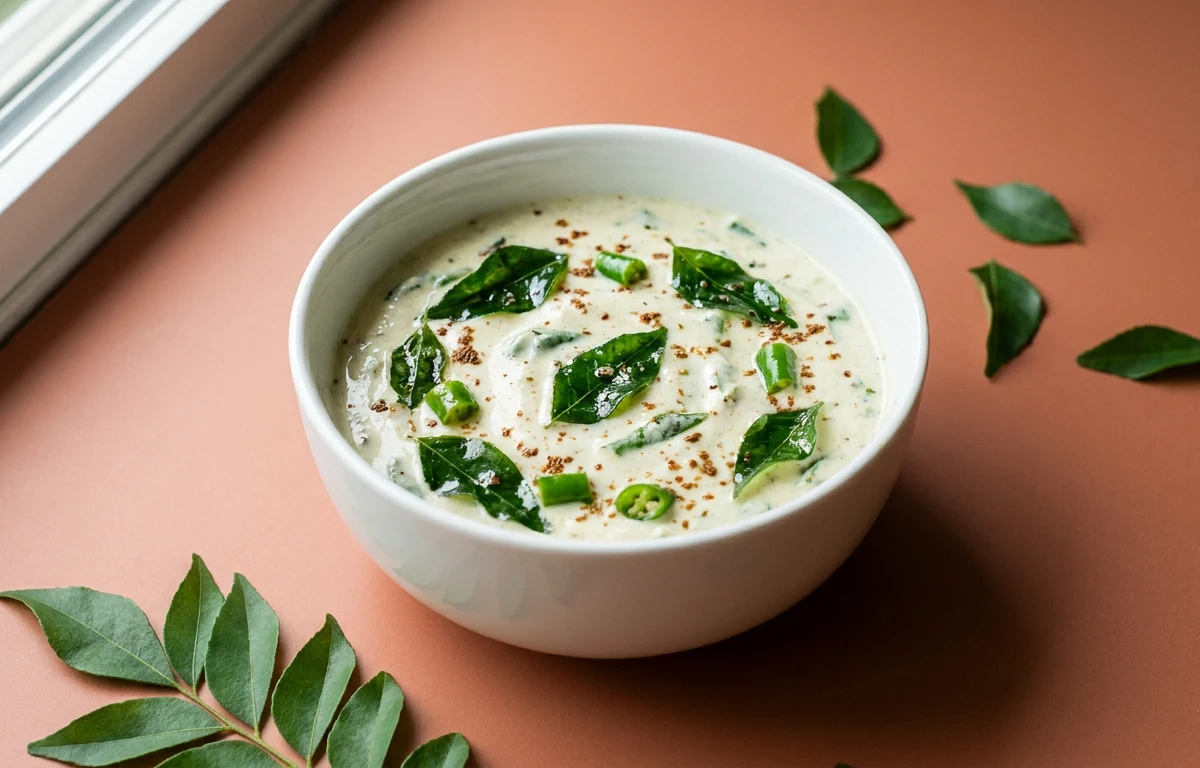
Remove the uthappam from the tawa and place on a serving plate, vegetable side up. Repeat steps 3 for the remaining batter and vegetable mix. Serve immediately with coconut chutney and sambar.
TIPUthappam softens as it cools — serve straight off the tawa for the crispiest texture.
What to keep in mind.
6 tips from the recipe — small details that make a real difference to the final dish.
- 1Use a non-stick tawa and keep the heat medium-low to ensure the vegetables cook through without burning the base.
- 2Press the vegetable topping gently into the batter with a spatula so it stays embedded when you flip.
- 3Cover the uthappam with a lid while cooking the first side — trapped steam helps cook the vegetables on top.
- 4Add the vegetable mix immediately after pouring the batter before the surface sets.
- 5Serve uthappam straight off the tawa — it softens quickly as it cools and loses its crisp edge.
- 6Adjust batter consistency with a splash of water if needed — it should be thicker than dosa batter but still spreadable.
Adapt it for your goals.
High-protein
Replace 1 cup of idli batter with a thick chickpea flour (besan) batter — this boosts protein and adds a nutty flavor, perfect for a post-workout meal.
jainJain
Omit onion, garlic, and ginger. Substitute with finely chopped cabbage, grated beetroot, and a pinch of asafoetida (hing) for a Jain-friendly version that still tastes aromatic.
veganVegan
The recipe is already vegan as written since idli batter is plant-based and uses oil instead of ghee — just ensure your batter contains no dairy by checking local brands.
cheese toppedCheese-topped
Sprinkle grated mozzarella or cheddar over the vegetables before covering — the melting cheese adds a rich, indulgent layer that kids love.
Why this is on our healthy list.
Fermented for Gut Health
The idli batter is naturally fermented, introducing beneficial probiotics that support digestion and a healthy gut microbiome.
Rich in Vegetables
Each serving packs a colorful mix of onion, tomato, bell pepper, and carrot, providing dietary fiber, vitamin C, and antioxidants.
Low in Fat
With only 1 teaspoon of oil per pancake, this recipe is a heart-friendly, low-fat alternative to fried snacks or cheesy flatbreads.
Good Source of Iron
The urad dal (black gram) in the batter contributes plant-based iron, which is better absorbed when paired with the vitamin C from the tomatoes and bell peppers.
Frequently asked questions
Your tawa may not be hot enough when you pour the batter, or the pan's non-stick coating is worn. Heat the pan on medium, drizzle a little oil, and wipe with a cut onion before each pancake.