
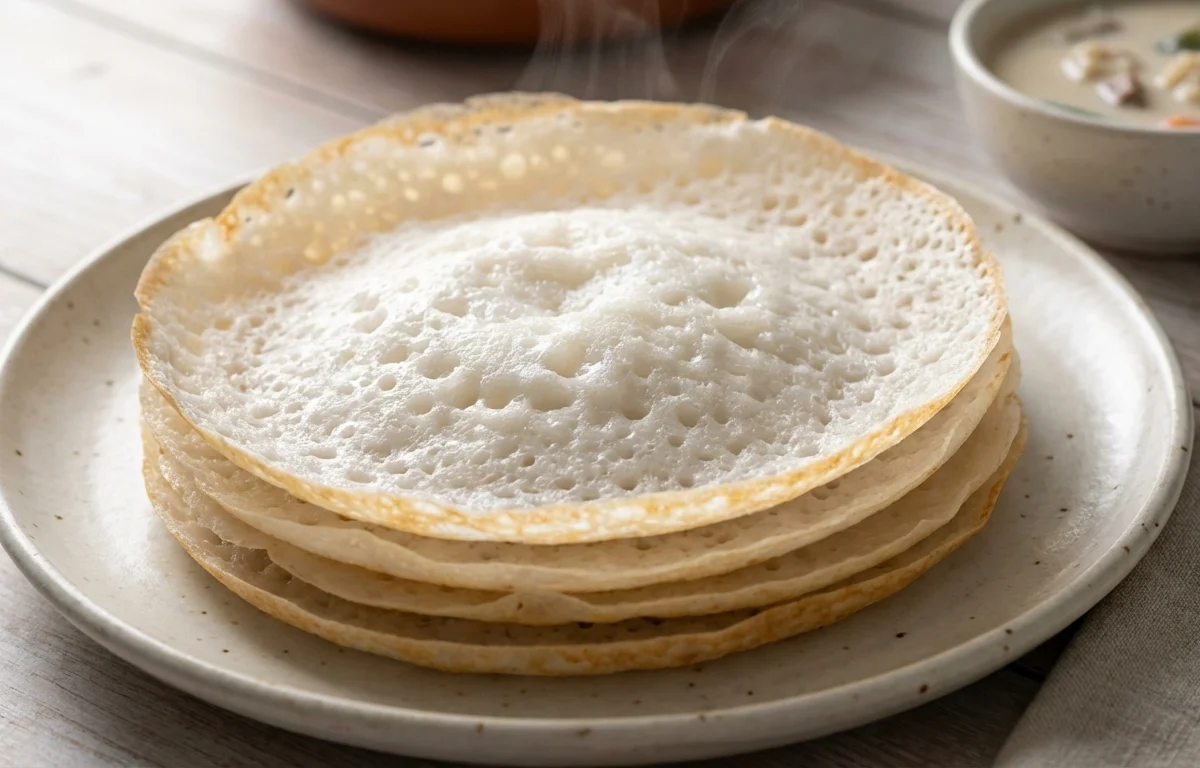
Vellayappam
Soft, lacy Kerala appams with tender centers and crisp, feathery edges. Made from fermented rice batter with coconut, these delicate pancakes are lovely with vegetable stew, egg curry, or a simple spoon of sweetened coconut milk.
For 8 servings
- prep · ~240 min
Soak the rice.
Wash the raw rice well and soak it in enough water for 4 hours. Drain completely before grinding.
TIPA full soak helps the batter grind smooth and gives the appams their soft center. - mix · ~10 min
Grind the batter.
1.Add the soaked rice to a blender with grated coconut, cooked rice, sugar, and instant yeast.2.Pour in water little by little and grind to a smooth, pourable batter.3.Transfer the batter to a large bowl and stir in the salt. - rest · ~480 min
Ferment the batter.
Cover the bowl and leave the batter in a warm place for 8 hours, or until light, airy, and slightly risen.
TIPThe batter should look bubbly but not overly sour. - mix · ~2 min
Adjust the batter consistency.
Stir the fermented batter gently. Add a little water if needed so it flows easily, like thin pancake batter.
- fry · ~3 min
Cook the vellayappam.
1.Heat an appam pan over medium heat and lightly grease it with oil.2.Pour a small ladle of batter into the center.3.Lift and swirl the pan so a thin layer coats the sides and a little batter settles in the middle.4.Cover and cook until the center is set and the edges turn lacy and light golden.TIPDo not flip the appam. It cooks from the trapped steam under the lid. - serve
Serve the vellayappam hot.
Repeat with the remaining batter to make 8 vellayappam. Serve hot with stew, curry, or sweetened coconut milk.
What to keep in mind.
8 tips from the recipe — small details that make a real difference to the final dish.
- 1Drain the soaked rice well before grinding, or the batter can turn too thin to form crisp lacy edges.
- 2Grind until completely smooth; any gritty rice bits will make the center coarse instead of soft and spongy.
- 3Leave enough headspace in the bowl during fermentation, because appam batter rises and gets airy overnight.
- 4After fermenting, stir very gently so you keep the bubbles that help the center cook up light.
- 5The right batter should be thinner than dosa batter; if it does not swirl easily, add water a spoon at a time.
- 6Grease the appam pan lightly, not heavily, or the batter may slide down instead of clinging to the sides.
- 7Cook covered on medium heat only until the center loses its wet shine; overcooking makes the middle dry.
- 8Leftover batter can be refrigerated for a day; let it sit out briefly and thin slightly before making more appams.
Adapt it for your goals.
Toddy-style
Replace the yeast with traditional toddy for a more authentic fermented aroma and slightly deeper flavor.
jaggery sweetJaggery-sweet
Serve with sweetened coconut milk or add a little melted jaggery to the accompaniment for a breakfast-style sweet version.
brown riceBrown-rice
Use part brown rice for a nuttier taste and heartier texture, though the appams may be slightly less delicate.
no yeastNo-yeast
Skip instant yeast and ferment longer in a warm place for a slower, more traditional batter if your kitchen is warm enough.
Why this is on our healthy list.
Naturally Gluten-Free
Made from rice and coconut with no wheat, this dish suits gluten-free meals when served with compatible sides.
Gentle Fermented Batter
The fermented batter can be easier to digest for some people and gives the appams their light, airy texture.
Plant-Based Energy
Rice provides steady carbohydrate energy, while coconut adds richness that makes the meal satisfying.
Frequently asked questions
The batter is usually too thick or the pan is not hot enough. Thin it slightly and swirl immediately after pouring.



.webp)
.webp)