Most people only think about field peas once a year, on New Year's Day. But these creamy, earthy little legumes deserve a spot in your pantry year-round. They're not just a symbol of good luck; they are one of the most efficient ways to get plant-based protein and gut-friendly fiber onto your plate. Forget any ideas about them being bland or boring. Cooked right, they're satisfying, incredibly versatile, and a true nutritional workhorse.
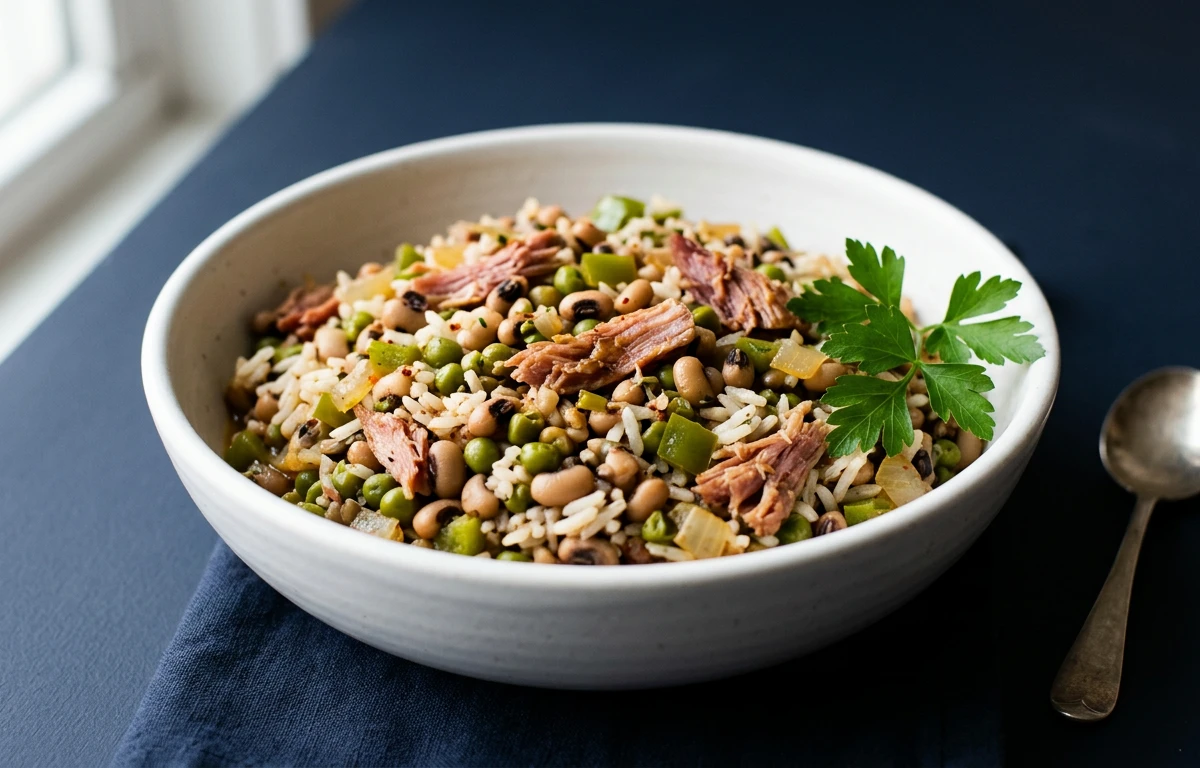
↑ Field peas (like these black-eyed peas) are a staple for a reason: filling, nutritious, and affordable.
The pantry's quiet workhorse
Field peas, a category that includes favorites like black-eyed peas and crowder peas, are a type of cowpea. Unlike the sweet green peas we eat fresh, field peas are left to mature and dry on the vine, which concentrates their nutrients. The result is a dense, satisfying legume that's part protein, part complex carb, and almost entirely good for you.
They have a distinctly creamy texture when cooked and a savory, earthy flavor that's a perfect canvas for spices. And at just over 100 calories for a generous half-cup serving, they deliver a huge amount of nutrition for very little cost, in every sense of the word.
IN ONE LINE
A fantastic source of plant protein and filling fiber, field peas are a low-fat, nutrient-dense legume that's great for gut health and steady energy.
Field pea nutrition facts
Here’s the nutritional breakdown for a 100-gram serving of cooked field peas (about half a cup), based on USDA data. This is what you get in a simple serving, boiled without salt.
The star players here are fiber and protein. Over 8 grams of each in a small serving is remarkable. That combination is what makes field peas so filling and so good for blood sugar control. They're also incredibly low in fat and provide a solid amount of complex carbohydrates for sustained energy.
Field peas and the glycemic index
While there isn't a universally agreed-upon glycemic index (GI) value for field peas, we know they fall into the low-to-medium category. Why? Because GI is massively influenced by fiber and protein, and field peas have loads of both. These nutrients slow down the digestion and absorption of carbohydrates, preventing the sharp blood sugar spikes you'd get from refined grains like white bread.
GLYCEMIC INDEX · FIELD PEAS vs COMMON FOODS
Field peas have a gentle impact on blood sugar
Apple
whole fruit
LOW
Field Peas (est.)
legume
LOW
Mango
whole fruit
LOW
White bread
refined
HIGH
SCALE 0–90
04590
The best way to eat them
Getting the most out of field peas is simple. A few good habits make all the difference.
01
Cook from dry, if you can.
It's cheaper and lets you control the salt. A simple overnight soak and a simmer is all it takes. If using canned, rinse them well to wash away excess sodium.
02
Pair with a whole grain.
Serving field peas with brown rice or quinoa creates a 'complete protein,' giving you all the essential amino acids your body needs.
03
Start with a small portion.
That impressive 8.2g of fiber can be a lot if your system isn't used to it. Start with a half-cup serving to let your gut adapt.
04
Don't forget the acid.
A splash of vinegar or a squeeze of lemon at the end of cooking brightens up their earthy flavor beautifully.
What field peas are good for
01
Excellent for gut health
With over 8 grams of fiber per serving, field peas are a top-tier food for feeding beneficial gut bacteria and promoting regularity.
8.2 g
fiber
02
A plant-protein powerhouse
They provide as much protein as an extra-large egg in a half-cup serving, making them ideal for building muscle and staying full.
8.3 g
protein
03
Supports steady blood sugar
The potent combination of fiber and protein ensures a slow, steady release of energy, making them a smart choice for anyone with diabetes or insulin resistance.
Low-GI
food
04
A friend to your heart
They are virtually fat-free and contain soluble fiber, which has been shown to help lower LDL (bad) cholesterol levels.
0.5 g
fat
What to pair field peas with
Field peas' earthy flavor and creamy texture make them a fantastic team player in the kitchen. Here are a few classic and creative pairings.
Eat freely — or be mindful?
Three ways to cook them
Beyond a simple side dish, field peas are incredibly versatile. Here are three ideas to get you started.
Want more plant-based protein in your week — without the guesswork?
Our meal planner can build a balanced week of meals rich in fiber and plant protein, with portions and macros already calculated and a single grocery list at the end.
Build my weekly plan →SOURCES & REFERENCES · 3
One more thing
Eating well is rarely about willpower. It’s about having a short list of dinners you actually want to eat. Pick two from this list. Make them next week. The rest will follow.
If you want these on autopilot, our weekly meal planner can drop the picks above into your calendar with one click and build a single grocery list from the merged ingredients.
FREQUENTLY ASKED QUESTIONS
Frequently asked questions
Are field peas good for you?
Yes, they are exceptionally good for you. They are an excellent source of plant-based protein, dietary fiber, and complex carbohydrates, all while being very low in fat. Their nutrient profile makes them great for heart health, gut health, and weight management.
Are field peas a carb or a protein?
They are both! A 100g serving has about 21 grams of carbohydrates and 8 grams of protein. The carbs are complex and high in fiber, and the protein is substantial for a plant food, making them a balanced source of energy.
Are field peas good for people with diabetes?
Yes, they are a fantastic choice. The high fiber and protein content leads to a low-to-medium glycemic index, meaning they help keep blood sugar levels stable. They provide sustained energy without the sharp spikes associated with refined carbs.
What's the difference between field peas and green peas?
They come from different plants and are harvested differently. Green peas (or garden peas) are harvested when they are young and eaten as a fresh vegetable. Field peas (like black-eyed peas) are a type of cowpea, and they are left to mature and dry on the plant, making them a legume, similar to beans and lentils.
METHODOLOGY
How this article was created
Built using verified nutrition databases, culinary research, and traditional cooking knowledge — every claim is cross-referenced against the sources listed in the article.
· USDA data· Culinary research· Quality reviewed
Read our methodology →TRANSPARENCY
About this content
Articles are curated using trusted food databases (USDA FoodData Central, IFCT), culinary literature, and dietary guidelines, then structured by our editorial team for clarity, accuracy, and usefulness.
· Verified data sources· Culinary research· Quality reviewed
Read our editorial policy →RELATED RECIPES
Cook from this article
EXPLORE OUR MEALS
Meals that fit this article

AMERICAN · 1677 CAL
Almonds with Sliced Apple + supplement + iron

MEDITERRANEAN · 809 CAL
Greek Yogurt with Berries Almonds and Granola + supplement + iron

GENERAL_HEALTHY · 705 CAL
Banana with Peanut Butter Pregnancy + supplement + iron

MODERN · 982 CAL
Hummus with Crudits and Pita with Fresh Orange Snack + supplement + iron
TAGGED
KEEP READING