Healthy Diwali Swaps: 7 Lighter Versions of the Sweets and Snacks You Actually Eat
Per-piece calorie counts for gulab jamun, jalebi, samosa, ladoo and barfi, plus 7 baked, air-fried, and refined-sugar-free Diwali swaps anchored in ICMR-NIN…
Loading...
Per-piece calorie counts for gulab jamun, jalebi, samosa, ladoo and barfi, plus 7 baked, air-fried, and refined-sugar-free Diwali swaps anchored in ICMR-NIN…
Diwali is a five-day calorie bracket, not a single dinner. Between the box of mithai at the office, the neighbour's plate of chakli, the family puja prasad, and the actual dinner, it is easy to land four-figure kilocalorie days on top of regular meals without noticing — one gulab jamun is roughly 150 kcal of refined sugar and ghee, one besan ladoo is closer to 185 kcal, and a single fried samosa lands at about 260 kcal before chutney [1][2]. Stacked over a week, that is the equivalent of an extra full day of eating, which is why the post-Diwali sluggishness is more arithmetic than mythology.
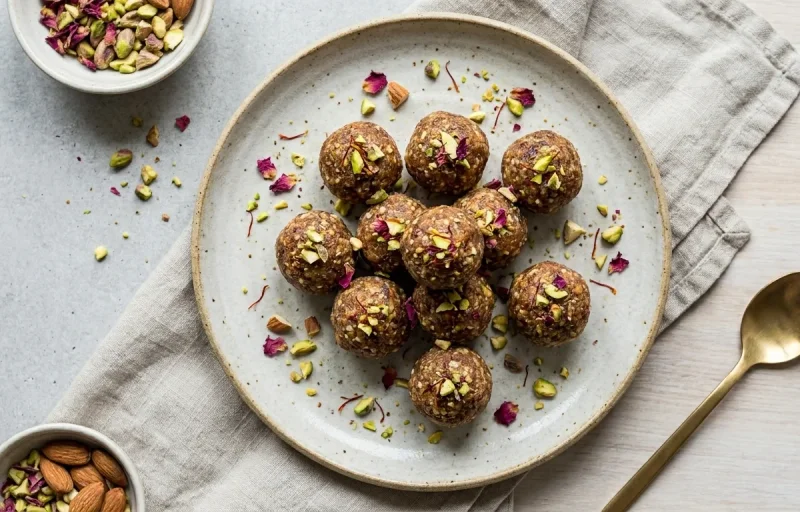
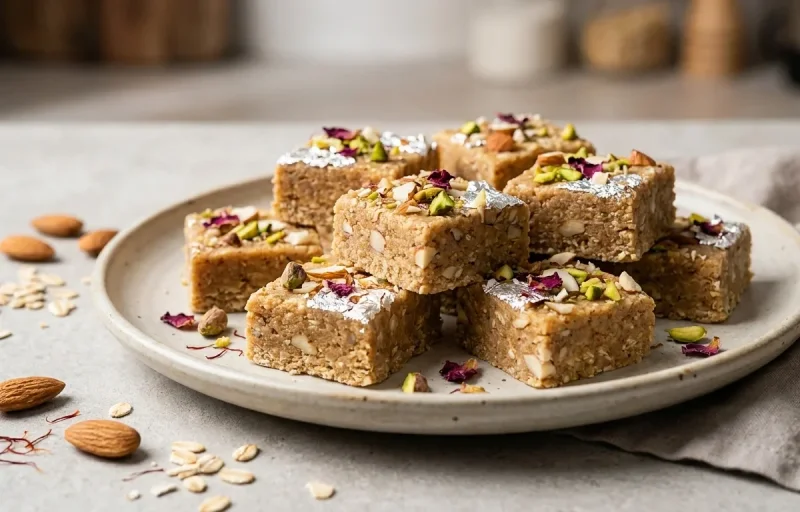
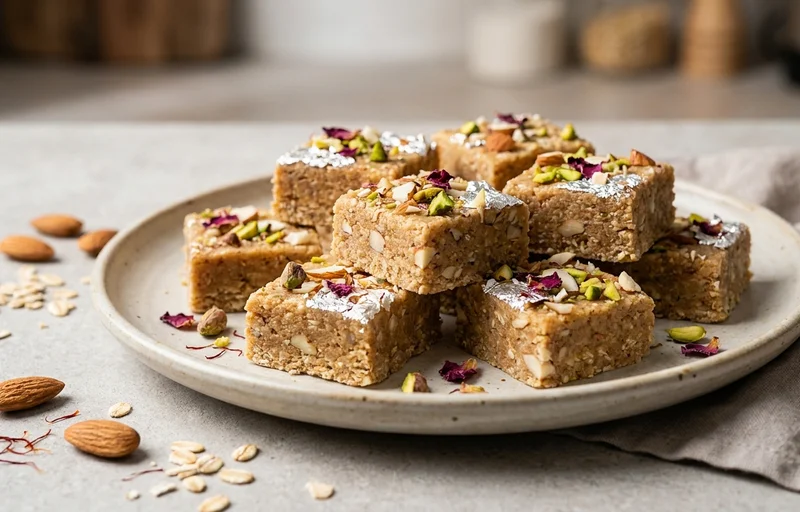
The useful response is not abstinence and not denial. It is two questions asked in order: which sweets and snacks are worth eating in their traditional form, and which respond well enough to a technique swap that you stop noticing? Baking instead of deep-frying typically removes 30-50% of the calories from a samosa or vada because oil absorption — not the dough — is where most of the kcal live [3]. Air-frying does even better on fat content, with Sanders' 2017 comparative data showing air-fried potato strips containing roughly 70-80% less oil than their deep-fried counterparts [4]. Dry-roasting chivda removes another 100+ kcal per 30 g serving versus the deep-fried version [1]. And reformulating ladoos and barfis around dates, nuts, and oats lets you cut the refined-sugar load to zero while keeping the festival texture, though the calorie density barely moves — these are still desserts. The American Heart Association's added-sugar ceiling is 25 g/day for women and 36 g/day for men [5], which is the number that should govern how many pieces, not whether the sweetener is jaggery, coconut sugar, or refined white. (Jaggery and white sugar both run 370-385 kcal/100 g, and the trace minerals in jaggery are real but practically negligible at festival serving sizes [6][7].) This guide gives you the per-piece arithmetic for eight Diwali staples and seven swaps that move the math the most.
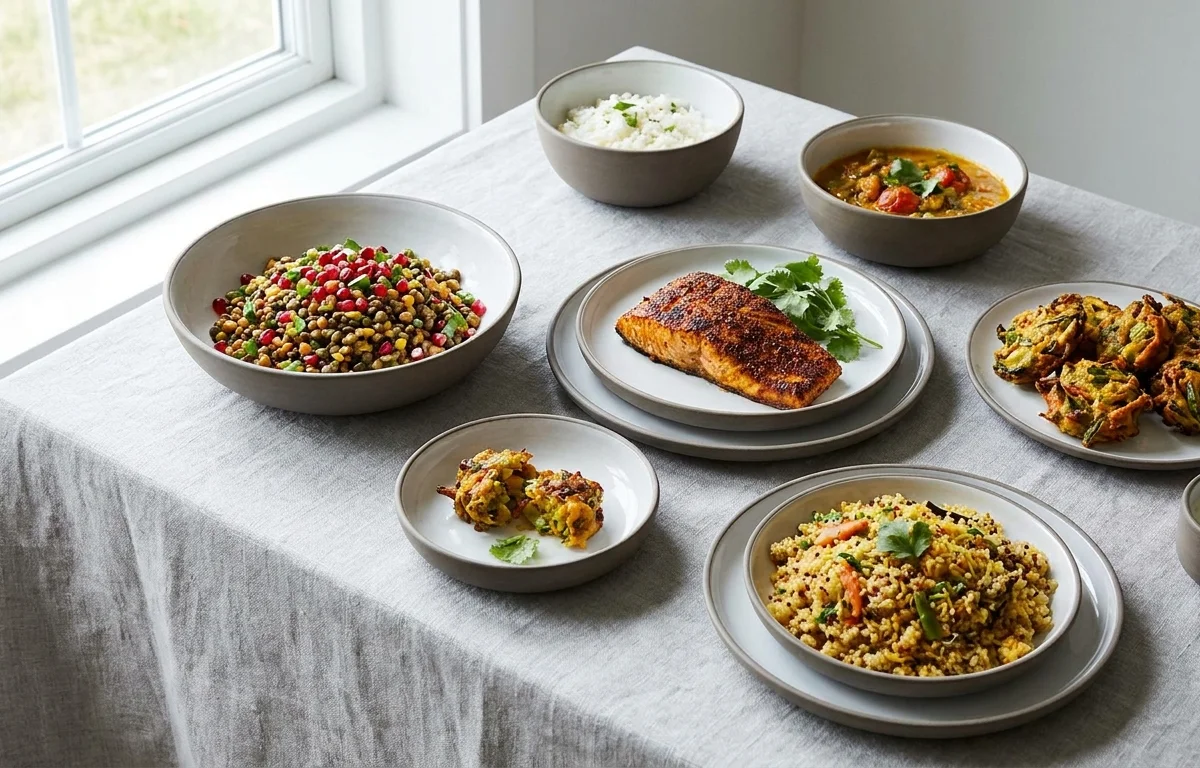
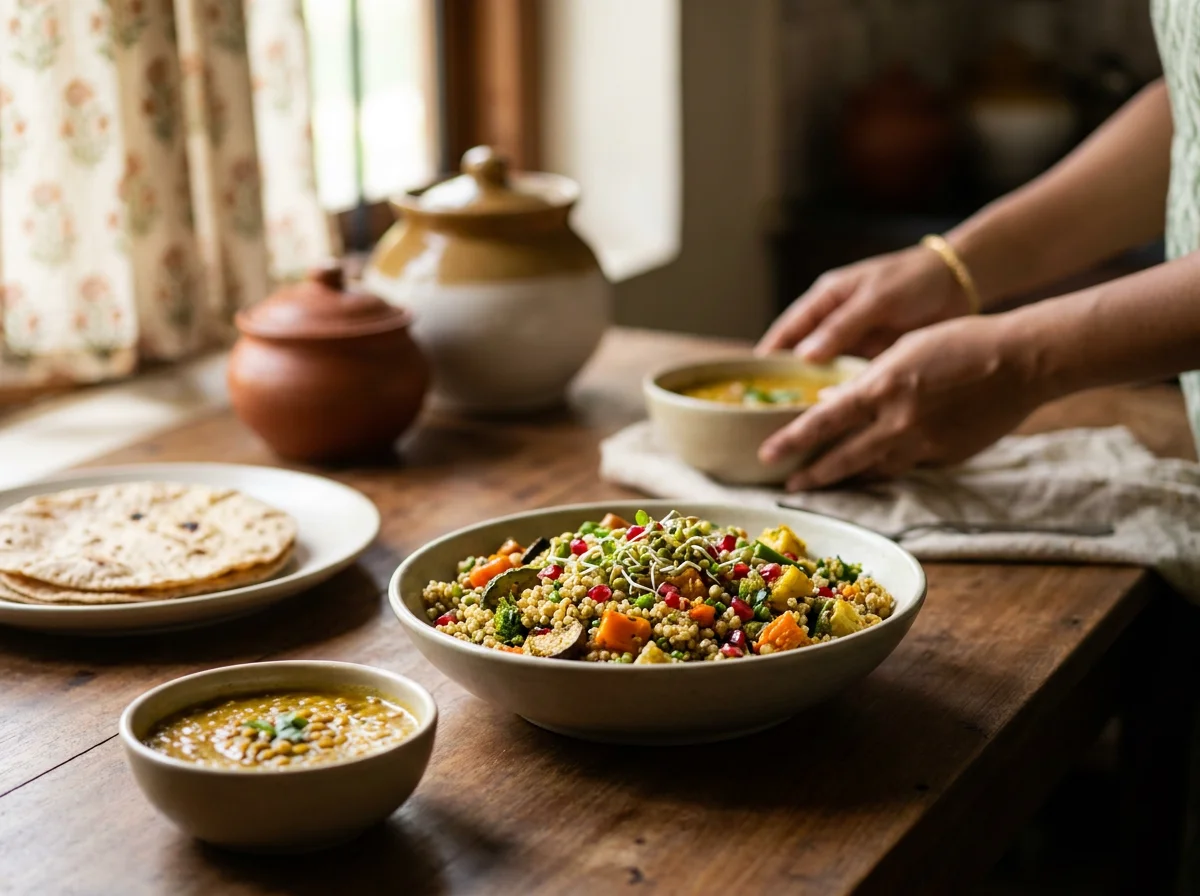
Read the per-piece kcal table once, then put it away. The two levers that matter over Diwali week are technique and portion: baking or air-frying the savouries (the samosa, kachori, mathri, vada) typically saves 30-50% of the calories and almost all of the trans-fat risk from reused frying oil [3][4]; reformulating the sweets around dates, nuts, and a touch of jaggery removes the refined-sugar load but does not magically reduce the energy density, so portion still matters. The AHA's 25 g/day added-sugar ceiling for women and 36 g/day for men is the number to anchor on — that is roughly two small besan ladoos, or one gulab jamun plus a small barfi, not a plateful [5]. Use real dahi or chaas as the digestif rather than a sugary beverage, walk after the heavy meal, and let the rest of the week of meals be the dal-roti-sabzi-salad rhythm your gut already knows. Diwali is five days. The metabolic week around it has 23 meals that look nothing like a thali of mithai, and those are the meals that decide how you feel on day six.
Built using verified nutrition databases, culinary research, and traditional cooking knowledge — every claim is cross-referenced against the sources listed in the article. Last reviewed May 2026.
Articles are curated using trusted food databases (USDA FoodData Central, IFCT), culinary literature, and dietary guidelines, then structured by our editorial team for clarity, accuracy, and usefulness.
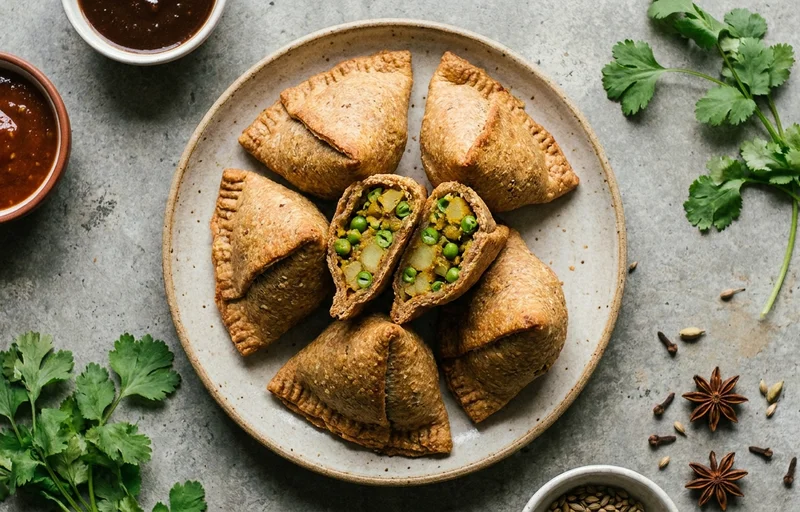
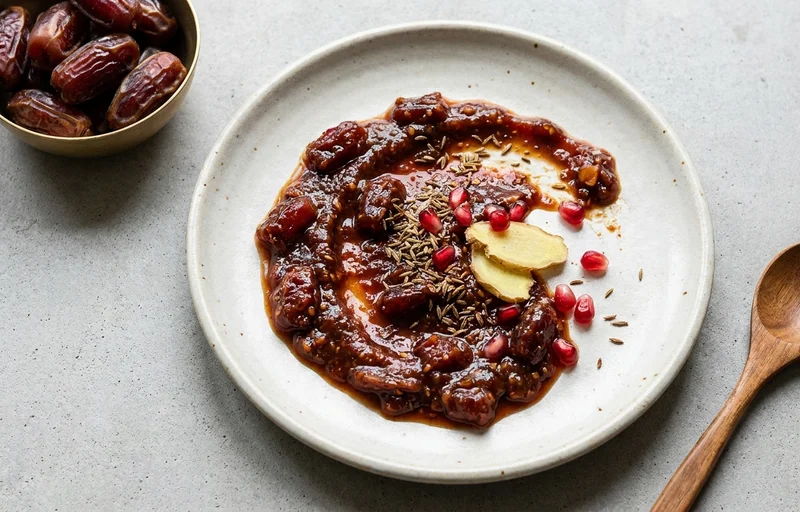
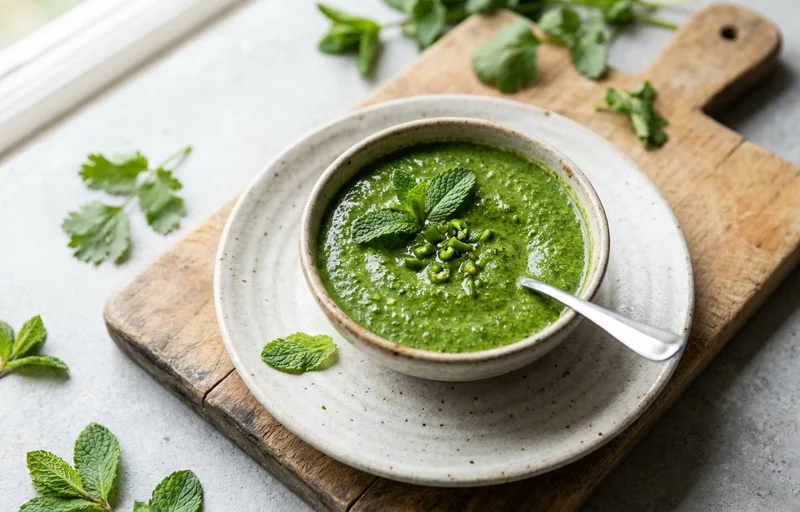
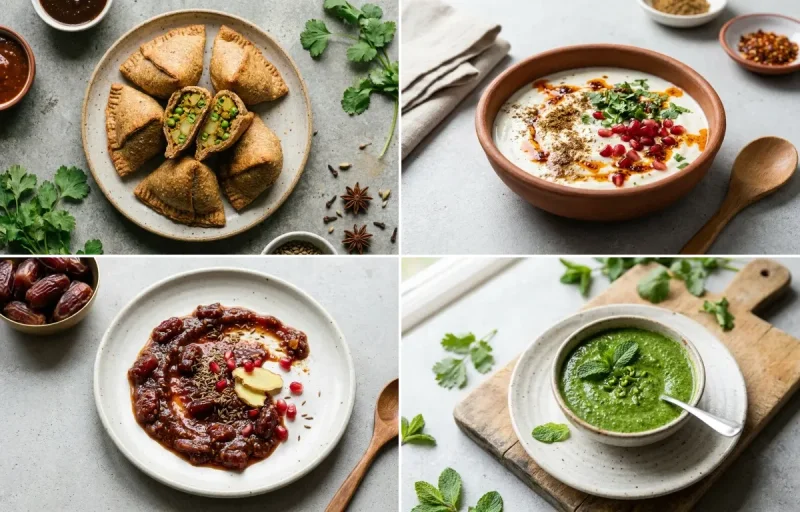
The clearest technique win on a Diwali platter. Deep-fried samosas land at ~260 kcal each [2]; baking the same whole-wheat shell at 200°C with a brushed coat of oil drops the count to ~150 kcal — a ~40% cut driven almost entirely by reduced oil absorption [3]. Serves with the same date-tamarind and mint-coriander chutneys the deep-fried version uses.
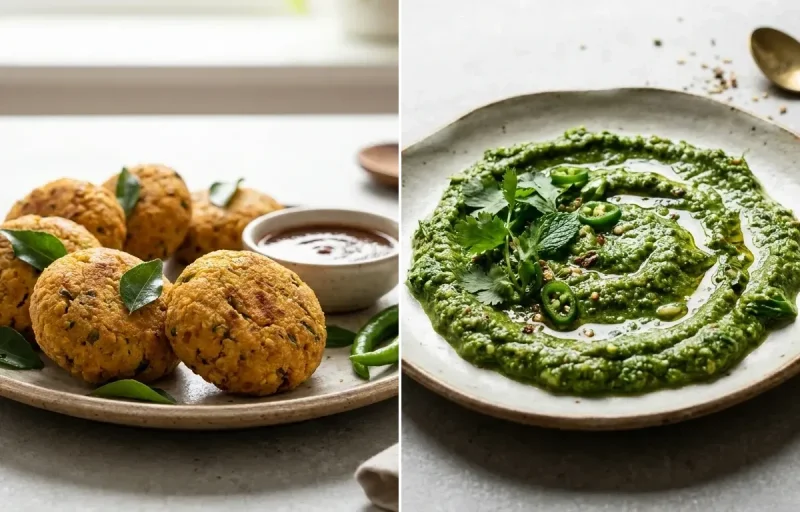
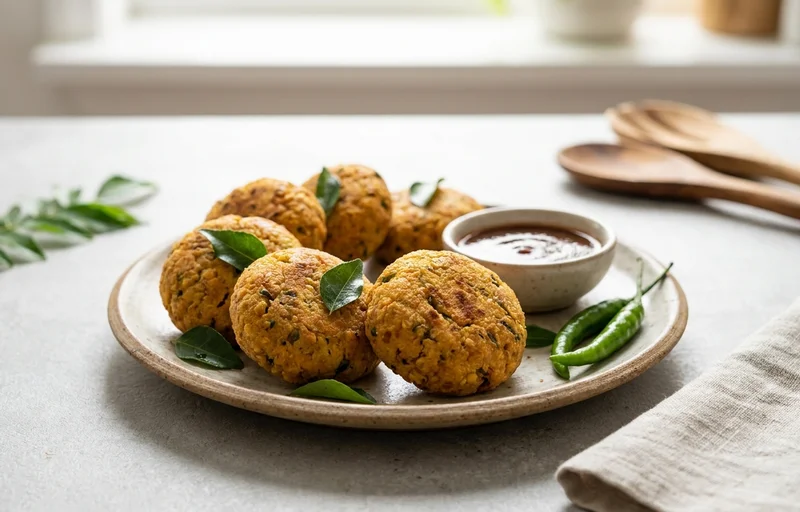
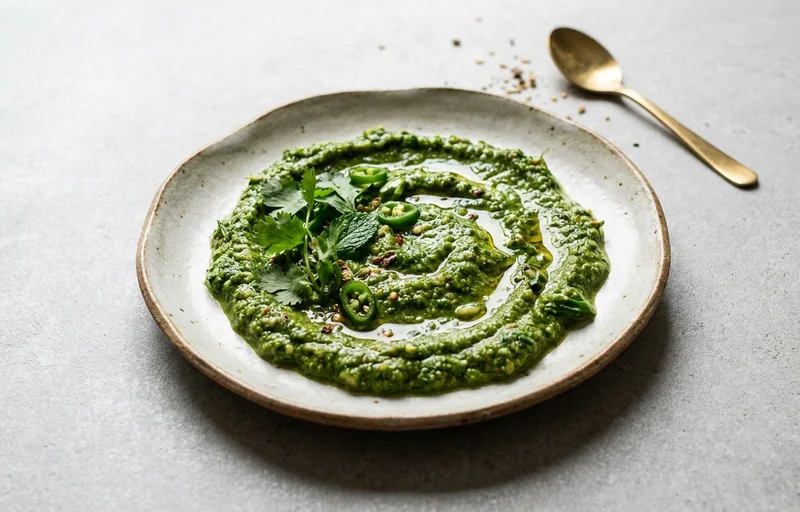
A baked, not fried, version of the pakora-and-vada cohort. Moong dal is naturally ~24% protein and high in fibre; baking the vada at 180°C instead of deep-frying drops per-piece calories from ~180 to ~100 kcal while preserving the dal's nutritional profile [3]. Crisp coriander-mint chutney compensates for the slightly drier texture.
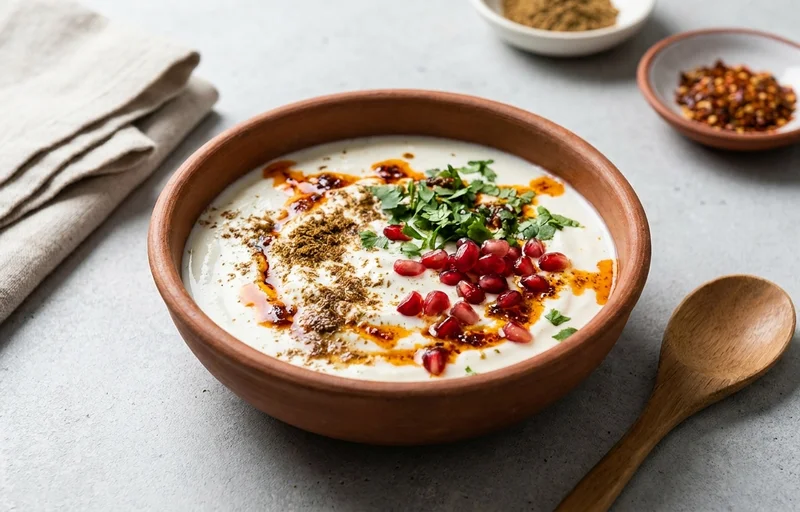
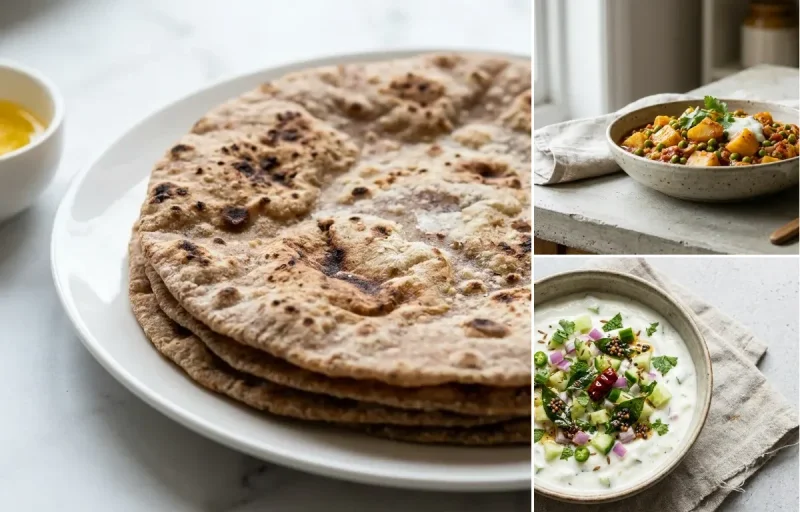
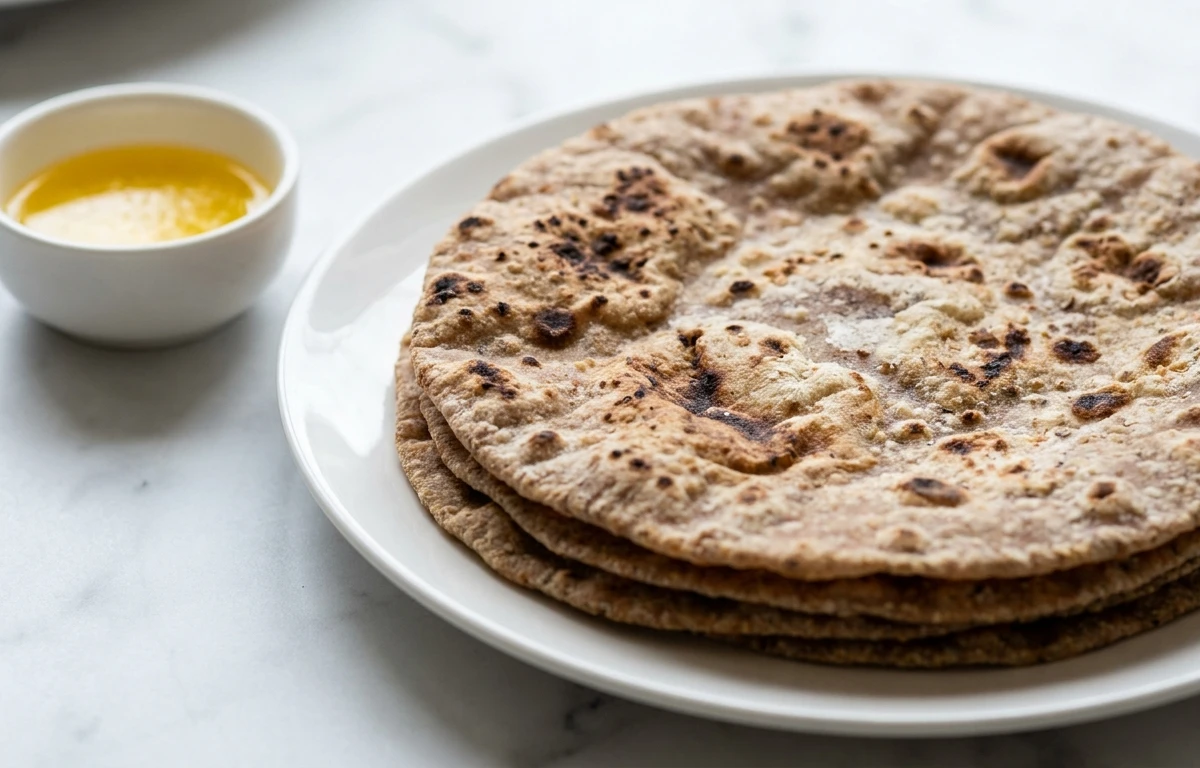
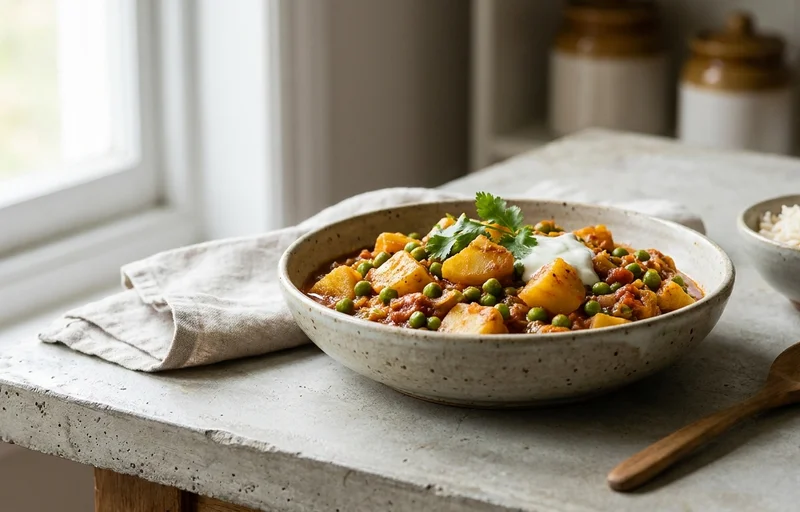
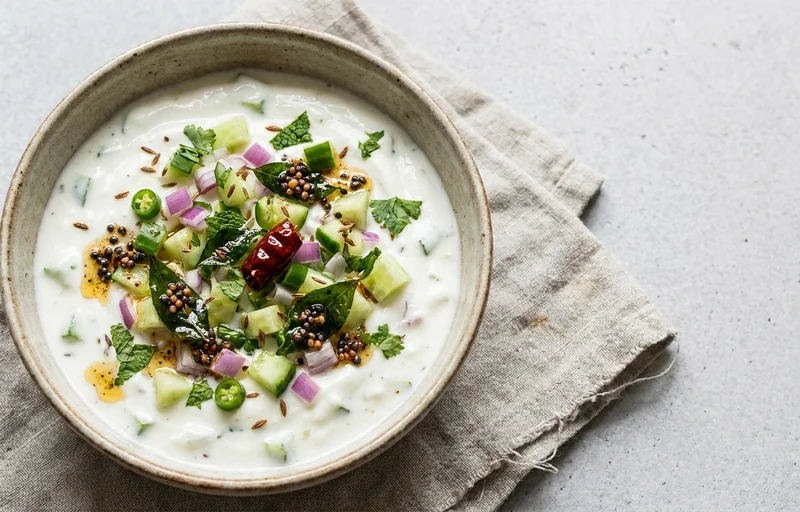
A direct swap for the festival puri-sabzi staple. Deep-fried puris run ~110-130 kcal each; pan-cooked multigrain rotis at ~85-100 kcal carry more fibre and no absorbed oil. Paired with a lighter aloo-matar (boiled-base, not bhuna-with-cream) and cucumber raita for the protein and gut-side balance the puri plate misses.
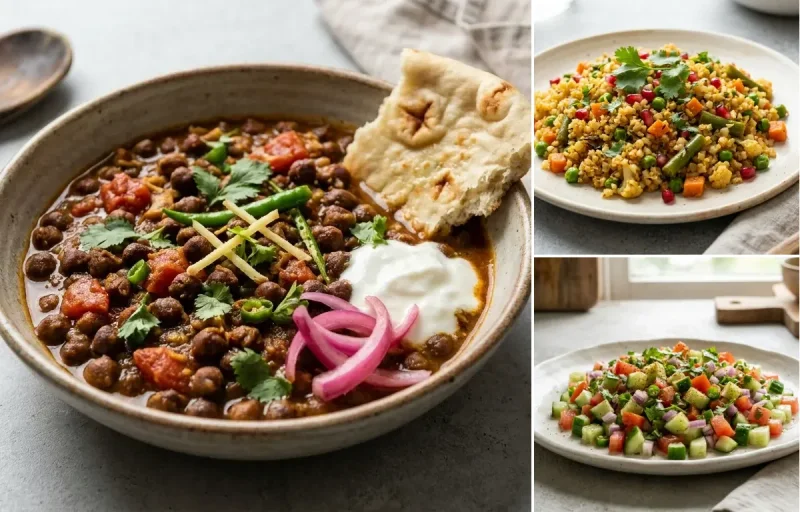
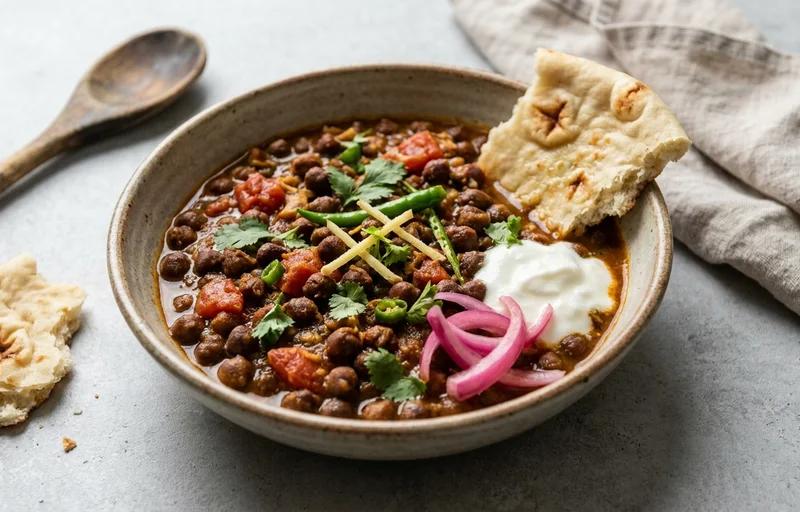
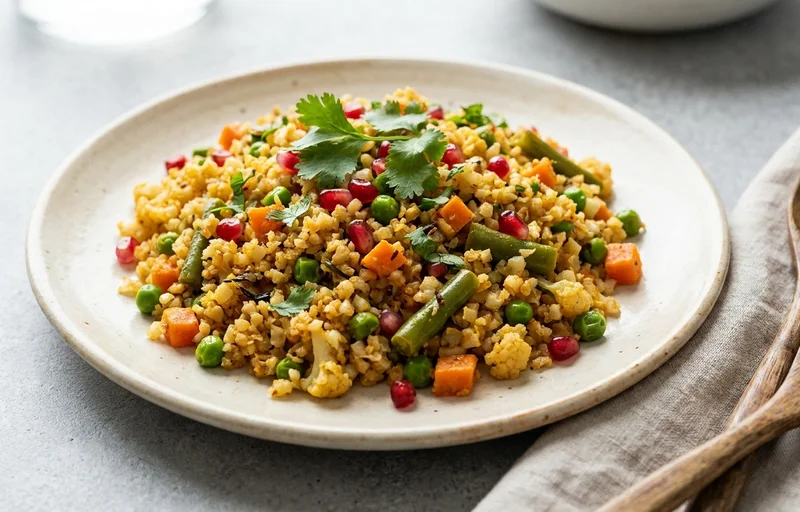
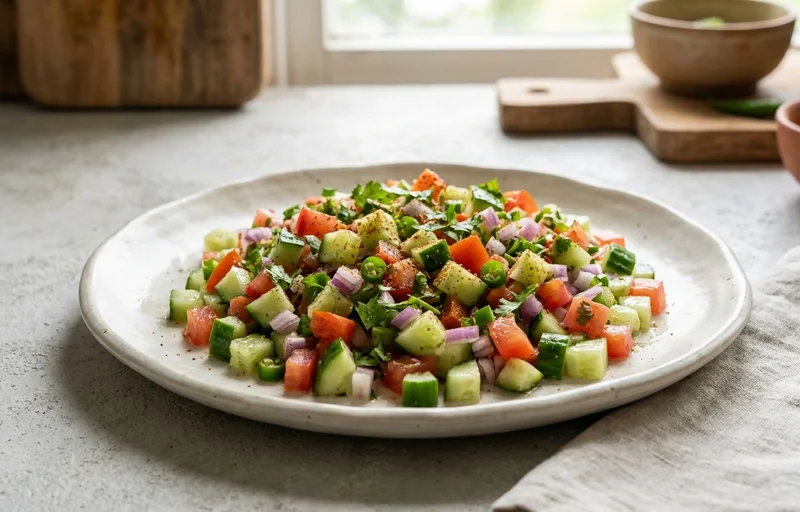
An intelligent substitution for chole bhature, which lands at ~700+ kcal per plate primarily because the bhature is deep-fried maida. Keeping the chole (the high-protein, high-fibre half) and swapping the bhature for cauliflower-rice pulao with a kachumber salad reframes the meal as 25% protein, 20% grain, 40% vegetables — closer to the balanced plate ratios that buffer the festival kcal load.