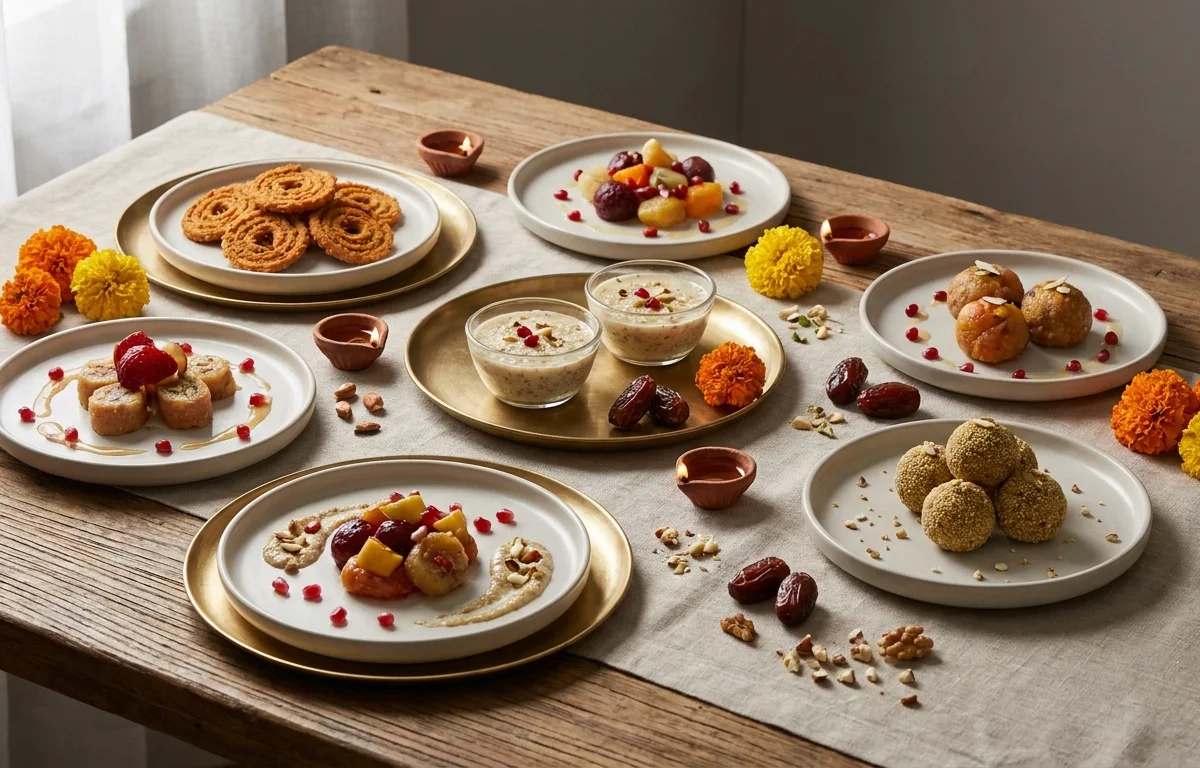
An Indian Christmas table — whether it is an Anglo-Indian roast in Bangalore, a Goan sorpotel-and-sannas spread, a Mangalorean kuswar platter, or a Kerala Syrian Christian duck mappas — is not a meal you should be talking yourself out of. Studies of holiday eating from the UK and US estimate average Christmas Day intake at 3,600 to 5,400 kcal across the day, with the dinner plate alone often landing between 1,200 and 1,500 kcal once roast, sides, gravy, dessert and a glass of wine are stacked together [1][2]. Repeated across the week between Christmas and New Year, that is the bulk of the 0.5–1 kg of weight most adults pick up over the holidays — weight that, as the New England Journal of Medicine 10-day-rule paper documented, takes most of the following year to come off [3].
The useful response is not a kale wreath. It is a planned plate. Keep the dishes that anchor the festival — the roast chicken with masala marinade, the plum cake your grandmother soaked in rum from October, the small glass of mulled wine, the kuswar your neighbour brought over. Lighten the dishes that mostly add fat and sugar without earning their place on the table: deep-fried starters made because you needed to fill a platter, cream-heavy curries that taste the same with yogurt, biryani built on a quarter-kilo of ghee. Use a smaller plate, eat the vegetables first, walk after, and accept that one celebratory meal — even a 1,200 kcal one — is not what damages cardiovascular health. Twenty 1,200 kcal meals in a row is.
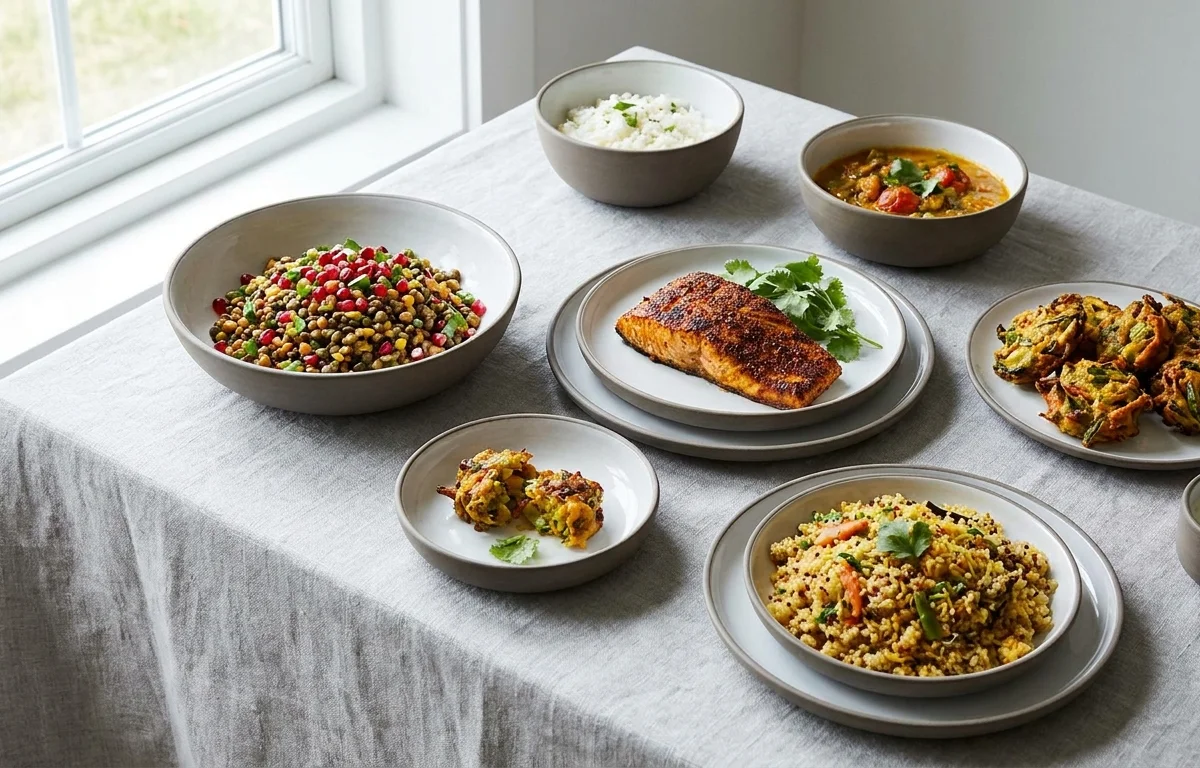
The seven meals below follow that pattern. Each is a complete dinner — protein, vegetable, grain or bread, accompaniment — at roughly 500 to 750 kcal per serving, built from the Anglo-Indian / Goan / Kerala / North Indian festive vocabulary rather than from a generic 'lighter holiday' playbook. None of them claim to make Christmas healthy. They are dinners that fit the festival, on the days you are not also eating biryani at lunch and plum cake at tea.
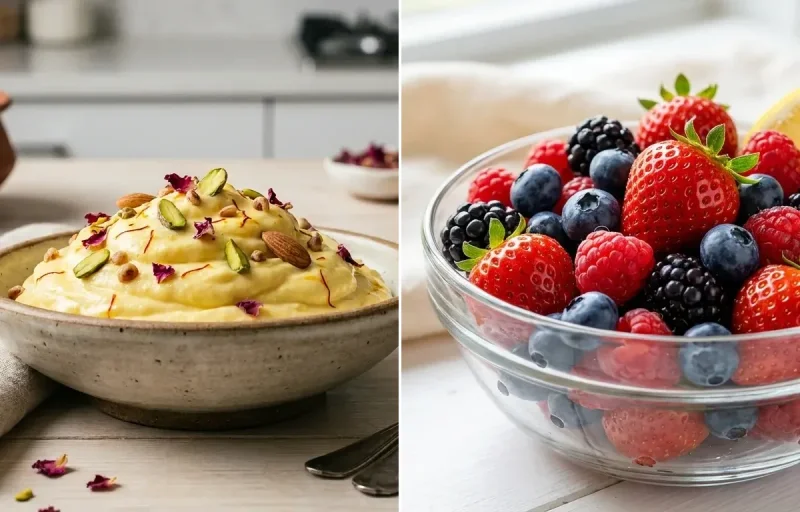
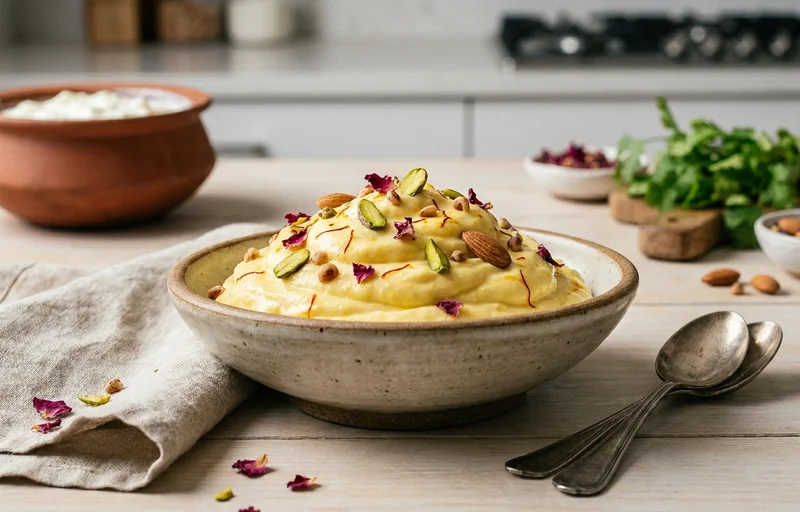
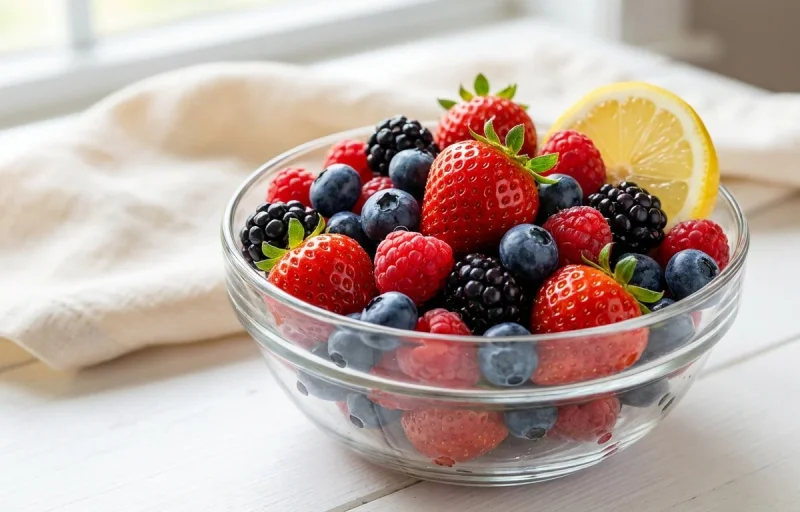
Shrikhand is the Indian dessert that fits a Christmas plate without arguing with it. Made from hung curd, sweetened lightly, scented with cardamom and saffron, it is ~180–220 kcal per 100 g — meaningfully lower than baked Christmas puddings or trifle, and it offers protein and probiotic dairy rather than just fat and sugar. Topped with fresh berries (or pomegranate seeds, which are seasonal in India), this is the dessert for the December dinners where the plum cake is not on the table. Save the cake for Christmas Day itself.
SUITABLE FOR
Who this is for
✓Anyone hosting Indian Christmas dinners across several evenings in December who wants menus that fit the festival rhythm without leaving guests sluggish.
✓Adults managing weight, blood pressure, or fasting blood sugar who want to keep festive food in the diet rather than skipping the season entirely.
✓Anglo-Indian, Goan, Mangalorean and Kerala Christian families who want lighter weekday-Christmas dinners and intend to keep the full traditional spread for the 25th itself.
✓Cooks who already understand that 'healthy Christmas dinner' is mostly a portion-and-frequency question, not an ingredient one, and want plate templates that reflect that.
LIMIT OR AVOID IF
Skip this if
!You are managing a specific medical condition (advanced diabetes, recent cardiac event, chronic kidney disease, pancreatitis) and need a clinician-set dinner template. Several of these meals contain paneer, ghee, or moderate rice portions that you may need to scale.
!You are looking for a single 'detox' menu that undoes a week of festive eating. No single meal does that, and 'detox' is marketing rather than physiology.
!You are on metformin, sulfonylureas, or insulin and plan to drink mulled wine or other alcohol with dinner — alcohol can amplify hypoglycaemia from these medications. Discuss with your doctor first.
PRACTICAL TIPS
✓Use a 9-inch (23 cm) dinner plate instead of the 11–12-inch festival plate, and fill half of it with vegetables and salad before any rice, meat, or bread reaches it. This single change has been shown to cut intake by 15–25 percent without conscious restriction.
✓Eat protein and vegetables first, starch and dessert last. Sequencing studies show this lowers post-meal blood sugar excursions meaningfully — useful on a day when you will also be eating cake and drinking wine [4].
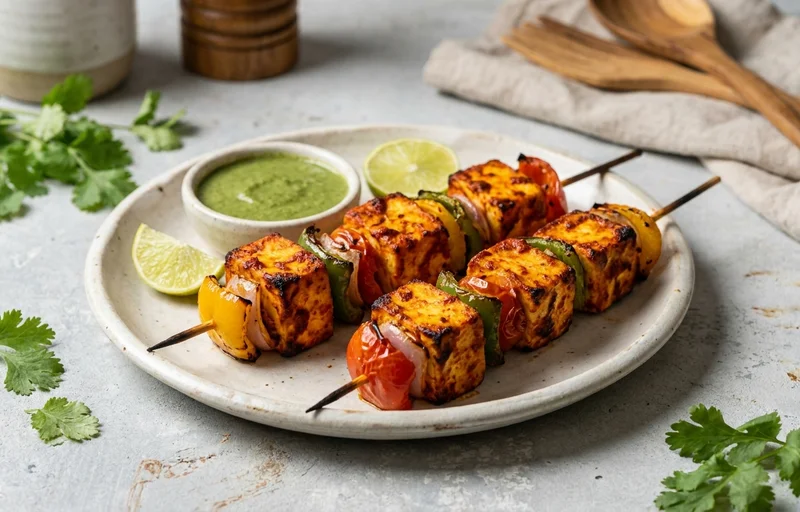
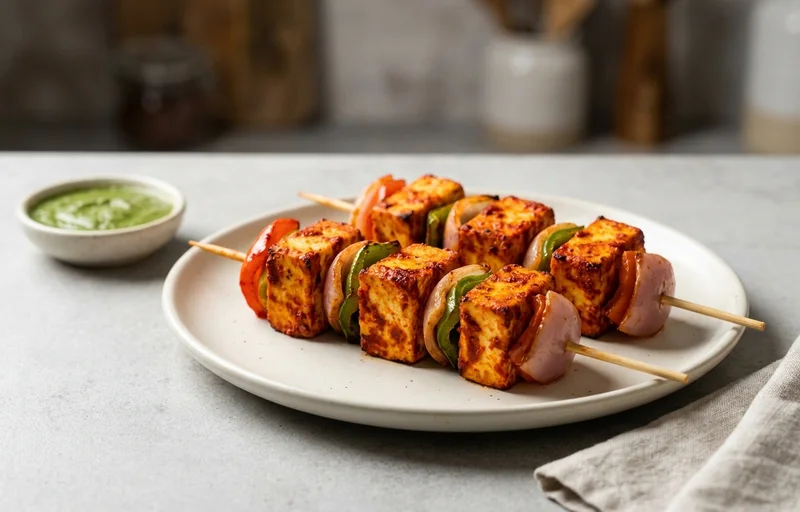
✓Roast, don't deep-fry, the starters. A yogurt-and-masala paneer tikka baked at 220 degC for 12–15 minutes costs roughly 180–220 kcal per skewer; the same paneer deep-fried as pakora costs 320–380. The flavour difference is tiny; the calorie difference is not.
✓Swap heavy cream for hung curd or low-fat yogurt in festive gravies. A standard 'makhani' or 'kofta curry' built on 200 ml of cream carries roughly 700 kcal of fat from the cream alone; the same dish made with thick yogurt finished off heat (so it doesn't split) lands ~200 kcal lower per recipe without losing the silky texture.
✓Treat the plum cake as the dessert, not as the tea-time snack. One ~50 g slice (about a deck of cards) is roughly 140–200 kcal depending on the recipe; the rum-soaked fruit is the point. Three slices across the day is where the math goes wrong, not the cake itself [5].
✓Walk for 15–20 minutes after dinner. Light post-meal walking has been shown to lower the post-meal glucose peak by 10–20 percent — and on a festival evening, after several hundred calories of pilaf and dessert, that is the cheapest health intervention available [4].
Two things are true at once. A roast chicken thigh, half a cup of rice pilaf, a generous helping of vegetables, and a slice of plum cake the size of a deck of cards is a perfectly reasonable Christmas dinner — probably 700 to 900 kcal, well within a single celebratory evening. And the same meal, plated the way most of us actually plate it on December 25th — two thighs with skin, a heaped cup of biryani, fried starters, two slices of cake, a second glass of mulled wine, leftovers at midnight — is closer to 1,800.
The seven dinners in this guide give you the first version. They keep the flavors that make an Indian Christmas feel like Christmas — the yogurt-and-masala marinades, the whole-spice pilafs, the shrikhand, the baked tikka — without leaning on the cream, ghee, and deep-frying that mostly contribute calories rather than memory. Pick one for the days you are hosting. Save the full traditional spread for the day itself, eat it without apology, and pay attention to portions rather than to ingredients. That, not a kale-wreath centrepiece, is what a sustainable festive table looks like.
FREQUENTLY ASKED QUESTIONS
Frequently asked questions
Is plum cake actually that bad?
Plum cake is calorie-dense but not nutritionally trivial — the dried fruit contributes fibre, iron, and antioxidants. A typical Indian Christmas plum cake runs ~280–400 kcal per 100 g depending on butter and sugar content.[5] The number that matters is the slice size: a 40–50 g slice (deck-of-cards thick) is ~140–200 kcal and a defensible dessert. Three slices across the day, washed down with mulled wine, is where the math becomes unkind.
Sorpotel is a family-recipe dish I won't compromise on. Where does that leave me?
It leaves you fine. A 100 g serving of sorpotel sits ~250–300 kcal because of pork fat and offal, but it is also a stew eaten by the small bowl with sannas or pao, not by the plateful. Portion it deliberately — a half-katori (~60–80 g) alongside vegetables and a single sanna is a reasonable Christmas dinner anchor at ~350–450 kcal total. The dish is fine; the portion is the dial.
We do a Goan kuswar platter — bebinca, neureos, kulkuls, dodol. How do I handle that?
Don't try to eat a 'healthy' portion of every item — kuswar is meant to be sampled, not grazed. The traditional pattern works in your favour: one or two pieces of one or two items at a time, alongside a hot drink, spaced across visits. The cultural design of kuswar is the portion control. The modern failure mode is leaving the full tin open in the living room for ten days. Move what you intend to eat to a plate; box the rest.
I take metformin / a sulfonylurea / insulin. Can I have mulled wine with dinner?
Probably yes in small amounts, but talk to your doctor first. Alcohol blunts the liver's release of glucose, which can deepen and prolong hypoglycaemia from sulfonylureas and insulin. Generally: never drink on an empty stomach, keep it to one 150 ml glass with dinner, eat carbohydrate with it, and have a glucose check ready. Specific guidance on your medication belongs with your treating doctor, not a blog.
Should I 'fast' before Christmas dinner to save up calories?
No. Skipping breakfast and lunch on the 25th to 'earn' the dinner reliably backfires — by 7 p.m. you are hungry, your blood sugar is low, and pre-dinner snacking on fried starters and mulled wine overshoots by 600–800 kcal before the meal begins. A normal breakfast and a light lunch (a bowl of vegetable soup, some salad, one roti) leaves you arriving with appetite, not hunger — the difference between enjoying a portioned plate and inhaling whatever is in front of you.
What about leftovers? Cold chicken biryani at midnight is a tradition.
Two things to watch. First, food safety: cooked chicken and rice need refrigeration within two hours and one reheating to steaming-hot throughout. Rice left at room temperature for several hours can grow Bacillus cereus — a real food-poisoning risk after festive meals. Second, midnight grazing is where the surplus festive calories actually go in. Pack leftovers into single-portion containers immediately rather than leaving the serving dish on the counter.
ABOUT THE AUTHOR
Sourabh Garg
CONTENT CREATOR
Sourabh writes about Indian cuisine, budget cooking, and the everyday nutrition questions that come up in Indian kitchens — chapati portions, dal protein, how to keep dishes balanced without losing the flavours families actually want. His pieces lean on credible sources (ICMR-NIN, peer-reviewed studies) and home-cook reality in equal measure.
Built using verified nutrition databases, culinary research, and traditional cooking knowledge — every claim is cross-referenced against the sources listed in the article. Last reviewed May 2026.
Articles are curated using trusted food databases (USDA FoodData Central, IFCT), culinary literature, and dietary guidelines, then structured by our editorial team for clarity, accuracy, and usefulness.
· Verified data sources· Culinary research· Quality reviewed
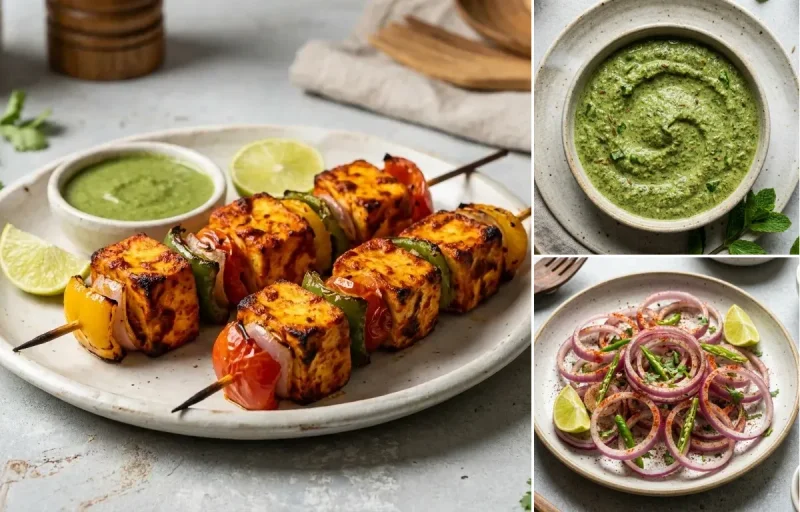
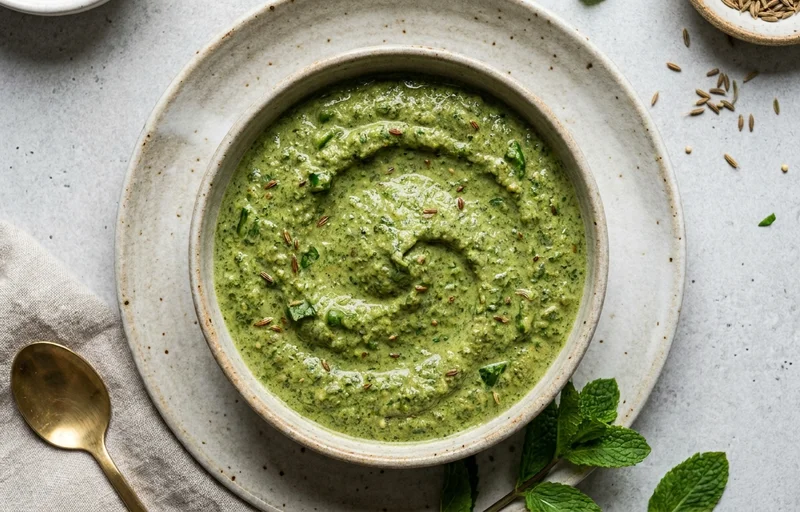
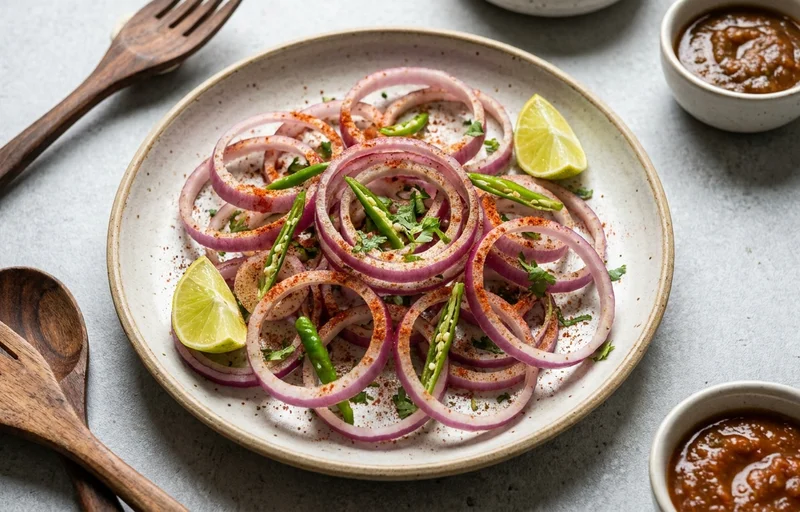
An honest starter for a festive Indian table. Paneer baked at 220 degC for 12–15 minutes after a yogurt-and-spice marinade lands around 200 kcal per six-skewer serving — roughly 40 percent less than the same paneer deep-fried as pakora — without losing the charred, tandoor-style flavour. The yogurt mint chutney and lacha onion are the same accompaniments you would serve at a wedding starter station; they just happen to be naturally light. Treat this as the warm-up to dinner, not as a third meal in itself.
For an extra smoky flavor without added oil, char the baked paneer skewers lightly under a broiler or grill for 1-2 minutes after baking, ensuring not to overcook the paneer.
189 CAL · 2G PROTEIN
2
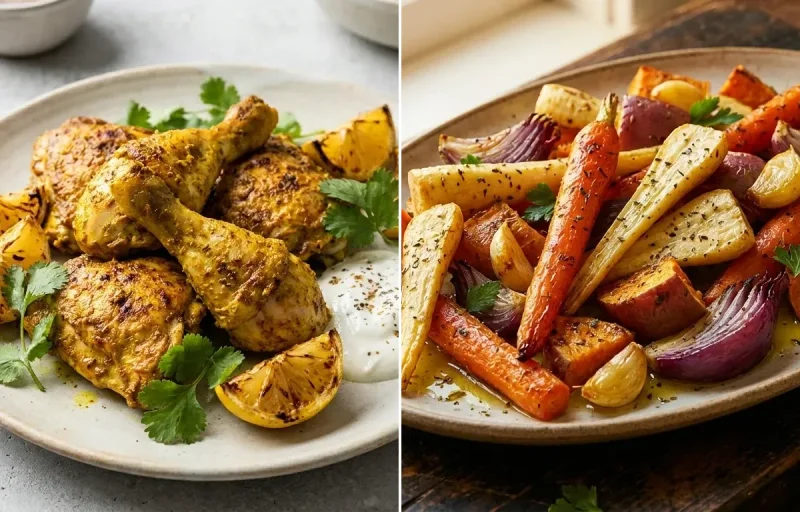
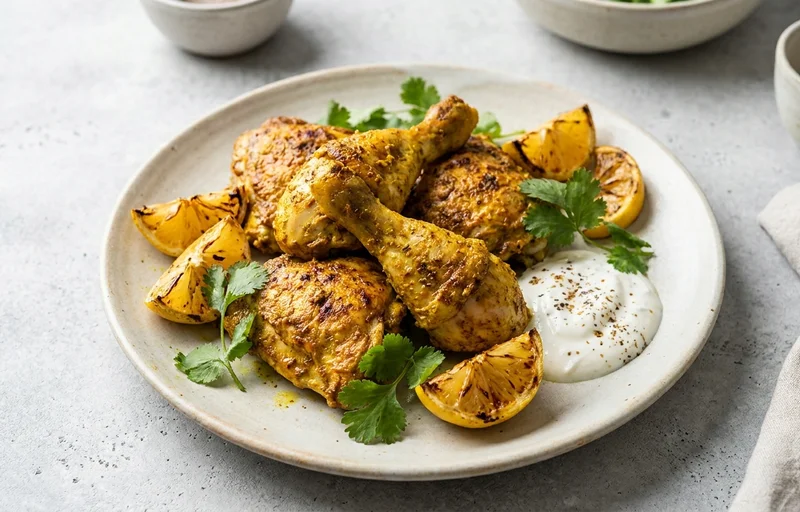
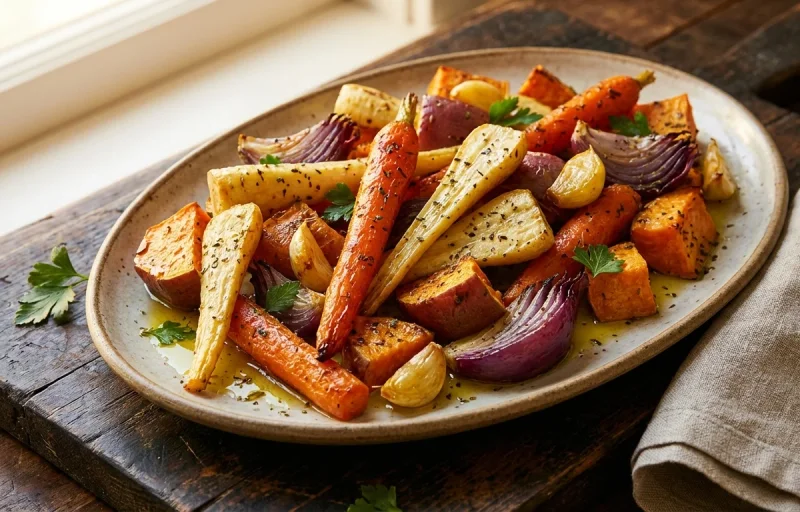
The Anglo-Indian Christmas anchor, made the way most home cooks who do this well already make it. A yogurt-and-spice marinade carries flavour deeper into the chicken than a butter baste, and roasting skinless thighs alongside root vegetables tossed in a single tablespoon of oil delivers a real Christmas plate at ~450–550 kcal per serving. The skin is the calorie expense that earns the least flavour return — a roasted skinless thigh is ~179 kcal per 100 g vs. ~215 with skin [7] — and most diners chew the cooked skin once and abandon it anyway.
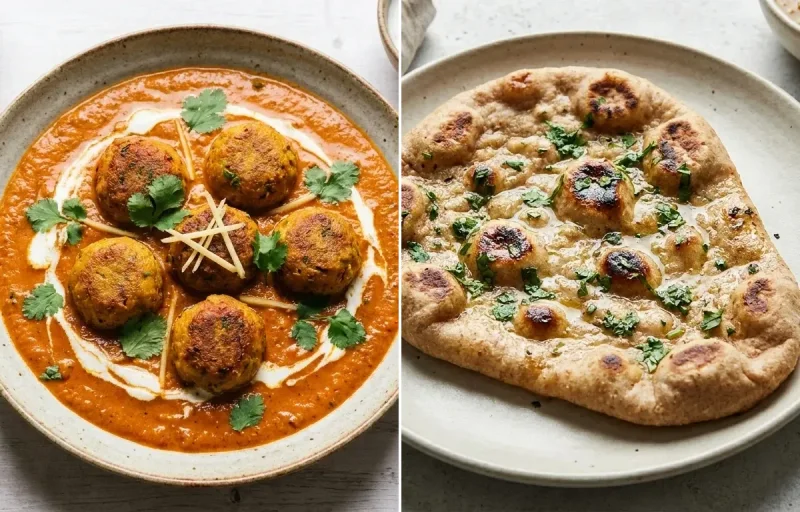
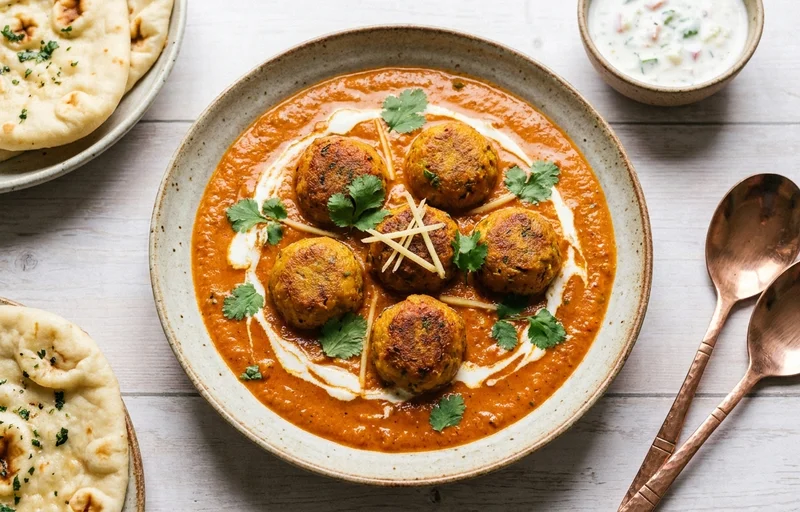
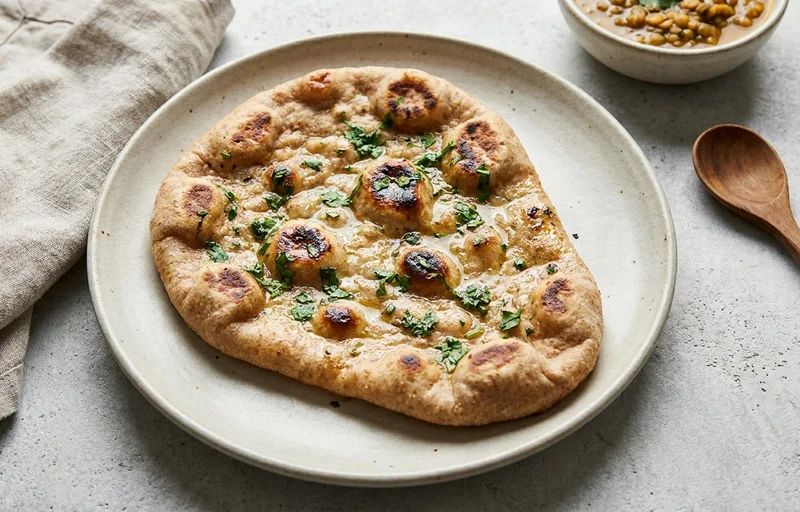
A vegetarian centrepiece that holds its own next to a roast bird. Pan-searing the vegetable koftas instead of deep-frying them saves roughly 8–10 g of absorbed oil per piece, and finishing the gravy with a spoonful of cashew paste and hung curd (rather than 200 ml of cream) keeps the silky mouthfeel at meaningfully lower saturated fat. Serve with one whole-wheat naan rather than two — the rest of the plate does the work.
To enhance the flavor of the gravy without extra salt, bloom whole spices like cardamom, cloves, and bay leaf in a little oil before adding onions and tomatoes, releasing their full aromatic potential.
2
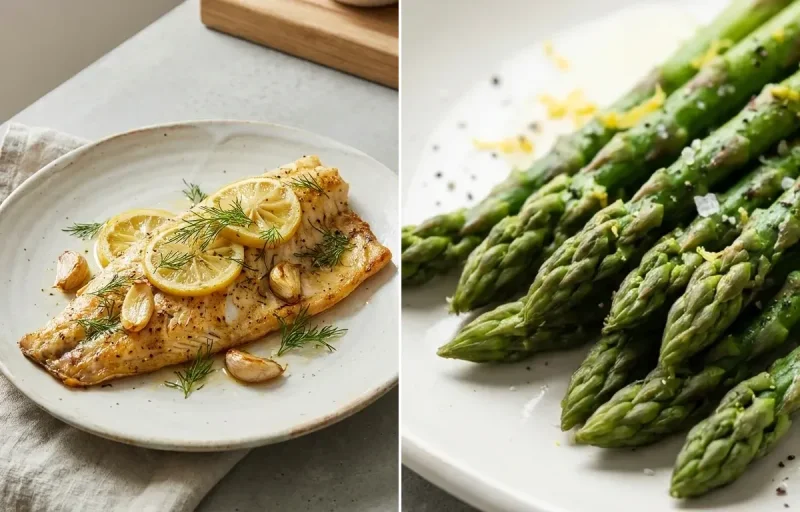
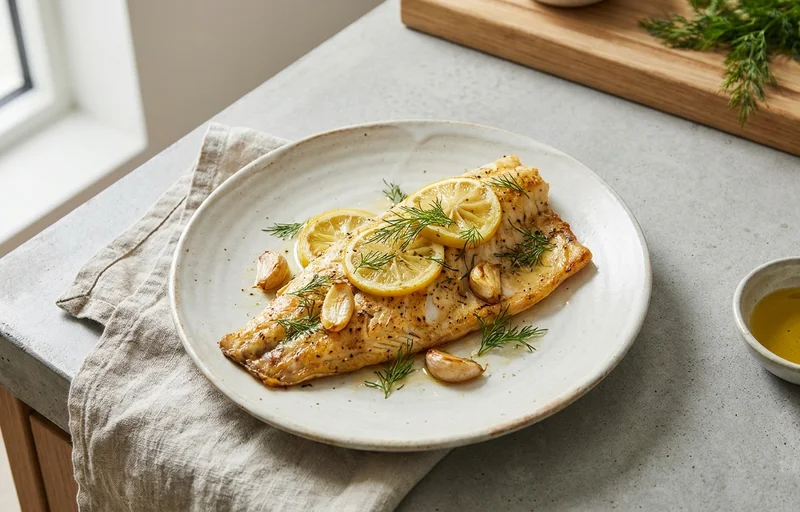
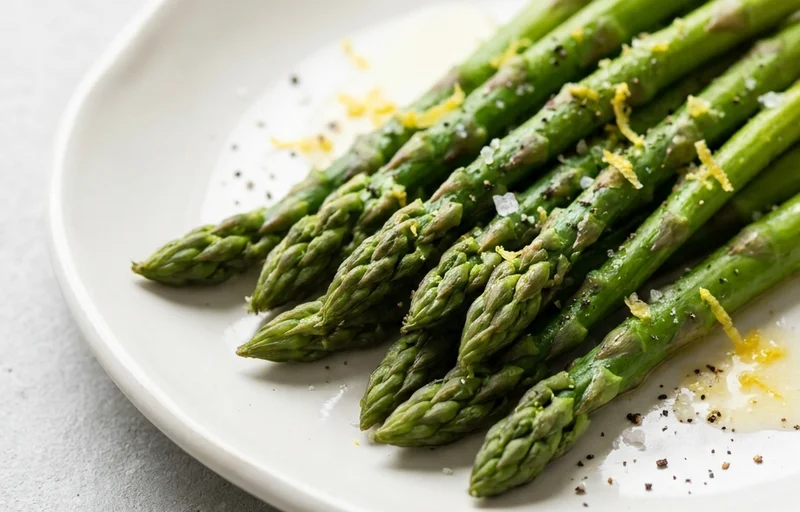
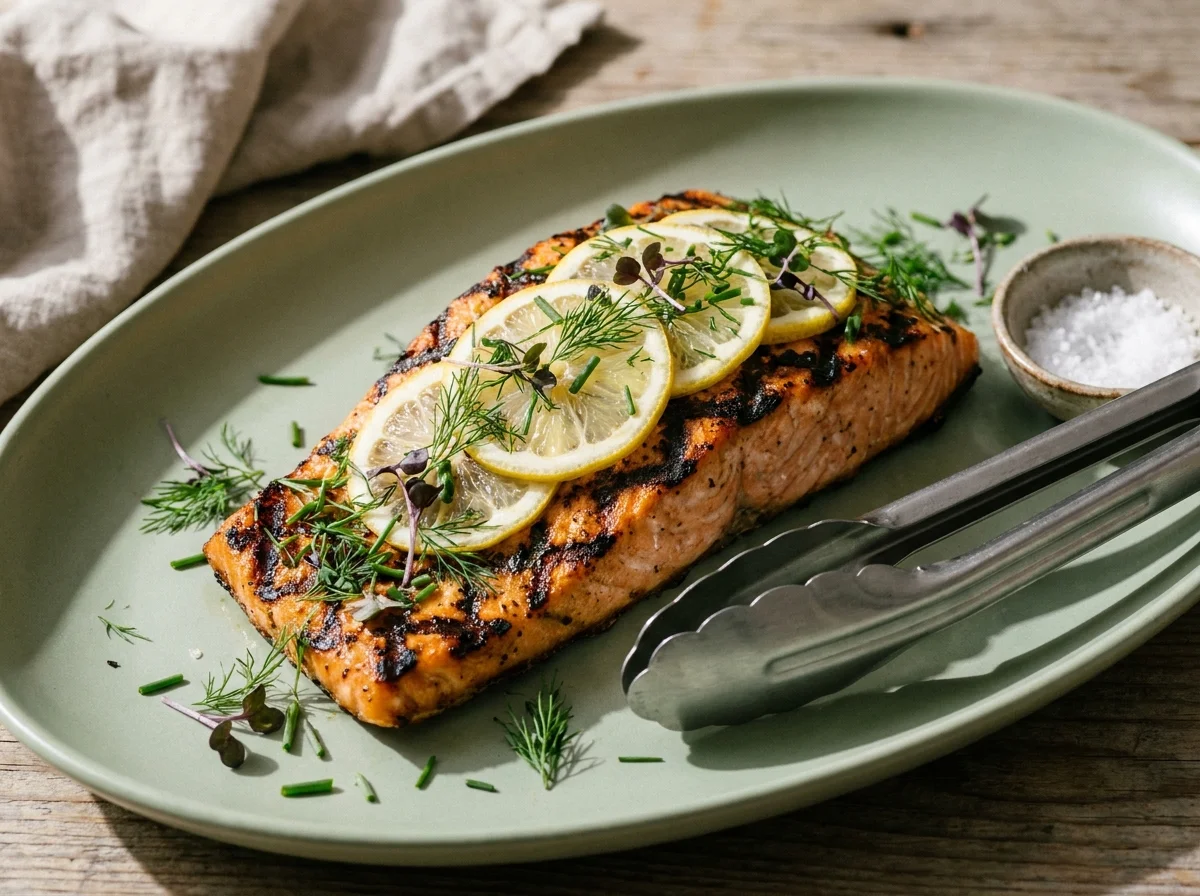
The Kerala-coast option for the Christmas table. Baking the fish on a bed of lemon, garlic, and curry leaves needs almost no added oil — the fish itself supplies the omega-3 long-chain fats — and the asparagus (or, more traditionally, ladies finger or broad beans) gives the plate volume at a low calorie cost. A complete dinner here lands around 380–450 kcal per serving, which is the calorie room you save for the slice of plum cake afterwards.
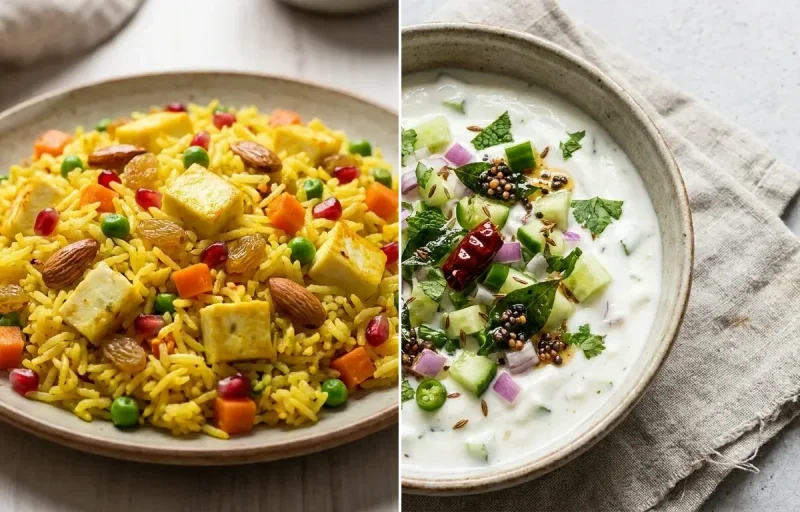
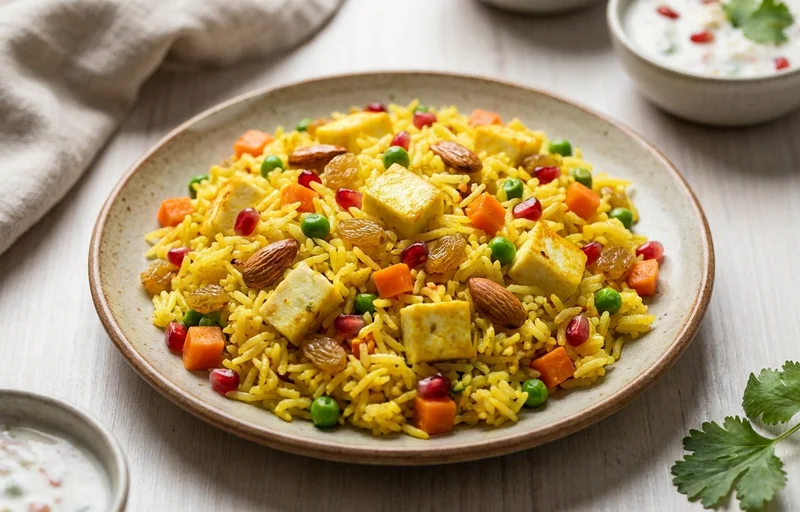
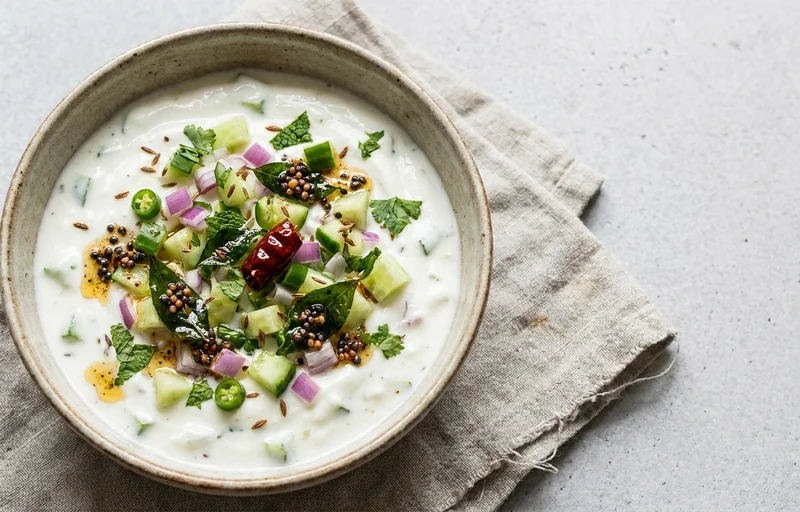
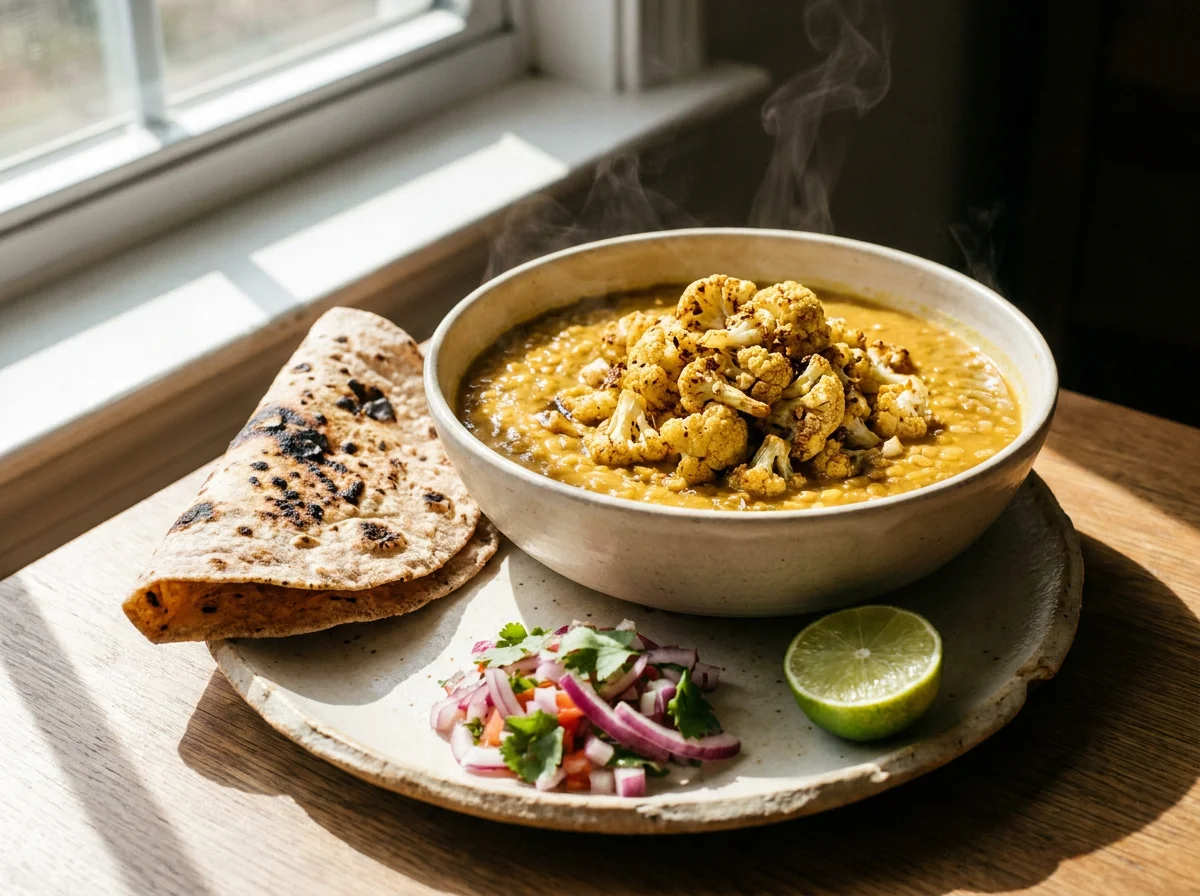
The dish that should occupy the rice slot on most festive Indian dinners — not because biryani is wrong, but because pulao does most of the same flavour work with a fraction of the ghee. A whole-spice pulao (cinnamon, clove, cardamom, bay) with mixed vegetables runs ~310 kcal per cooked cup versus ~520 for a ghee biryani; the cucumber raita adds cool fermented dairy that the festive plate is otherwise short on. A half-cup serving with one of the heavier mains, not a heaped plate of its own.
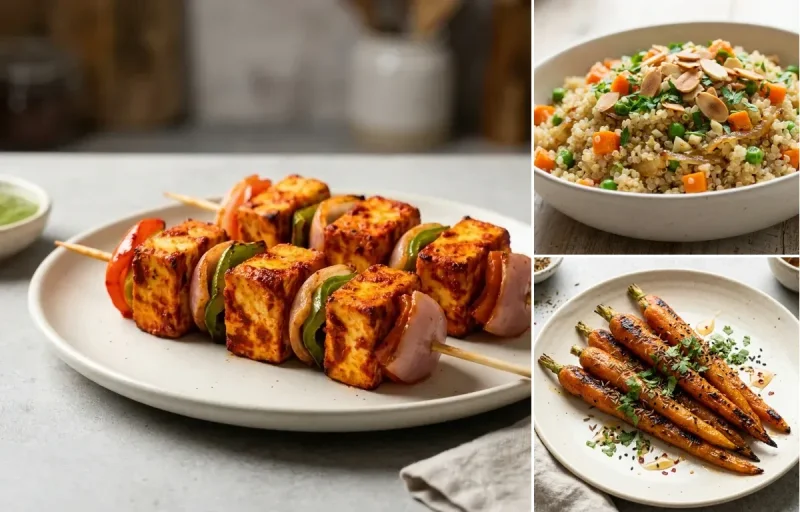
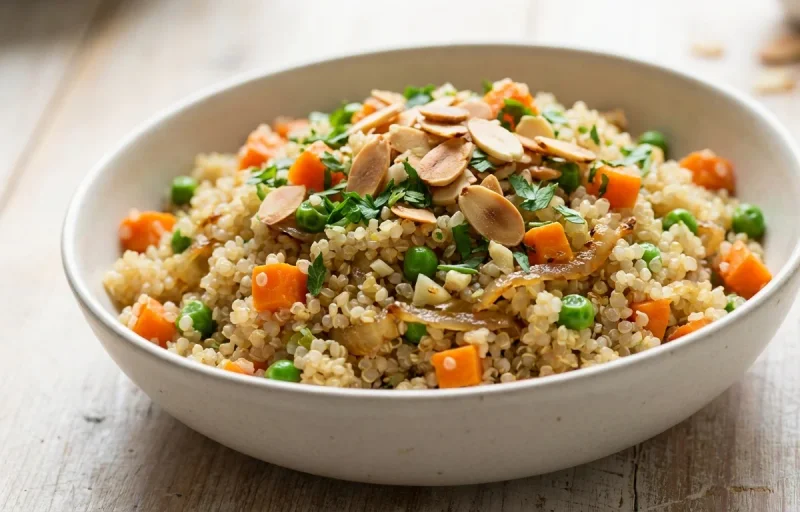
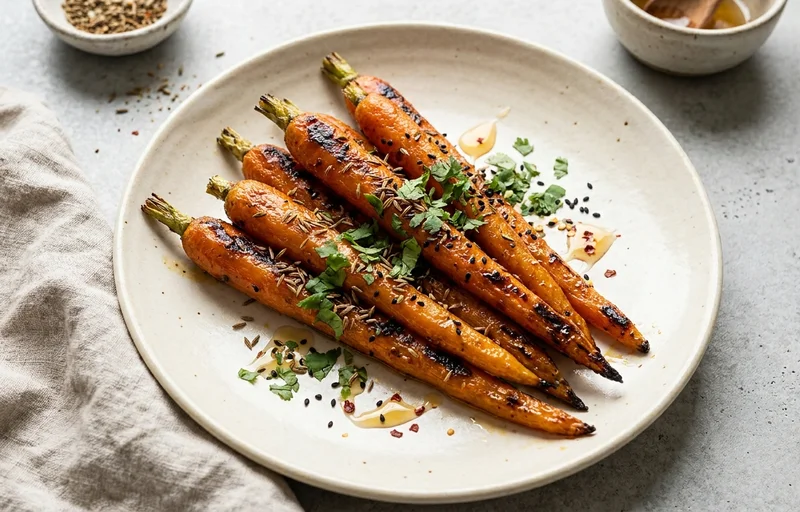
A side-and-grain pairing that earns its place on a Christmas table. Quinoa delivers more protein per cup than white rice and a better amino-acid profile; honey-cumin roasted carrots use the natural sugars in the carrot rather than added cream or butter to read as 'festive'. The grilled paneer skewers complete the plate as a vegetarian protein at ~200 kcal per serving — a defensible alternative to the roast for guests who do not eat meat.
For an extra burst of aroma, gently toast the saffron threads before steeping them in warm milk, and crush fresh green cardamom pods just before adding to the shrikhand.
!You have a confirmed nut, dairy, or seafood allergy — most of these menus rely on dairy (paneer, yogurt) or include a fish option, and would need adaptation.
ⓘ This guidance is general. Talk to a healthcare professional or registered dietitian for personalised dietary advice.