Health & Nutrition · 7 MIN READ
Is Poha Healthy? Nutrition Facts and How to Make It Better
India's 10-minute breakfast — what's actually in poha, where it falls short on protein, and the 5 cheap add-ins that turn it into a balanced plate. Sourced…
Loading...
India's 10-minute breakfast — what's actually in poha, where it falls short on protein, and the 5 cheap add-ins that turn it into a balanced plate. Sourced…
India’s favorite 10-minute breakfast is light, cheap, and comforting. But is it actually good for you — and how do you turn it from empty carbs into a balanced plate?.
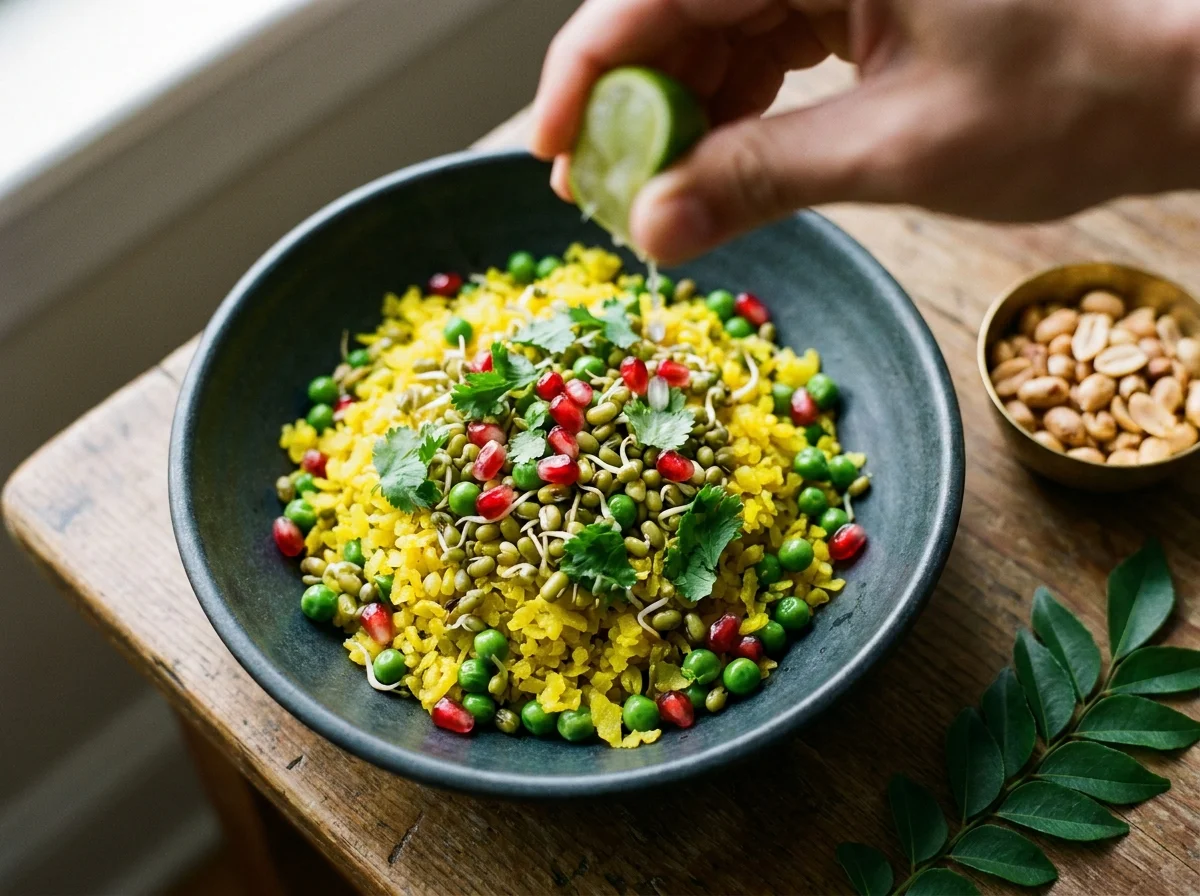
Poha is the breakfast that earns its place: ready in 10 minutes, easy on the stomach, and beloved from Indore to Mumbai. Nutritionally, it’s genuinely decent — light, low in fat, and made from iron-fortified flattened rice. But the standard plate leans heavily on carbs and skips protein. The good news? A few cheap additions turn poha into one of the most balanced quick breakfasts you can make.
It’s naturally vegetarian, can be made vegan and gluten-free, and is gentle enough for kids, recovery meals, and sensitive stomachs. As a base, it’s hard to beat. The question is only what you build on top of it.
Here’s what a standard one-cup serving of cooked kanda poha (with onion, peanuts, and a little oil) roughly delivers:
Plain white poha lands around GI 69 — squarely in the medium-to-high band [6]. That's because flattened rice is partially pre-cooked during processing, which makes its starch digest faster than raw rice and pushes blood sugar up more quickly.
The number sounds scary, but it isn't the whole story. GI of a food doesn't reflect how that food actually behaves on your plate. Pair poha with protein (peanuts, sprouts, eggs, paneer) and a dose of fibre (mixed vegetables, lemon for vitamin C) and the postprandial spike flattens considerably. This is why an upgraded poha plate is fine for most people — including those managing blood sugar — while a big bowl of plain poha with sev on top is not.
Flattened rice (poha) is often iron-fortified during processing, which makes it a quietly useful source of iron — especially valuable in vegetarian diets where iron can run low. It’s also low in fat by default and free of cholesterol.
Every one of these takes seconds and costs almost nothing — but together they transform poha from a carb-only plate into a complete, balanced breakfast:
Build your bowl in these proportions and it becomes a genuinely complete breakfast — no math, no measuring:
Poha was never the problem. A plate of just flattened rice is a snack; add protein and vegetables and it becomes a breakfast that carries you to lunch.
— Priya Sharma, RD
Our meal planner builds protein-and-veg-forward breakfasts like upgraded poha into your week — with portions and macros already calculated.
Build my weekly plan →Eating well is rarely about willpower. It’s about having a short list of dinners you actually want to eat. Pick two from this list. Make them next week. The rest will follow.
If you want these on autopilot, our weekly meal planner can drop the picks above into your calendar with one click and build a single grocery list from the merged ingredients.

Sourabh writes about Indian cuisine, budget cooking, and the everyday nutrition questions that come up in Indian kitchens — chapati portions, dal protein, how to keep dishes balanced without losing the flavours families actually want. His pieces lean on credible sources (ICMR-NIN, peer-reviewed studies) and home-cook reality in equal measure.
Meet the editorial team →Built using verified nutrition databases, culinary research, and traditional cooking knowledge — every claim is cross-referenced against the sources listed in the article. Last reviewed Jun 2026.
Articles are curated using trusted food databases (USDA FoodData Central, IFCT), culinary literature, and dietary guidelines, then structured by our editorial team for clarity, accuracy, and usefulness.