Let's talk about the black plum. It's that deep, moody purple fruit that shows up in late summer, and honestly, it's wildly underrated. People either forget about them or worry they're just sugar. But that taut skin and juicy flesh hide a secret: plums are a low-calorie, low-glycemic fruit packed with some surprising benefits, especially for your gut and heart. The key is to enjoy them fresh, skin and all.
↑ Fresh black plums, enjoyed whole, are a low-calorie, low-glycemic choice.
The underrated summer fruit
A ripe black plum is a simple pleasure. It doesn't have the hype of a mango or the year-round presence of an apple. It just shows up, does its job, and tastes fantastic. Its deep purple skin, which you should absolutely eat, is where many of the antioxidants are hiding. Inside, the amber flesh is sweet, but not too sweet, with a tartness that keeps things interesting.
They're mostly water, which makes them refreshing and low-calorie. The carbohydrates they do have are bundled with fiber, making them a much smarter choice than you might think.
IN ONE LINE
A black plum is a low-calorie, low-GI fruit with notable benefits for gut regularity and antioxidant intake, thanks to its fiber, sorbitol, and pigmented skin.
Black plum nutrition facts
Here's the nutritional breakdown for a 100-gram serving of raw black plum, which is about two small-to-medium fruits.
For just 46 calories, you get a nice little bump in vitamin C and some useful fiber. What the label doesn't show are the other compounds at play: the anthocyanins (antioxidants that give the plum its color) and sorbitol, a sugar alcohol that plays a big role in one of the plum's most famous benefits.
A word of caution: plums contain sorbitol, a natural laxative. Two or three is a healthy snack. A whole punnet might have you running for the bathroom.
Black plum's glycemic index
Glycemic index (GI) tells us how quickly a food's carbs hit our bloodstream. Anything under 55 is considered 'low'. With a GI of 40, black plums are firmly in the low-and-slow category. This means they provide steady energy without a dramatic spike and crash in blood sugar, making them a great choice for almost everyone. Their glycemic load (which considers portion size) is also very low, around 5 for a 100g serving.
GLYCEMIC INDEX · BLACK PLUM vs COMMON FOODS
Plums are a true low-GI fruit
Cherries
whole fruit
LOW
Apple
whole fruit
LOW
Black Plum
whole fruit
LOW
Mango
whole fruit
LOW
Watermelon
whole fruit
HIGH
SCALE 0–90
04590
The smart way to eat plums
It's hard to go wrong with a plum, but here are a few tips to get the most out of them.
01
Eat the skin.
It’s not just edible, it's where a huge concentration of the fiber and disease-fighting antioxidants are located. Just wash it first.
02
Stick to a couple.
Two or three plums make a perfect snack. Because of their natural sorbitol content, eating too many at once can cause digestive upset for some.
03
Choose fresh over juice.
Plum juice loses the fiber and concentrates the sugar. Whole fruit is always the better bet for blood sugar control and fullness.
04
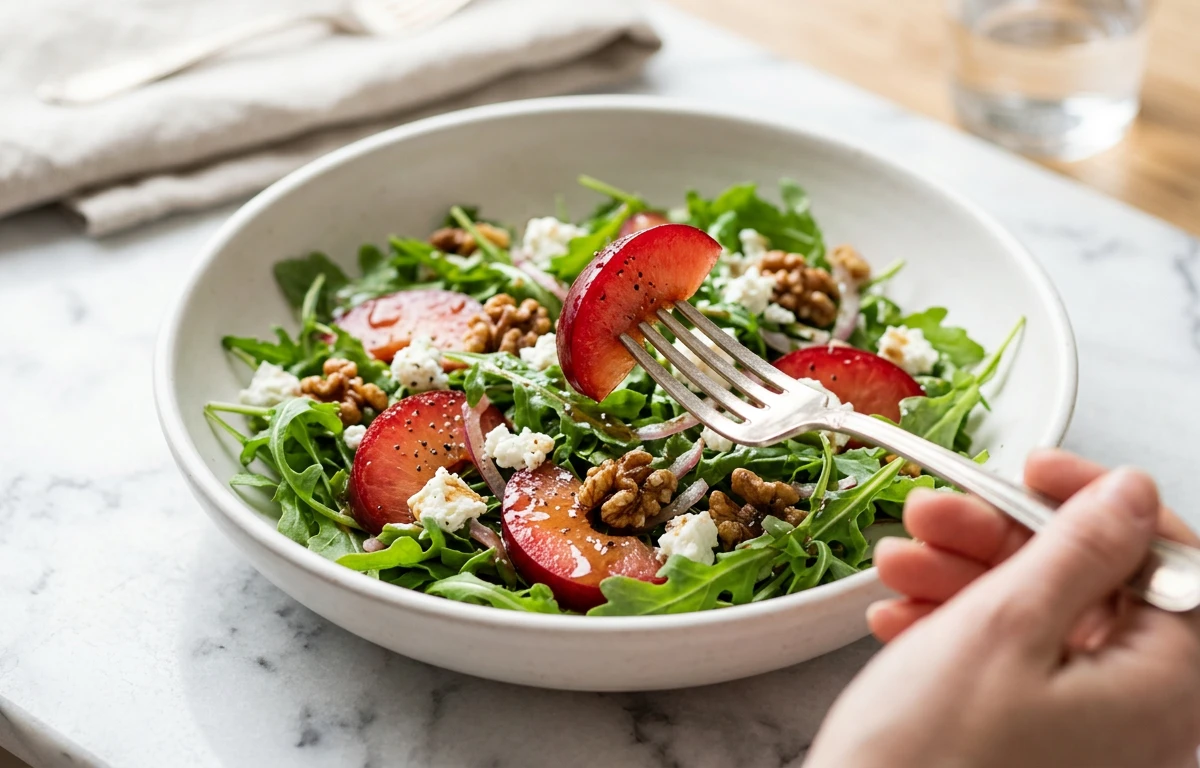
Pair with protein or fat.
A handful of nuts or a dollop of yogurt alongside your plum will make your snack even more satisfying and blood-sugar-friendly.
What plums are good for
01
Supporting gut health
Plums are famous for this. The combination of fiber and sorbitol (a sugar alcohol) helps draw water into the colon, promoting regular bowel movements.
1.4 g
fiber
02
Rich in antioxidants
The deep purple color comes from anthocyanins, powerful antioxidants that help protect your cells from damage. The skin is particularly rich in them.
Rich
in anthocyanins
03
Gentle on blood sugar
With a low GI of 40, plums provide a sweet taste and steady energy without the sharp spikes associated with high-sugar snacks.
GI 40
low
04
Aiding in weight management
At only 46 calories per 100g and with a high water content, plums are a filling, low-calorie snack that can satisfy a sweet craving.
46
calories
What to pair plums with
Plums' balance of sweet and tart makes them surprisingly versatile. Pairing them with other foods can create a more balanced and satisfying meal or snack.
Eat freely — or be mindful?
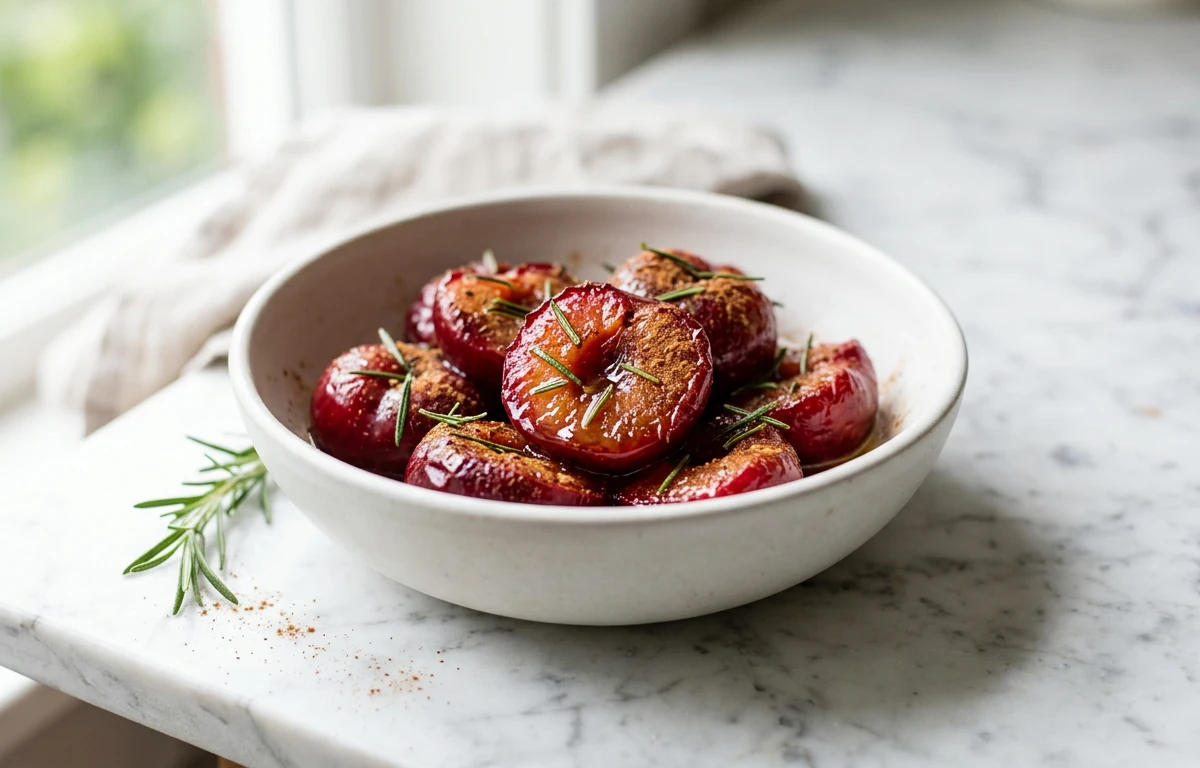
Three ways with plums
Beyond eating them out of hand, plums are wonderful in simple preparations that highlight their flavor.
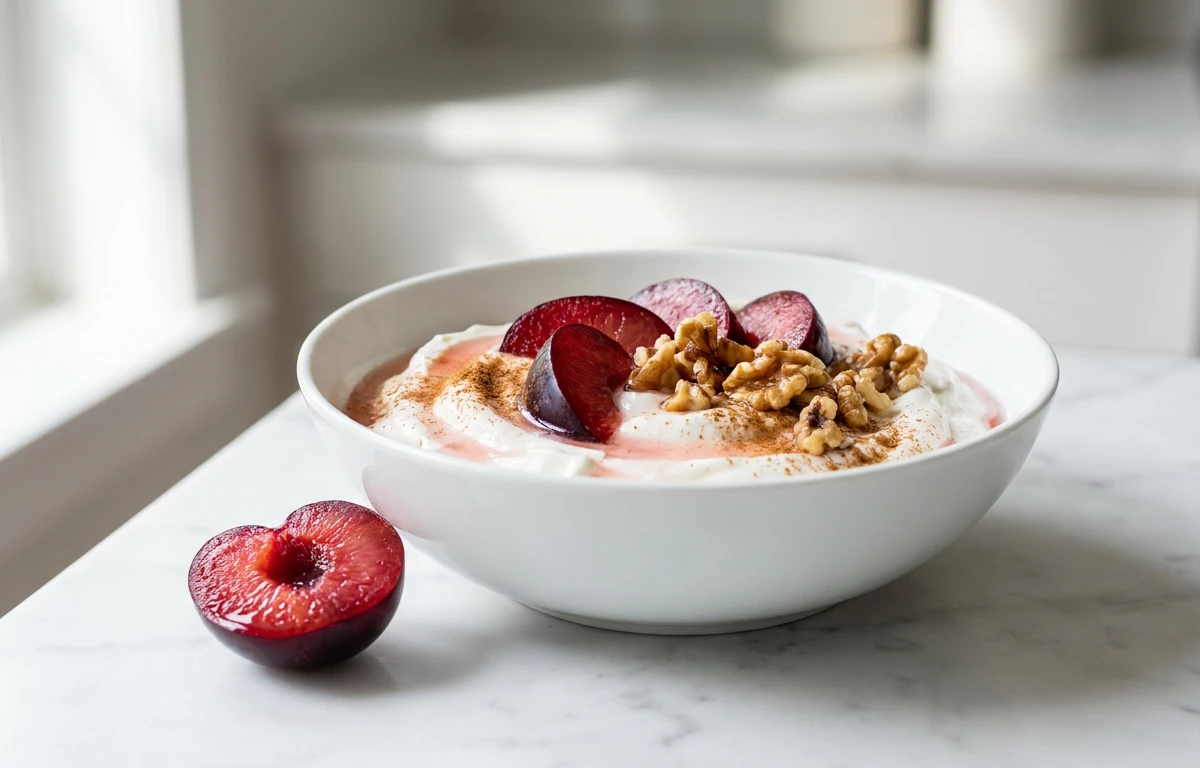
Want fruit worked into a balanced week — without the planning?
Our meal planner pairs fruit like plums with protein and fibre for steady energy, with portions and macros already calculated and a single grocery list at the end.
Build my weekly plan →SOURCES & REFERENCES · 3
One more thing
Eating well is rarely about willpower. It’s about having a short list of dinners you actually want to eat. Pick two from this list. Make them next week. The rest will follow.
If you want these on autopilot, our weekly meal planner can drop the picks above into your calendar with one click and build a single grocery list from the merged ingredients.
FREQUENTLY ASKED QUESTIONS
Frequently asked questions
Are black plums good for constipation?
Yes, they are well-known for this. Plums (and their dried form, prunes) contain both fiber and sorbitol, a natural sugar alcohol that has a mild laxative effect. A couple of plums a day can help promote regularity.
Can you eat plums if you have diabetes?
Yes, in moderation. Plums have a low glycemic index (GI) of 40, meaning they don't cause a rapid spike in blood sugar. A serving of one or two plums can be a great fruit choice for someone with diabetes.
How many plums are too many to eat?
There's no hard rule, but due to the sorbitol content, eating a large quantity (e.g., more than 4-5 in one sitting) might lead to gas, bloating, or diarrhea for some people. Start with two or three and see how you feel.
Are plums good for weight loss?
They can be a helpful part of a weight-loss plan. They are low in calories (about 46 per 100g), high in water, and contain fiber, which helps you feel full and satisfied. They're a great way to handle a sweet craving.
METHODOLOGY
How this article was created
Built using verified nutrition databases, culinary research, and traditional cooking knowledge — every claim is cross-referenced against the sources listed in the article.
· USDA data· Culinary research· Quality reviewed
Read our methodology →TRANSPARENCY
About this content
Articles are curated using trusted food databases (USDA FoodData Central, IFCT), culinary literature, and dietary guidelines, then structured by our editorial team for clarity, accuracy, and usefulness.
· Verified data sources· Culinary research· Quality reviewed
Read our editorial policy →RELATED RECIPES
Cook from this article
EXPLORE OUR MEALS
Meals that fit this article

AMERICAN · 1677 CAL
Almonds with Sliced Apple + supplement + iron

MEDITERRANEAN · 809 CAL
Greek Yogurt with Berries Almonds and Granola + supplement + iron

GENERAL_HEALTHY · 705 CAL
Banana with Peanut Butter Pregnancy + supplement + iron

MODERN · 982 CAL
Hummus with Crudits and Pita with Fresh Orange Snack + supplement + iron
TAGGED
KEEP READING