That checkerboard cereal square is a kitchen cupboard staple for a reason. It's crunchy, it's satisfying, and it feels wholesome. But is it? Wheat Chex is a funny one. On one hand, it's made from whole wheat and packs a genuinely impressive amount of fiber. On the other, it's a processed cereal with a hefty carb load and, depending on the version, a surprising amount of sodium. It's not a simple 'good' or 'bad' food. It's a tool, and the trick is knowing how to use it right.
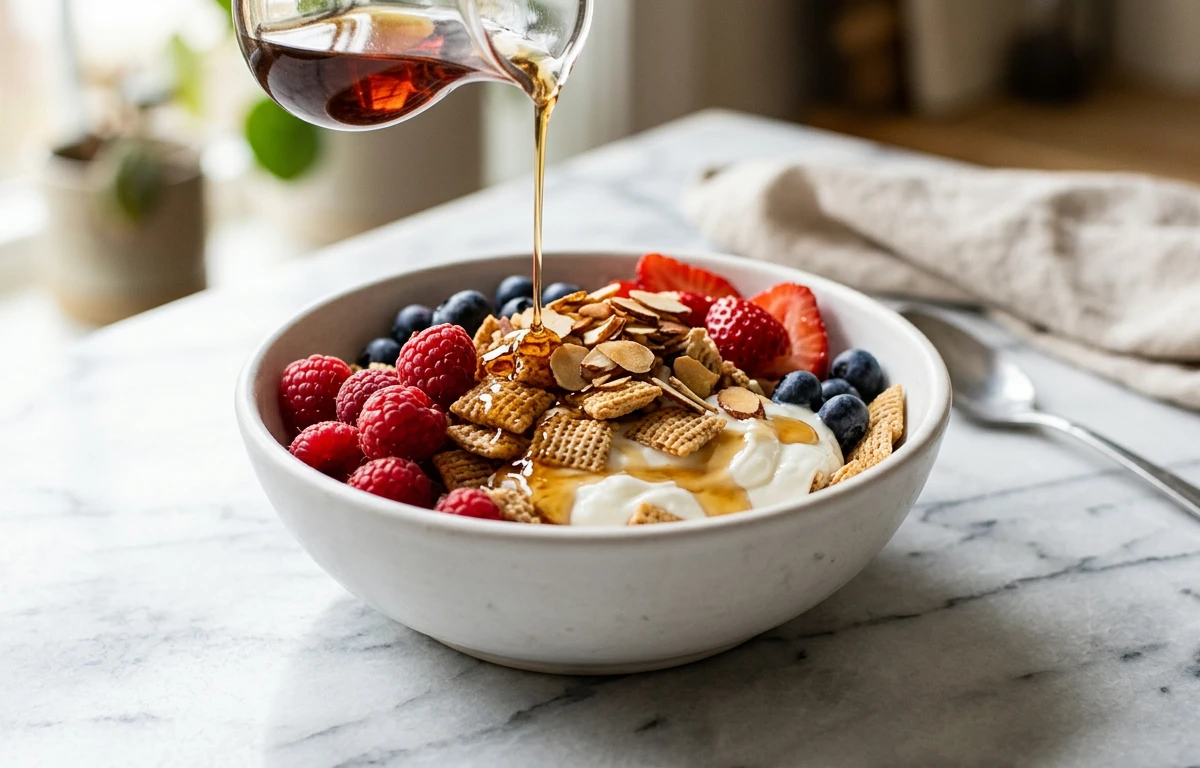
↑ Wheat Chex is a high-fiber whole grain, but it's best paired with protein to make a balanced meal.
The high-fiber, high-sodium staple
Let's be honest about breakfast cereal. Most of it is just dessert in a box. Wheat Chex feels different, and in some ways, it is. It's made from 100% whole grain wheat, and the fiber content is genuinely impressive. That's a huge win.
But it's not just whole wheat in a field. It's wheat that has been processed, cooked, and shaped into a lattice square, which changes how your body handles it. And then there's the sodium. It's high. Really high. So while it can be part of a healthy diet, it's not the simple, virtuous choice the 'whole grain' label might suggest.
Wheat Chex is a high-fiber, whole-grain cereal, but its high carbohydrate and sodium content mean portion and pairings are everything.
Wheat Chex nutrition facts
The numbers here are for a 100-gram portion, which is a very large bowl of cereal (nearly 2 cups). A more typical serving is closer to 60 grams. But using 100g helps us compare it fairly to other foods. The standout numbers are the fiber and the carbs.
That fiber number is not a typo: 16.7 grams is more than half of what you need in a whole day. That's fantastic for gut health and feeling full. The protein is decent for a cereal, too. But look at the sodium: 833 mg is a huge amount, about a third of your daily limit. The iron is also sky-high because it's heavily fortified, which is common in breakfast cereals.
Wheat Chex and your blood sugar
There's no officially published glycemic index for Wheat Chex, but we can make a very educated guess. Glycemic index (GI) ranks foods on a 0-100 scale based on how fast they raise blood sugar. Below 55 is low, 56-69 is medium, and 70+ is high.
While it's made from whole wheat (which usually lowers GI), the grain is also puffed and processed into a light, airy square. This process makes the starches more available and easier to digest, which tends to raise the GI. It will almost certainly be lower than Corn Flakes (GI 81) but higher than minimally processed grains. A reasonable estimate puts it in the medium GI range, likely around 65-70.
GLYCEMIC INDEX · WHEAT CHEX vs COMMON FOODS
Wheat Chex likely sits in the medium-GI band
Apple
whole fruit
LOW
Pineapple
whole fruit
MEDIUM
Wheat Chex (est.)
processed grain
MEDIUM
White Bread
refined
HIGH
Cornflakes
refined
HIGH
SCALE 0–90
04590
The smart way to eat it
You can absolutely have a bowl of Wheat Chex. You just need a strategy to balance out its weaknesses (the carbs, the sodium) and play to its strengths (the fiber).
01
Watch the portion size.
Don't free-pour. Use a measuring cup. A single serving is about one cup (59g), not a giant soup bowl full.
02
Always add protein and fat.
This is non-negotiable. It slows down the carb digestion. Use whole milk or Greek yogurt, and add a handful of nuts or seeds.
03
Don't add sugar.
The cereal itself is unsweetened, which is great. Don't undo that by adding table sugar or honey. If you need sweetness, use whole fruit like berries.
04
Factor in the sodium.
If you have Wheat Chex for breakfast, you need to be mindful of your salt intake for the rest of the day. This is especially true if you have high blood pressure.
05
Remember it's not gluten-free.
It seems obvious, but it's a common mix-up. WHEAT Chex contains wheat. If you need gluten-free, you must buy the versions explicitly labeled as such (like Rice or Corn Chex).
What Wheat Chex is good for
01
A huge hit of fiber
With 16.7g per 100g, it's one of the highest-fiber breakfast cereals available. This supports gut health, regularity, and can help you feel full.
16.7g
fiber / 100g
02
100% whole grain energy
The primary ingredient is whole wheat, providing complex carbohydrates for energy, unlike cereals made from refined flour.
100%
whole grain
03
Very low in fat
With less than 2g of fat per 100g serving, it's a naturally low-fat food, which is beneficial for heart health.
1.7g
fat / 100g
04
A vehicle for other nutrients
Its plain, crunchy nature makes it a perfect base for nutrient-dense additions like berries, nuts, seeds, and Greek yogurt.
10g
protein / 100g
What to pair Wheat Chex with
Eating Wheat Chex by itself with skim milk is a recipe for a blood sugar spike and hunger an hour later. Pair it smartly to create a balanced meal.
Eat freely — or be mindful?
Three ways to use it
Think beyond the breakfast bowl. Wheat Chex's sturdy crunch makes it useful in other ways.

Want a balanced breakfast without the guesswork?
Our meal planner builds breakfasts that balance carbs, protein, and fat for steady energy. We handle the portions and pairings so you get a delicious, healthy start to your day.
Build my weekly plan →SOURCES & REFERENCES · 3
One more thing
Eating well is rarely about willpower. It’s about having a short list of dinners you actually want to eat. Pick two from this list. Make them next week. The rest will follow.
If you want these on autopilot, our weekly meal planner can drop the picks above into your calendar with one click and build a single grocery list from the merged ingredients.
FREQUENTLY ASKED QUESTIONS
Frequently asked questions
Is Wheat Chex healthy?
It's a mixed bag. The high fiber and whole grain content are excellent, but the very high sodium and carbohydrate load are significant drawbacks. It can be part of a healthy diet if the portion is small and it's paired with protein and fat, but it's not a 'health food' on its own.
Is Wheat Chex good for people with diabetes?
Caution is advised. While the fiber helps, the overall carbohydrate load is very high, which can make blood sugar management difficult. A very small portion, combined with plenty of protein and fat, might be manageable for some, but there are better breakfast choices.
Is Wheat Chex gluten-free?
No. Wheat Chex is made from whole grain wheat and contains gluten. General Mills makes other Chex varieties, like Rice Chex and Corn Chex, which are labeled gluten-free. Always check the packaging.
Why is there so much sodium in Wheat Chex?
Salt is a key ingredient in many processed foods, including cereals, for flavor and texture. It makes the relatively plain whole wheat more palatable. The amount in Wheat Chex is unusually high, even for a mainstream cereal.
METHODOLOGY
How this article was created
Built using verified nutrition databases, culinary research, and traditional cooking knowledge — every claim is cross-referenced against the sources listed in the article.
· USDA data· Culinary research· Quality reviewed
Read our methodology →TRANSPARENCY
About this content
Articles are curated using trusted food databases (USDA FoodData Central, IFCT), culinary literature, and dietary guidelines, then structured by our editorial team for clarity, accuracy, and usefulness.
· Verified data sources· Culinary research· Quality reviewed
Read our editorial policy →RELATED RECIPES
Cook from this article
EXPLORE OUR MEALS
Meals that fit this article

AMERICAN · 1677 CAL
Almonds with Sliced Apple + supplement + iron

MEDITERRANEAN · 809 CAL
Greek Yogurt with Berries Almonds and Granola + supplement + iron

GENERAL_HEALTHY · 705 CAL
Banana with Peanut Butter Pregnancy + supplement + iron

MODERN · 982 CAL
Hummus with Crudits and Pita with Fresh Orange Snack + supplement + iron
TAGGED
KEEP READING