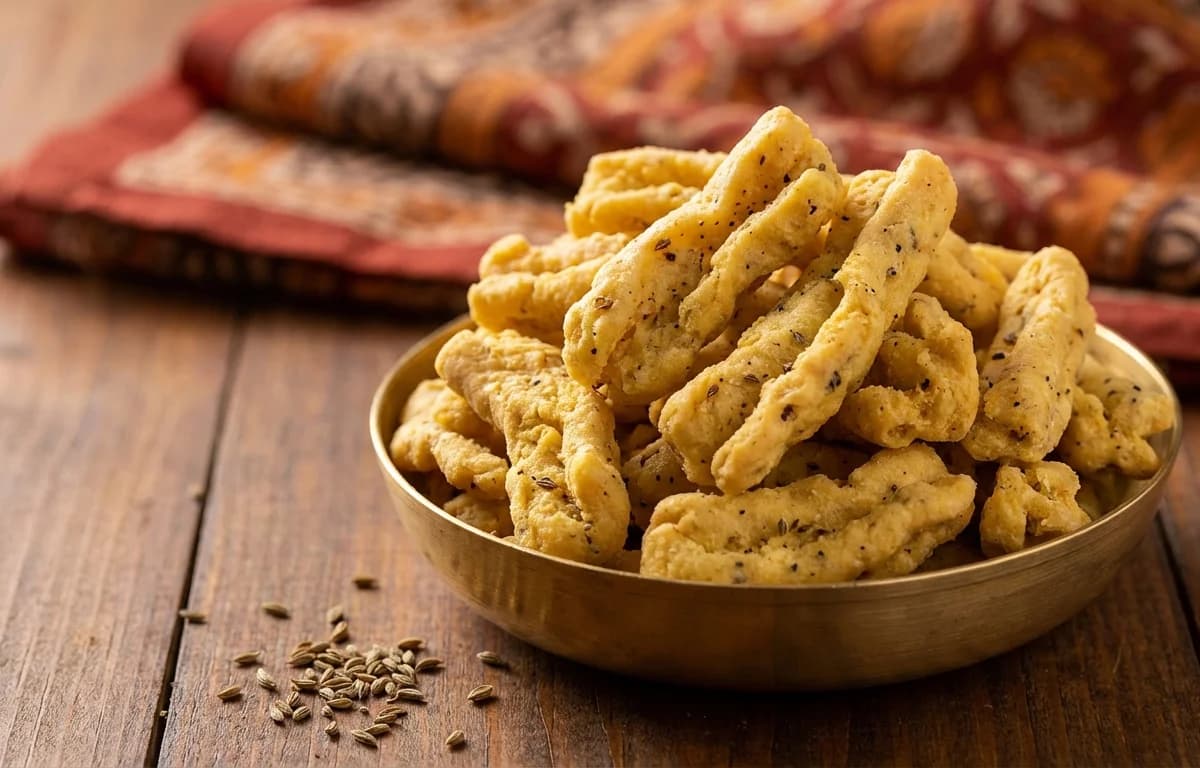
A beloved Gujarati tea-time snack, these savory chickpea flour noodles are uniquely soft and spongy, not crunchy like typical sev. Seasoned with aromatic carom seeds and a hint of black pepper, they are irresistibly delicious and melt in your mouth. Perfect with a cup of hot chai.
Prep15 min
Cook25 min
Servings4
Serving size: 1 serving
307cal
10gprotein
30gcarbs
17g
Ingredients
2 cup Besan (sifted)
4 tbsp Oil (for the dough)
1 tsp Ajwain (lightly crushed)
1 tsp Black Pepper Powder
0.25 tsp Hing
0.5 tsp Baking Soda
1 tsp Salt (or to taste)
0.75 cup Water (lukewarm, adjust as needed)
Instructions
1
Prepare the Dough
In a large mixing bowl, place the sifted besan. Add the crushed ajwain, black pepper powder, hing, baking soda, and salt. Whisk everything together to combine.
A classic fried egg with a sunny, runny yolk, spiced up with a sprinkle of Indian masalas. The perfect quick breakfast or simple side to any meal, ready in just 5 minutes.
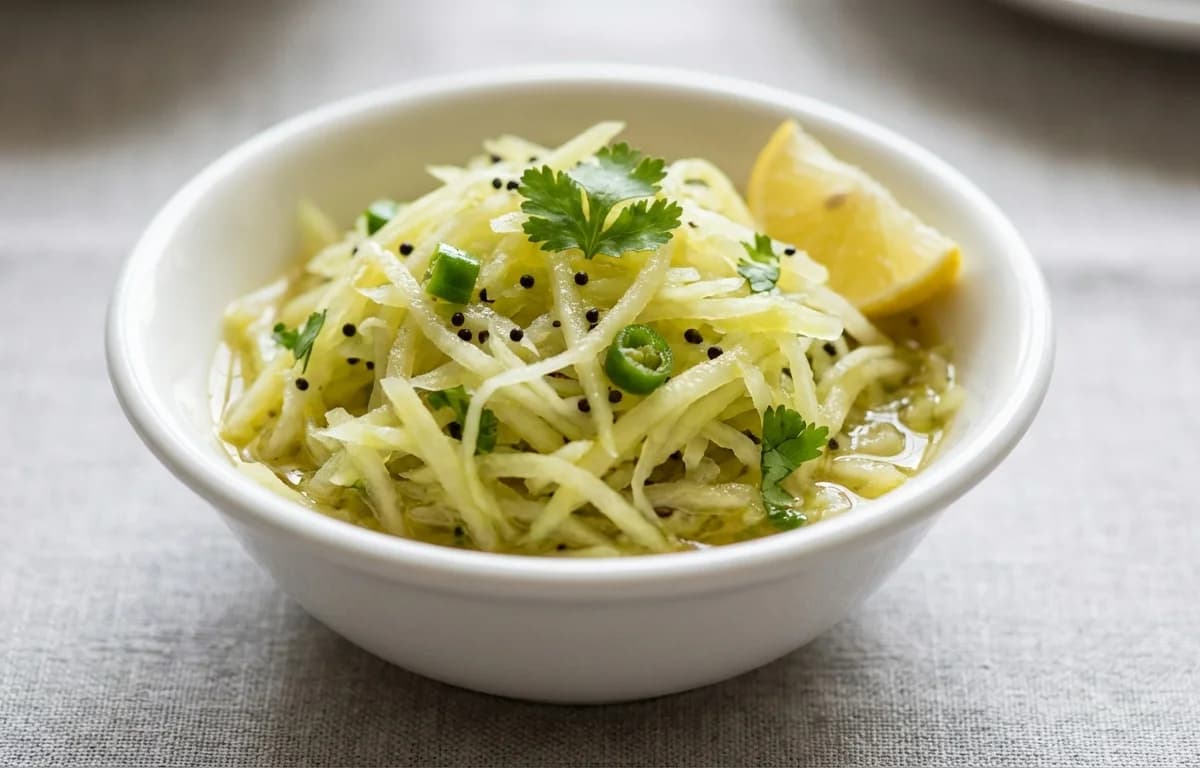
A crunchy, tangy, and slightly sweet Gujarati warm salad made from grated raw papaya. This quick stir-fry is a classic accompaniment to snacks like fafda and jalebi, ready in just 15 minutes.
Prep10 min
Cook5 min
Servings4
Serving size: 1 serving
About Bhavnagari Gathiya, Fried Egg, Papaya Sambharo and Masala Chai
Crispy gathiya, spiced fried egg & fresh sambharo with chai. An energy-giving, soul-satisfying treat!
This gujarati dish is perfect for lunch. With 567.75 calories and 17.970000000000002g of protein per serving, it's a nutritious choice for your meal plan.
Other Cuisines to Explore
Discover authentic meals from cuisines around the world.
Add 4 tablespoons of oil to the dry mixture. Using your fingertips, rub the oil into the flour for 2-3 minutes. This process, called 'moyan', is crucial for a soft texture. The mixture should resemble coarse, moist sand.
Gradually add lukewarm water, a little at a time, and knead to form a very soft, smooth, and sticky dough. The consistency should be much softer than chapati dough, almost like a thick, pliable paste that holds its shape. Knead for 4-5 minutes until smooth.
2
Set Up the Gathiya Press
Generously grease the inside of a sev or gathiya maker (press) and the disc with oil to prevent the dough from sticking.
Fit the press with the thick, striped disc specifically designed for gathiya.
Carefully fill the press with the prepared dough, ensuring there are no air pockets.
3
Heat Oil for Frying
Pour the oil for deep frying into a kadai or a deep, heavy-bottomed pan. Heat the oil over a medium flame.
To check if the oil is at the right temperature (around 150-160°C / 300-320°F), drop a tiny piece of dough into it. It should sizzle and rise to the surface steadily without browning quickly. If it browns instantly, the oil is too hot.
4
Fry the Gathiya
Once the oil is ready, reduce the heat to low-medium. Hold the press directly over the hot oil and turn the handle to extrude the dough in a large, circular motion, forming a single layer.
Fry for about 1-2 minutes on one side. The gathiya will puff up. Do not disturb them immediately.
Gently flip them over using a slotted spoon and fry for another 1-2 minutes. The gathiya should be cooked through but remain a pale cream or light yellow color. Avoid browning them, as this will make them hard.
Carefully remove the fried gathiya from the oil and place them on a wire rack or paper towels to drain excess oil.
5
Cool and Store
Repeat the frying process in batches for the remaining dough, ensuring the oil temperature remains consistent.
Allow the gathiya to cool down completely to room temperature. They will become slightly firmer as they cool.
Once completely cool, break them into smaller, bite-sized pieces. Store in an airtight container for up to 3 weeks.
134cal
6gprotein
1gcarbs
11gfat
Ingredients
2 large Egg
1 tbsp Ghee (Can be substituted with vegetable oil)
0.25 tsp Salt (Adjust to taste)
0.25 tsp Turmeric Powder
0.25 tsp Red Chili Powder (Adjust to your spice preference)
0.25 tsp Black Pepper Powder (Freshly ground is best)
1 tbsp Coriander Leaves (Finely chopped, for garnish)
Instructions
1
Heat ghee in a non-stick skillet or frying pan over medium-low heat. Swirl the pan to ensure the ghee coats the bottom evenly.
2
Gently crack the eggs into the hot pan, leaving space between them. Be careful not to break the yolks.
3
Immediately sprinkle the salt, turmeric powder, red chili powder, and black pepper powder evenly over the eggs.
4
Cook for 2-3 minutes. For a runny yolk (sunny-side up), cook until the whites are completely set. For a jammy yolk, cover the pan with a lid for the last minute of cooking to steam the top. For a fully cooked yolk, gently flip the egg and cook for another 30-60 seconds.
5
Using a spatula, carefully slide the fried eggs onto a serving plate. Garnish with freshly chopped coriander leaves and serve immediately.
500 g Raw Green Papaya (Peeled and coarsely grated)
2 tbsp Peanut Oil (Or any neutral vegetable oil)
1 tsp Mustard Seeds
0.25 tsp Asafoetida (Also known as Hing)
8 pcs Curry Leaves
3 pcs Green Chili (Slit lengthwise)
0.5 tsp Turmeric Powder
1 tsp Salt (Adjust to taste)
1 tsp Sugar (Optional, to balance flavors)
1 tbsp Lemon Juice (Freshly squeezed)
2 tbsp Coriander Leaves (Finely chopped, for garnish)
Instructions
1
Prepare the Tempering (Vaghar)
Heat the peanut oil in a wide pan or kadai over medium-high heat.
Once the oil is hot, add the mustard seeds. Wait for them to splutter completely, which should take about 30-45 seconds.
Lower the heat to medium, then add the asafoetida, curry leaves, and slit green chilies. Sauté for another 30 seconds until the chilies are fragrant and slightly blistered.
2
Stir-fry the Papaya
Add the grated raw papaya and turmeric powder to the pan.
Increase the heat back to medium-high and toss everything together quickly, ensuring the papaya is well-coated with the tempering.
Stir-fry for only 2-3 minutes. The goal is to heat the papaya through while maintaining its crisp, crunchy texture. Do not overcook.
3
Season and Serve
Turn off the heat completely. Remove the pan from the stove.
Immediately add the salt, sugar (if using), and fresh lemon juice.
Give it a final, quick toss to combine all the flavors.