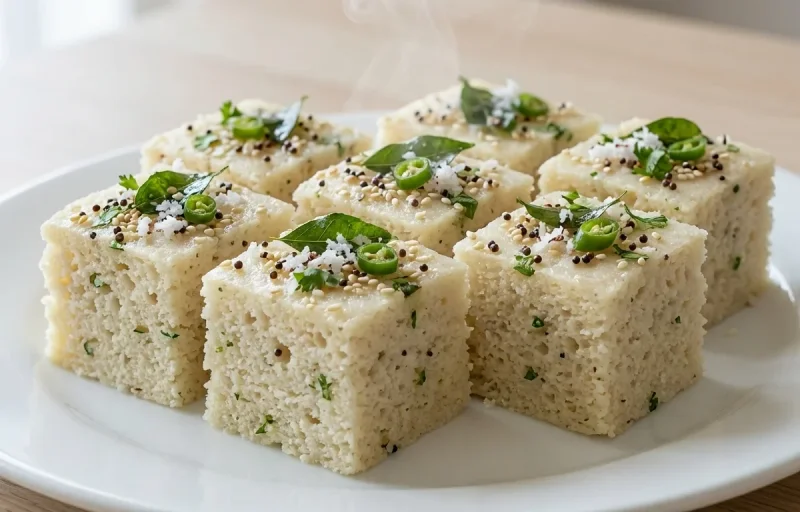
A classic Gujarati snack, these are crispy, savory ribbons made from chickpea flour. Perfect for breakfast or a tea-time treat, especially when paired with fried green chilies and sweet papaya chutney (sambharo).
Prep20 min
Cook25 min
Servings4
Serving size: 1 serving
274cal
10gprotein
30gcarbs
14g
Ingredients
2 cup Besan (Sifted for a smooth dough)
1 tsp Papad Khar (The traditional leavening agent. If unavailable, use 1/2 tsp baking soda.)
1 tsp Ajwain (Lightly crushed between your palms to release flavor)
0.25 tsp Turmeric Powder
0.25 tsp Hing
0.75 tsp Salt (Adjust to taste)
0.25 tsp Black Pepper Powder (Freshly ground is best)
Crispy, syrup-soaked spirals of fried batter, a beloved Indian sweet. This recipe creates perfectly crunchy and juicy jalebis with a delightful tang from fermentation, ready to be enjoyed warm.
A thick, sweet, and tangy Gujarati condiment made from yogurt and chickpea flour. It's the perfect accompaniment for snacks like khaman, dhokla, and patra, adding a burst of flavor.
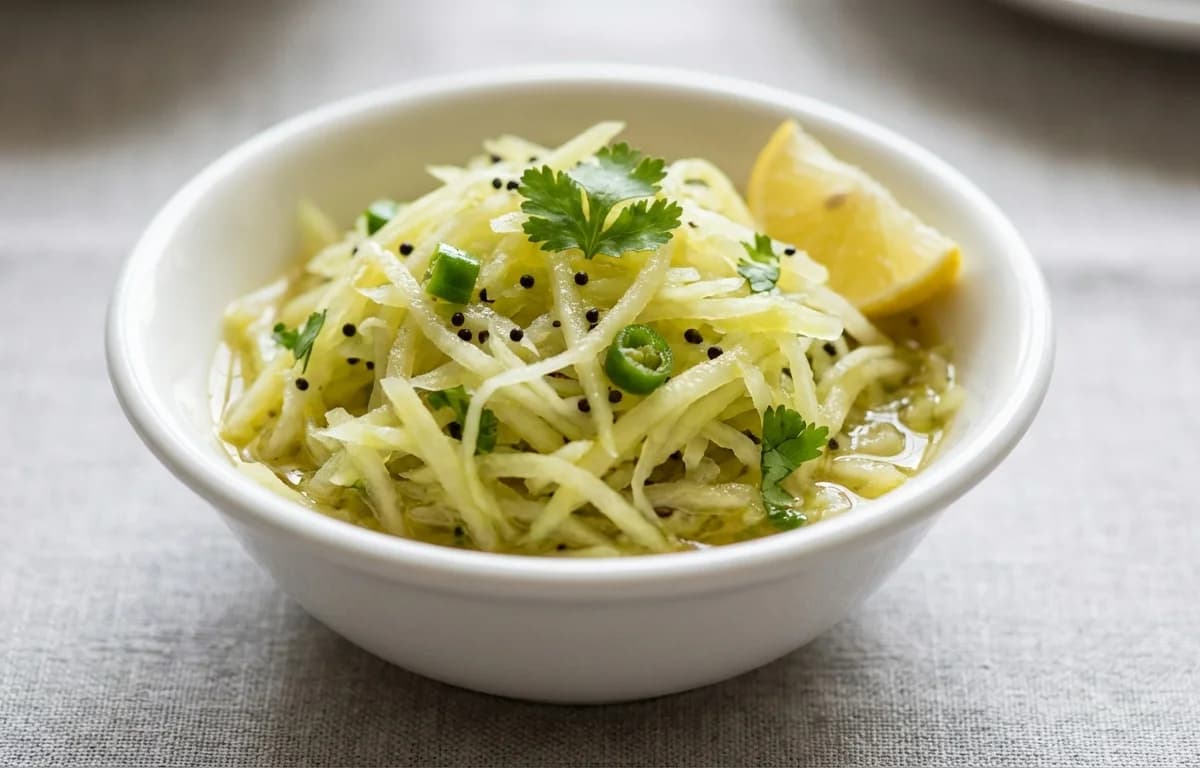
A crunchy, tangy, and slightly sweet Gujarati warm salad made from grated raw papaya. This quick stir-fry is a classic accompaniment to snacks like fafda and jalebi, ready in just 15 minutes.
About Fafda, Jalebi, Kadhi Chutney and Papaya Sambharo
Crispy Fafda, sweet Jalebi, and tangy Kadhi Chutney – a soul-satisfying, flavorful breakfast treat!
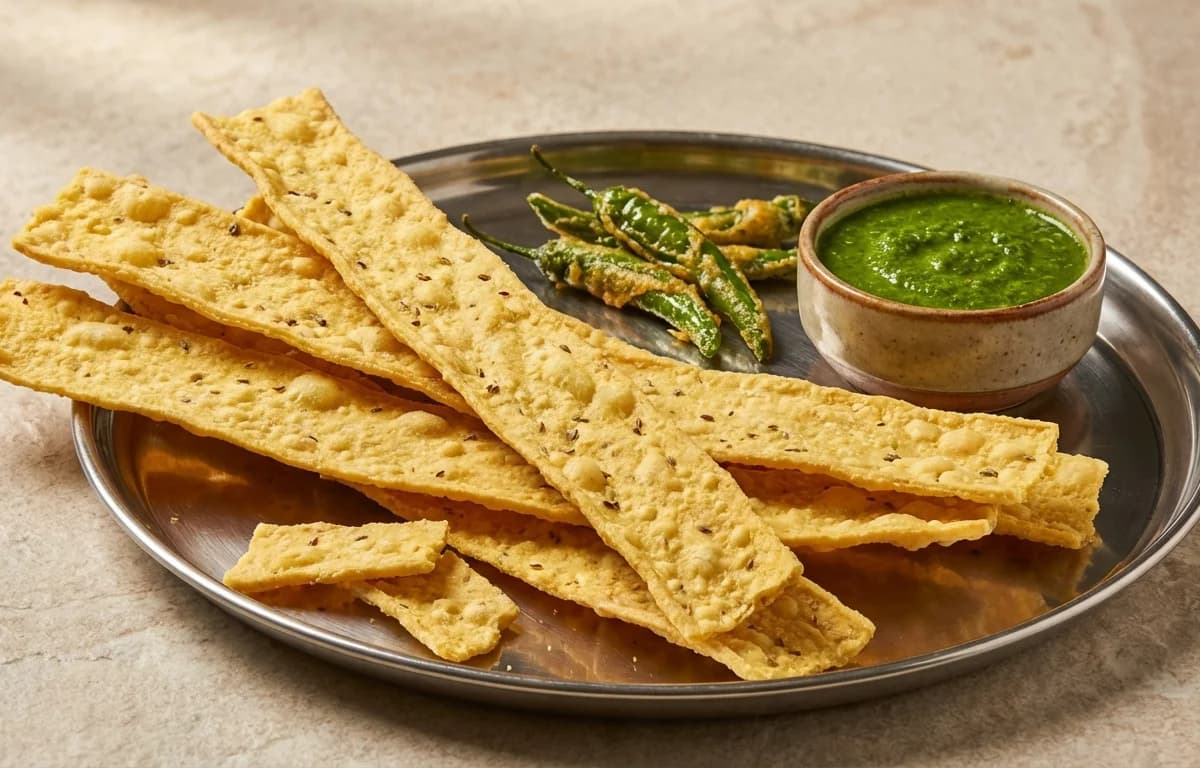
This gujarati dish is perfect for breakfast. With 812.75 calories and 22.1g of protein per serving, it's a nutritious choice for your meal plan.
fat
Instructions
1
Prepare the Dough
In a large mixing bowl, combine the sifted besan, papad khar, crushed ajwain, turmeric powder, hing, salt, and black pepper powder. Whisk well to mix.
Add 3 tbsp of oil to the dry mixture. Rub it in with your fingertips until the mixture resembles coarse breadcrumbs. This step, called 'moyan', is crucial for a crispy texture.
Gradually add lukewarm water, a little at a time, and knead to form a firm, smooth, and pliable dough. The dough should be stiffer than chapati dough but not dry or crumbly.
Knead the dough for 6-8 minutes on a clean surface until it is very smooth and elastic. Cover with a damp cloth and let it rest for 20 minutes.
2
Shape the Fafda
After resting, knead the dough again for a minute. Divide it into 25-30 small, equal-sized portions and roll each into a small cylindrical log shape.
Place a wooden board or a clean, ungreased countertop in front of you. Take one dough log and place it at the edge of the board closest to you.
Using the base of your palm (the fleshy part near your wrist), press down firmly on the dough log and drag it forward in one single, swift, and even stroke. This will stretch the dough into a long, thin strip.
The strip should be almost translucent. Carefully slide a thin, sharp knife or a metal spatula under the fafda strip to lift it from the board without breaking it. This requires practice, so don't worry if the first few break.
3
Fry the Fafda
Heat the oil for deep frying in a wide kadai or pan over medium heat. The oil should be moderately hot (around 170°C / 340°F). To test, drop a tiny piece of dough; it should rise to the surface steadily without browning too quickly.
Gently slide the shaped fafda strips into the hot oil. Fry 3-4 strips at a time to avoid overcrowding the pan.
Fry for about 45-60 seconds, then flip and fry for another 30-45 seconds until they are a very light golden color and crisp. Fafda should not be dark brown.
Using a slotted spoon, remove the fafda from the oil and place them on a wire rack or a plate lined with paper towels to drain any excess oil.
4
Serve
Fafda are best enjoyed fresh and hot.
Serve immediately with traditional accompaniments like papaya sambharo (raw papaya salad), besan chutney (kadhi), and fried green chilies.
4
Serving size: 1 serving
280cal
5gprotein
29gcarbs
16gfat
Ingredients
1 cup Maida
2 tbsp Besan
0.25 cup Curd (Use slightly sour curd for best results)
1 tsp Instant Yeast
1 tsp Sugar (For the batter)
0.75 cup Warm Water (For the batter, adjust as needed)
2 cup Ghee (For deep frying)
1 cup Water (For the sugar syrup)
0.25 tsp Saffron Strands (A generous pinch)
0.5 tsp Cardamom Powder
1 tsp Lemon Juice (Prevents syrup crystallization)
1 tbsp Pistachios (Finely chopped, for garnish)
Instructions
1
Prepare and Ferment the Batter (1 hour 5 minutes)
In a large mixing bowl, whisk together the maida, besan, instant yeast, and 1 tsp of sugar.
Add the curd and mix to combine.
Gradually pour in the warm water while whisking continuously to form a smooth, lump-free batter. The consistency should be thick but pourable, similar to pancake batter.
Cover the bowl with a lid or plastic wrap and set it aside in a warm place to ferment for 1 hour. The batter will become bubbly and slightly increase in volume.
2
Make the Sugar Syrup (10 minutes)
While the batter is fermenting, prepare the syrup. In a wide saucepan, combine 1.5 cups of sugar and 1 cup of water.
Bring the mixture to a boil over medium heat, stirring until the sugar dissolves completely.
Reduce the heat and simmer for 5-7 minutes until the syrup thickens slightly and reaches a 'one-string' consistency. To test, cool a drop slightly and press it between your thumb and forefinger; a single thread should form when you pull them apart.
Turn off the heat and stir in the saffron strands, cardamom powder, and lemon juice. Keep the syrup warm on the lowest possible heat setting.
500 g Raw Green Papaya (Peeled and coarsely grated)
2 tbsp Peanut Oil (Or any neutral vegetable oil)
1 tsp Mustard Seeds
0.25 tsp Asafoetida (Also known as Hing)
8 pcs Curry Leaves
3 pcs Green Chili (Slit lengthwise)
0.5 tsp Turmeric Powder
1 tsp Salt (Adjust to taste)
1 tsp Sugar (Optional, to balance flavors)
1 tbsp Lemon Juice (Freshly squeezed)
2 tbsp Coriander Leaves (Finely chopped, for garnish)
Instructions
1
Prepare the Tempering (Vaghar)
Heat the peanut oil in a wide pan or kadai over medium-high heat.
Once the oil is hot, add the mustard seeds. Wait for them to splutter completely, which should take about 30-45 seconds.
Lower the heat to medium, then add the asafoetida, curry leaves, and slit green chilies. Sauté for another 30 seconds until the chilies are fragrant and slightly blistered.
2
Stir-fry the Papaya
Add the grated raw papaya and turmeric powder to the pan.
Increase the heat back to medium-high and toss everything together quickly, ensuring the papaya is well-coated with the tempering.
Stir-fry for only 2-3 minutes. The goal is to heat the papaya through while maintaining its crisp, crunchy texture. Do not overcook.
3
Season and Serve
Turn off the heat completely. Remove the pan from the stove.
Immediately add the salt, sugar (if using), and fresh lemon juice.
Give it a final, quick toss to combine all the flavors.
After fermentation, gently whisk the batter for a few seconds to deflate it slightly.
Pour the batter into a clean squeeze bottle with a small nozzle. Alternatively, use a sturdy piping bag with a small, plain round tip.
4
Fry the Jalebis (10 minutes)
Heat the ghee in a wide, shallow pan (like a kadai or frying pan) over medium heat. The ghee should be about 1-inch deep and moderately hot (around 175°C or 350°F).
Working in batches, squeeze the batter into the hot ghee in concentric, overlapping circles to form the classic spiral shape.
Fry for 1-2 minutes per side, until the jalebis are a light golden brown and crisp. Do not overcrowd the pan to maintain the ghee's temperature.
Use tongs or a slotted spoon to carefully flip them.
5
Soak in Syrup (3 minutes)
Once a batch of jalebis is fried, immediately remove them from the ghee, letting any excess drip off for a moment.
Transfer the hot jalebis directly into the warm sugar syrup.
Press them down gently to ensure they are fully submerged. Let them soak for 30-60 seconds, flipping once. They should absorb the syrup without becoming soggy.
Remove the soaked jalebis from the syrup and place them on a wire rack to let any excess syrup drip away.
6
Garnish and Serve
Sprinkle the warm jalebis with finely chopped pistachios.
Serve immediately for the best crispy and juicy texture.
Add the mustard seeds and let them crackle and pop, which should take about 30 seconds.
Add the cumin seeds, asafoetida, and curry leaves. Sauté for another 30 seconds until the curry leaves are crisp and aromatic.
4
Combine and serve
Carefully pour the hot tempering over the thickened kadhi chutney. Be cautious as it will sizzle.
Stir well to incorporate the tempering.
Garnish with freshly chopped coriander leaves.
Serve the Kadhi Chutney warm or at room temperature with khaman dhokla, patra, or other Gujarati snacks.
Garnish with freshly chopped coriander leaves and serve immediately while it's warm and crunchy.